Est. 1927 · 1925-1927 Sandusky Post Office · National Register of Historic Places · Carousel Heritage
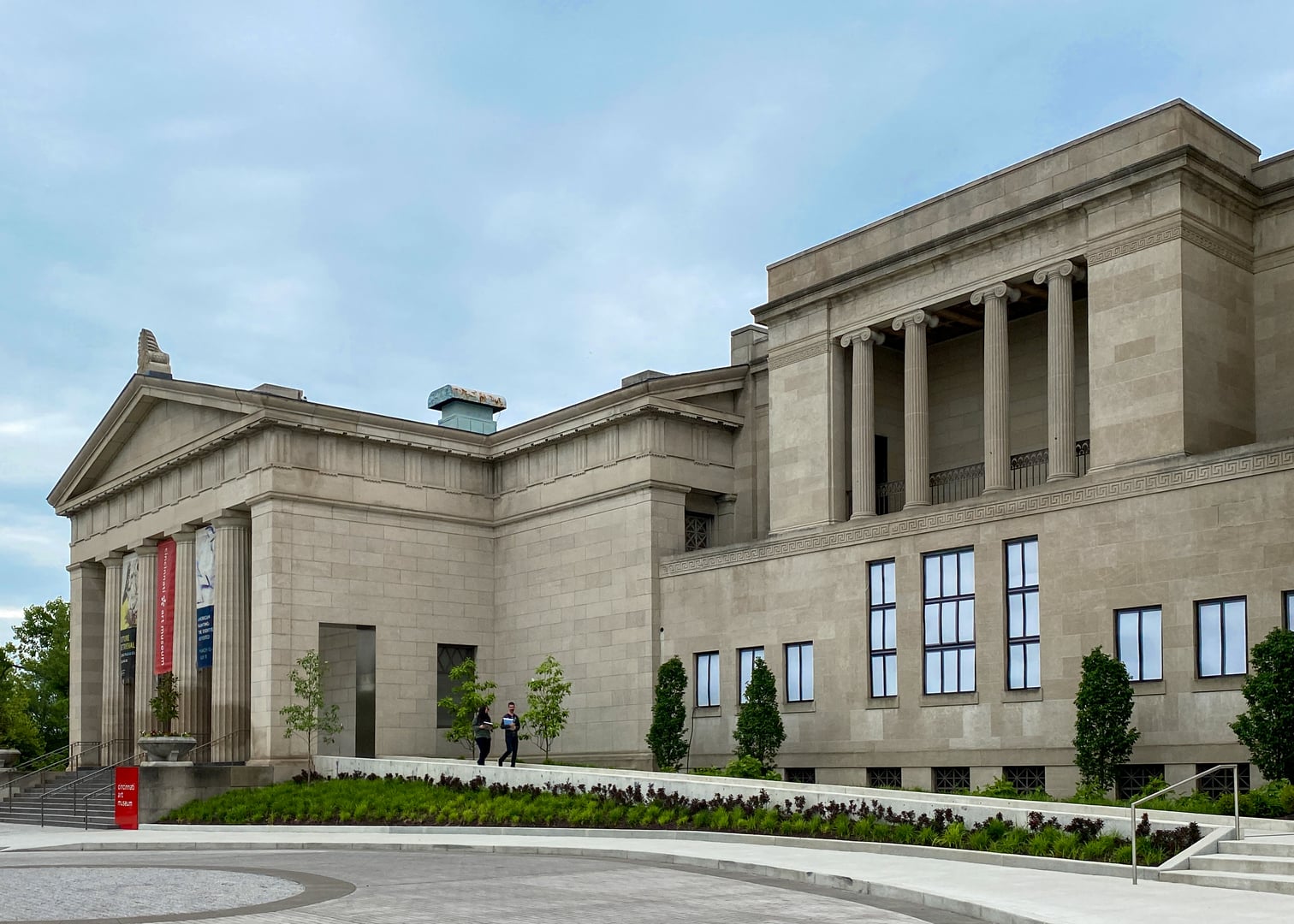
The building at 301 Jackson Street was built between 1925 and 1927 as Sandusky's main U.S. Post Office, in the formal Beaux-Arts civic style typical of mid-1920s federal post offices. Its second floor served at various points as office space for federal agencies, including the FBI according to museum lore — a use commonly assigned to upper floors of federal post-office buildings of the era.
The Postal Service moved out of the Jackson Street building in 1986 to a new facility at 2220 Caldwell Street. The building sat vacant for several years until a group of carousel-history enthusiasts, inspired by the 1988 U.S. Postal Service release of a series of carousel-themed stamps (one of which depicted a figure from Cedar Point's Kiddieland carousel), proposed converting the building into a museum.
The Merry-Go-Round Museum opened to the public on July 14, 1990. It houses carved carousel animals, historic carousel artifacts, an artist's studio for restoration work, and a working carousel that visitors can ride as part of admission. The building is listed on the National Register of Historic Places, and the museum operates as a downtown Sandusky cultural anchor and family attraction.
Sources
- https://merrygoroundmuseum.org/
- https://www.toledoblade.com/a-e/living/2023/07/01/wanderer-series-sandusky-s-merry-go-round-museum-explores-history-artistry-of-beloved-carnival-ride/stories/20230701001
- https://www.atlasobscura.com/places/merry-go-round-museum
- https://fringeparanormal.wordpress.com/2021/06/22/merry-go-round-museum/
Object manipulation (basement)Phantom footstepsApparition (second floor)SLS-camera figure detection
The Merry-Go-Round Museum is one of several Sandusky landmarks featured in regional paranormal accounts, and the museum's haunting lore is unusually specific about which areas of the building generate which reports.
In the basement, staff have described a child spirit said to inhabit an artist's studio where carousel restoration work is done. According to the museum's own retellings and a June 2021 Fringe Paranormal investigation, the child has been blamed for empty paint-mixing cups being thrown and for marks appearing on restoration work as if drawn by small hands. One summer, several brooms reportedly vanished from the studio and reappeared months later stacked together in a corner.
On the second floor, which served as federal office space and at one point housed FBI offices, witnesses report phantom footsteps and an apparition described as a custodian. Local lore identifies the figure as a custodian who is said to have died of a heart attack on site.
The 2021 Fringe Paranormal investigation reported SLS-camera figure detections and post-analysis audio of what investigators interpreted as a child's voice. The museum acknowledges the lore but does not market the building as a paranormal attraction; daytime visits are oriented around carousel history and the restored ride.
Verifiability is medium: the specific phenomena are sourced primarily to one informal paranormal-investigation writeup and museum-staff retelling. The historical context (former post office, second-floor federal use, basement studio) is well-documented.
Notable Entities
Basement child spiritCustodian apparition (second floor)
Media Appearances
- Fringe Paranormal investigation, June 2021
- Living Dead Paranormal — YouTube return investigation
Where this legend is told