Est. 1800 · Antebellum Plantation · Enslaved Labor History · Federal Architecture · Mecklenburg County Heritage
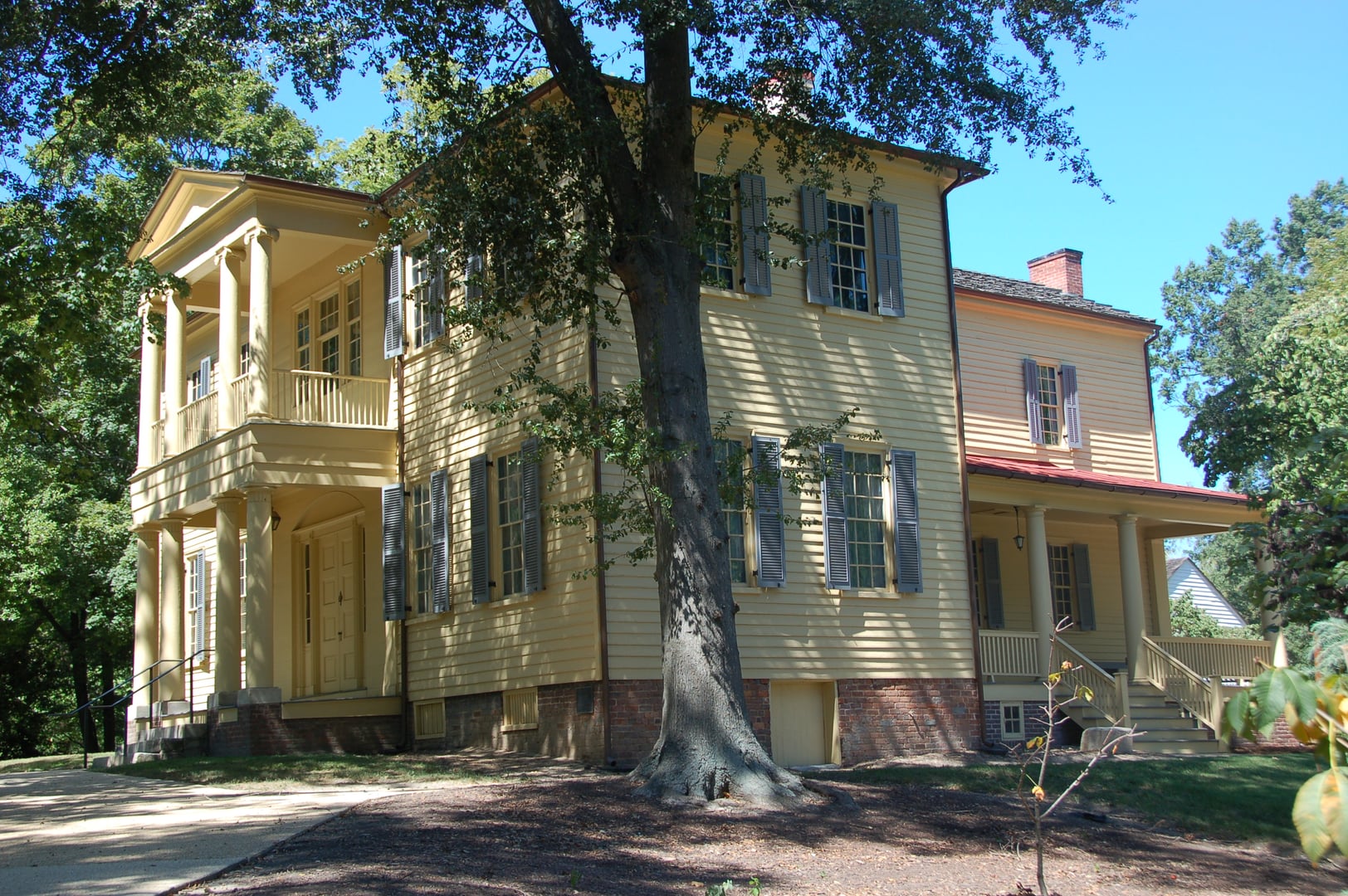
James Latta was born in Ireland and immigrated to the United States in 1785. After several years operating as a traveling merchant — purchasing goods in Philadelphia and Charleston and selling them by Conestoga wagon across York, Mecklenburg, Lincoln, and Rowan counties — he accumulated sufficient capital to invest in land. The house he constructed around 1800 reflects the Federal style with some Georgian elements, including the main staircase.
By the time Latta retired from active merchant work in 1820, the property had expanded to 742 acres and relied on the labor of 34 enslaved men, women, and children to operate as a cotton plantation. The plantation remained in family hands across several generations.
Mecklenburg County eventually acquired the 16-acre core of the original property and operated it as a living history museum under the name Historic Latta Plantation. In February 2022, the county renamed it Latta Place to reflect the property's historical name as Latta knew it around 1800.
The site's management relationship with Historic Latta Inc. ended in 2021 following a controversial Juneteenth event controversy. The county subsequently undertook a community-led redesign process. In March 2025, Mecklenburg County revealed the final design concept: an $11.2 million project including a new visitor center and an interpretive trail looping through the 16-acre site, with a dedicated tribute to the 65 documented enslaved individuals — a number that historians expect will grow with continued archival research. Construction was set to begin in late 2025 with a projected 2026 reopening.
Sources
- https://latta.mecknc.gov/
- https://en.wikipedia.org/wiki/Latta_Place
- https://www.corneliustoday.com/latta-place-will-reopen-in-2026-after-redevelopment-starting-winter-2024/
- https://www.wfae.org/race-equity/2025-03-22/mecklenburg-county-will-redesign-reinterpret-19th-century-plantation-site
Phantom soundsPhantom footstepsObject movementDoors opening/closingShadow figures
Staff and volunteers at Latta Place have described the attic as the most consistently active area on the property. Independent reports from tour visitors, building staff, and investigators describe children's laughter and the sound of small feet running back and forth — audible from the rooms directly below. Doors in the upper portion of the house have been heard slamming when staff were working elsewhere in the building.
The most specific account concerns a wooden cane kept as a period artifact. During a guided tour, as a docent demonstrated the cane for a group of visitors, the object slipped from his hands. Instead of falling to the floor, the cane remained upright. It then moved across the room in a walking motion before coming to rest. The incident was witnessed by the full tour group.
Staff who have experienced these phenomena have generally described the entities as non-threatening — a characterization consistent with the working theory that the activity reflects the Latta family itself, whose domestic life saturated the house across multiple generations.
Charlotte Ghost Tours includes Latta Place in its programming. Paranormal investigation teams, including the North American Paranormal Society, have conducted sessions at the property, though Latta Place has been closed since 2021 pending its $11.2M redesign. Whether the paranormal tour programming will resume after the 2026 reopening is not confirmed.