Est. 1927 · Detroit Art History · Diego Rivera Murals · African Collection · Kongo Cultural Heritage · Michigan Museum Funding Model
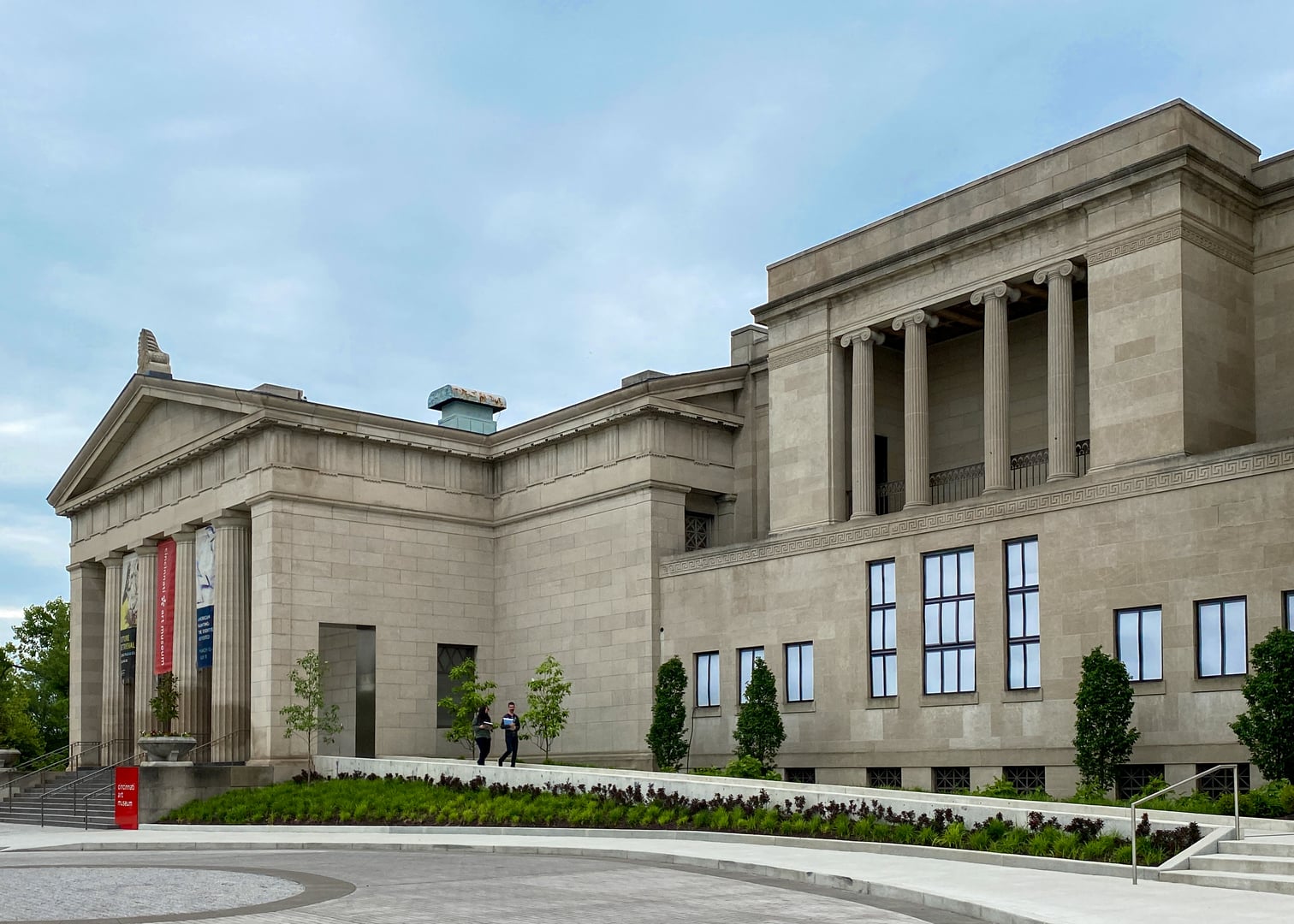
The Detroit Museum of Art was founded in 1883 and originally housed in a building on Jefferson Avenue. In 1919 the institution was renamed the Detroit Institute of Arts. The current building at 5200 Woodward Avenue, designed by Paul Cret in the Beaux-Arts style, opened in 1927 and has since been expanded multiple times.
The DIA collection of more than 65,000 works is organized across an encyclopedic range of galleries: ancient Egypt, Greece, and Rome; medieval Europe; Asian art; African, Oceanic, and Indigenous American art; and six centuries of European and American painting and sculpture. Diego Rivera's Detroit Industry Murals, commissioned in 1932 and completed in 1933, fill the central interior courtyard and remain among the most significant commissioned public art works in North American history.
The African Collection on the museum's ground floor includes an nkisi n'kondi, or Kongo nail figure, created in the late nineteenth century by the Kongo people of present-day Congo. The figure — a standing male form bristling with iron nails, blades, and cowrie shells — functioned as doctor, judge, and priest within the ritual context of its origin culture. Each nail driven into the figure represented a sworn agreement, a healing ritual, or a judgment rendered. It is described by the museum as the most celebrated work in its African collection.
The museum's millage funding model, approved by tri-county voters in 2012, provides free admission to all residents of Macomb, Oakland, and Wayne counties — making the DIA one of the few major American art museums to offer universal local free access.
Sources
- https://en.wikipedia.org/wiki/Detroit_Institute_of_Arts
- https://dia.org/collection/nail-figure/51144
- https://historicdetroit.org/buildings/detroit-institute-of-arts
ApparitionsPhantom soundsObject movement
The accounts at the Detroit Institute of Arts come from security personnel — people doing their jobs in an empty building at night, without particular incentive to dramatize what they observe. Multiple officers working afternoon and midnight rotations have independently reported two specific phenomena.
The first involves the Kongo nail figure in the African Gallery. When the gallery is unlit, the figure — an nkisi n'kondi made by the Kongo people in the late nineteenth century, dense with iron nails representing ritual obligations — has been observed in postures inconsistent with its stationary display position. The officers describe it as movement. No structural explanation for this has been offered.
The second phenomenon is auditory and occurs in the American Gallery. Officers patrolling through a room containing Rembrandt Peale's 'The Court of Death' — a large-format allegory of mortality, roughly 11 feet tall and 23 feet wide — have heard what they describe as the sound of a large painting falling. The sound is significant enough to prompt an immediate check of the gallery. Every time, the gallery is undisturbed. No artwork is out of place. The crash does not repeat.
Both accounts have been corroborated across multiple officers working different shifts. Whether the nail figure's apparent movement reflects something in the way low light interacts with its three-dimensional surface, or whether the sound in the American Gallery has an acoustic explanation, has not been formally investigated. The museum does not officially comment on either account.