Est. 1951 · Detroit History · Motor City Heritage · Detroit Historical Society · Automotive Industry
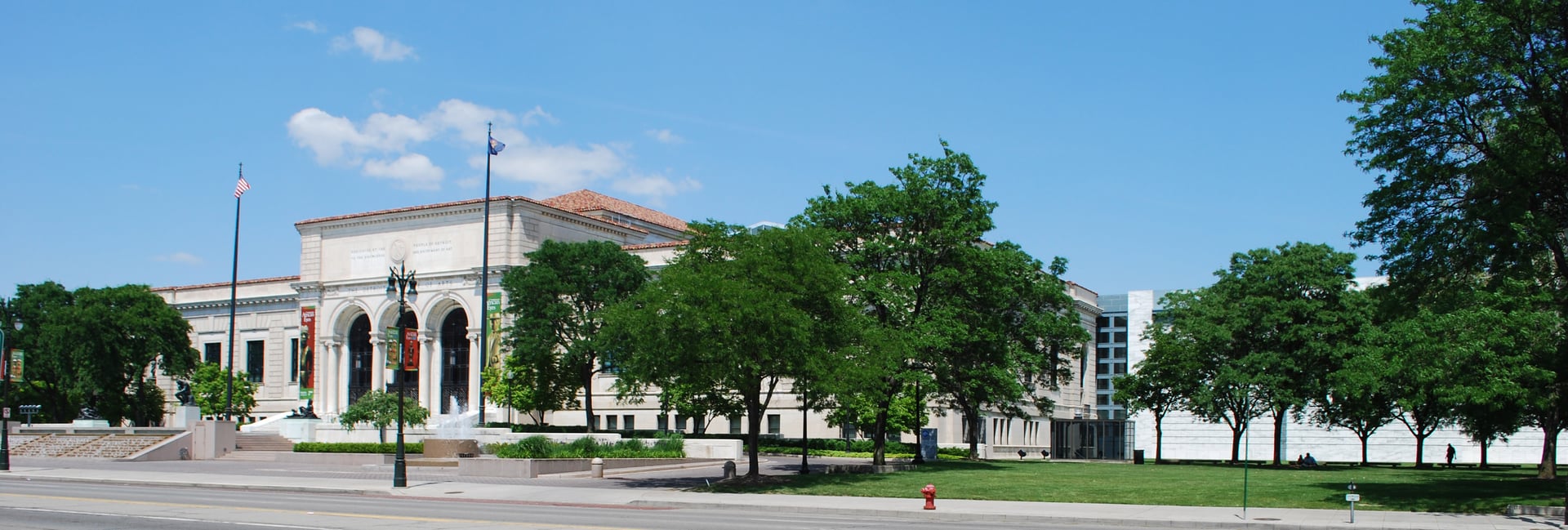
The Detroit Historical Society was organized in 1921 by civic leaders committed to preserving the accumulated history of one of America's most consequential industrial cities. The organization's first public presence was modest: a single suite on the 23rd floor of the Barlum Tower (now the Cadillac Tower), which opened as a museum in November 1928 and was briefly marketed as the highest museum in the world.
The current building on Woodward Avenue opened July 24, 1951, a date chosen to coincide with the 250th anniversary of Detroit's founding by Antoine de la Mothe Cadillac in 1701. The Woodward Avenue campus provided the space to develop the permanent exhibitions that have defined the museum since — most notably the Streets of Old Detroit, a walkable recreation of nineteenth-century commercial Detroit that remains among the most visited exhibits in the state.
The museum documents Detroit's full arc: its origins as a French colonial trading post, its growth as a manufacturing center, the automotive revolution that reshaped global transportation, and the social upheavals of the twentieth century. Today the building is operated by the Detroit Historical Society and is open Wednesday through Sunday, with free admission for society members and children under six.
Sources
- https://en.wikipedia.org/wiki/Detroit_Historical_Museum
- https://www.detroithistorical.org/visit/detroit-historical-museum
- https://www.detroithistorical.org/sites/default/files/pdfs/DHM%20visitor%20guide%202023-web.pdf
OrbsPhantom smells
The paranormal account attached to the Detroit Historical Museum is low-key and specific to the lower level. Workers have reported seeing an orb in the basement area, positioned near a persistent stain on the floor. The stain itself is described as unusual: it carries a sulfur-like odor that reportedly dissipates or disappears when physically touched — a sensory anomaly that staff have noted without explanation.
The account is not widely known within the institution. Those who have reported the phenomenon describe it as something most employees aren't aware of rather than a celebrated ghost story. That specificity — the particular combination of a located stain, a specific smell, and an orb sighting in proximity — gives the account a different texture than generalized hauntings.
What the stain is, what deposited it, and why it might carry a sulfurous odor are not addressed in available sources. The museum itself focuses on documented Detroit history and does not officially acknowledge paranormal claims. Visitors interested in the lower level can explore it as part of standard museum admission.