Est. 1910 · 1910 Mission-Style Architecture · Southern Pacific Railroad Heritage · Texas Historical Commission Recognition · Galveston Bay Waterfront · Girl Scout Camp Establishment 1958
The Scott Mansion occupied a prime waterfront location on Galveston Bay in Seabrook, Texas. Built in 1910 for William Scott, a high-ranking executive of the Southern Pacific Railroad Lines of Texas and Louisiana, the mansion was situated at the "Surf" stop on the Galveston, Harrisburg and San Antonio Railroad branch line. Scott named the residence either "Deepend" or "Deepdene"—historical accounts vary on the exact nomenclature.
The three-story concrete structure was architecturally distinctive for its era and location. One of the first concrete homes built on Galveston Bay, the mansion featured six bedrooms, six bathrooms, five screened-in sleeping porches, and a basement. The Texas Historical Commission subsequently recognized it as "the most distinctive mission-style residence in the state of Texas," acknowledging its architectural significance.
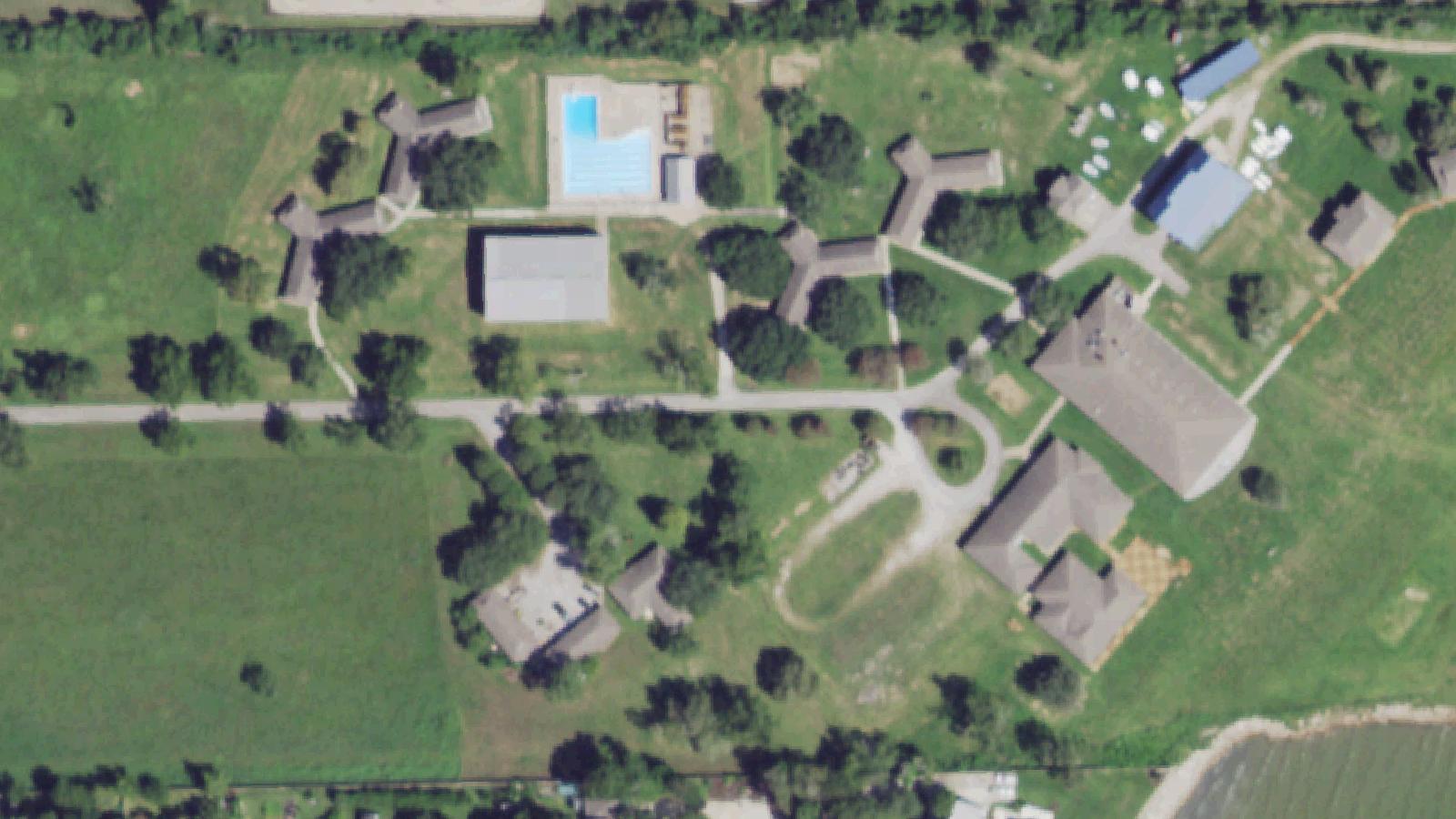
In 1958, the San Jacinto Girl Scouts Council purchased the mansion and surrounding property for conversion to a summer camp. The facility was renamed Casa Mare—referencing its waterfront "sea house" location. For thirty-four years, the property served as a Girl Scout camp facility. In 1991, the Girl Scouts Council announced plans to demolish the historic mansion, citing high maintenance costs as justification. Preservationists sought to halt the destruction, and on April 8, 1992, an appellate court issued an order enjoining demolition. However, the court order arrived too late; demolition had already commenced. The mansion was torn down, and modern camp infrastructure—dormitories, mess halls, and activity facilities—was constructed on the site.
Sources
- https://houstorian.wordpress.com/2007/09/04/william-scott-mansion/
- https://houstonarchitecture.com/topic/49470-william-scott-mansion-at-4810-todville-rd/
ApparitionsPhantom screamsEVPDisembodied voicesObject movementPhantom pulling sensationPoltergeist activityPhantom sounds
Camp Casa Mare's paranormal reputation centers on three documented tragic narratives intertwined with the mansion's history. The primary entity is a young woman who lived in the mansion near the shore with her father. According to oral tradition, she was grieving the loss of a lover. Each night, she stood on her balcony, watching the sea in anticipation of his return. This vigil ended when she fell—or jumped—from the balcony, colliding with the ground below. Her death occurred at the location, which remains uncovered by buildings despite the mansion's demolition. The site is now marked by a tile mural of a star.
Witnesses report that standing in a circle around the location where she died produces an unusual physical sensation: an inward pulling force that causes all participants to "lean" toward the center, as if being drawn toward the trauma site by an external force. This phenomena is interpreted as either the woman's spirit pulling visitors toward her death location or a residual energy imprint of the traumatic event itself.
A second paranormal narrative involves two children who died after falling into a well on the property and becoming trapped. Though the well has since been covered, campers and staff report hearing disembodied screams and the sound of clawing—as if from within the earth—as if the trapped victims continue desperately attempting to escape. These auditory phenomena are documented across multiple independent witness accounts and are interpreted as residual haunting phenomena or EVP manifestations.
Third, the dormitory nearest the shore—designated for campers participating in sailing activities—exhibits consistent poltergeist phenomena. The structure contains three showers. When the first two are activated, the third mysteriously engages without manual input. Lights activate and deactivate autonomously. Campers report hearing disembodied voices and unexplained sounds. The phenomena occur regularly enough that campers recognize them as established features of the dorm's behavior rather than mechanical anomalies.
Whether these phenomena represent residual haunting energy imprinted at the site of tragedy, intelligent spirits attached to the location, or psychological suggestion amplified by the historical narratives remains contested. The consistency of independent witness accounts across decades—both before and after the mansion's demolition—suggests either genuine paranormal activity or strong environmental factors that produce similar experiences in multiple visitors.
Notable Entities
The Balcony WomanThe Trapped ChildrenThe Sailing Dorm Spirit