Est. 1900 · Historic Commercial District · Late 19th Century Architecture · Connecticut Tobacco Heritage · National Register Historic District
New Milford's Bank Street represents one of Connecticut's most historically significant commercial corridors. The street features continuous blockfronts of three-story masonry buildings constructed in the late 19th and early 20th centuries as New Milford flourished as a regional commercial and industrial center. The town developed an economy centered on tobacco processing and drying throughout the 19th century, with the area between the town green and railroad becoming the commercial hub.
The New Milford Center Historic District encompasses approximately 160 structures across eight blocks, including prominent brick and stone buildings along Bank and Main Streets. These buildings exemplify commercial vernacular architecture of the turn-of-the-century period.
Bank Street Coffee House operated at 56 Bank Street for over 20 years, becoming a popular gathering place and community fixture in downtown New Milford. The coffee shop served gourmet coffee and tea along with light breakfast and lunch items. It was owned by Andrew and Beverly Monthie for six years before the owners were notified by their landlord that the property would not be renewing leases following structural renovations. The business closed on October 28, 2017.
Sources
- https://en.wikipedia.org/wiki/New_Milford_Center_Historic_District
- https://www.livingplaces.com/CT/Litchfield_County/New_Milford_Town/New_Milford_Center_Historic_District.html
- https://patch.com/connecticut/newmilford/new-milford-coffee-shop-close-after-20-years
- https://candlewoodlakemagazine.com/2017/10/25/bank-street-coffee-house-closing-at-popular-location/
- https://danburycountry.com/new-milford-coffee-house-closing-down-after-20-years/
Phantom footstepsObject movementShadow figuresDisembodied sounds
Bank Street in New Milford carries a reputation as one of Connecticut's most actively haunted streets, with documented paranormal accounts spanning decades. The street itself has been the setting for multiple ghost stories and unexplained phenomena.
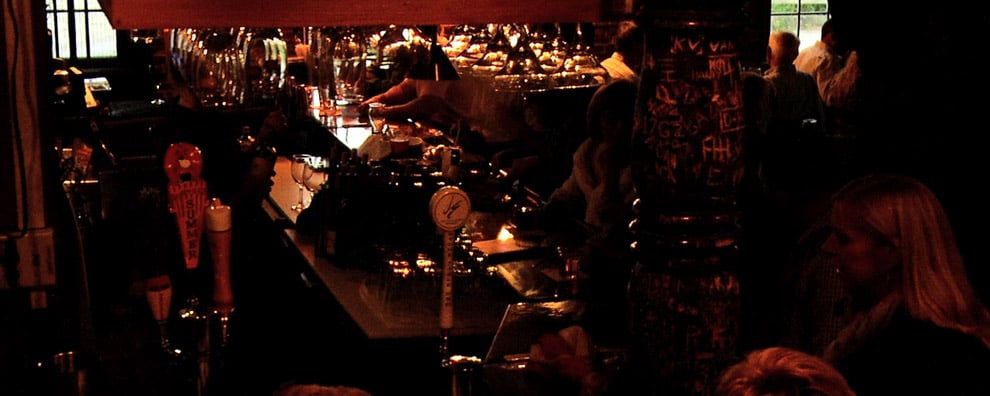
At the Bank Street Coffee House specifically, employees reported experiencing consistent paranormal activity in the back areas of the building. Witnesses described hearing distinct footsteps ascending the basement stairs when no one else was present. Kitchen staff reported objects moving on their own without explanation, with items shifting positions or disappearing only to reappear elsewhere. Multiple employees described encountering shadowy figures moving through the building, particularly in dimly lit areas and the basement level.
The broader Bank Street haunting phenomena is most famously associated with the 1930 incident of the "Haunted Stove." For two weeks in early October 1930, a restaurant on Bank Street drew thousands of witnesses and international news coverage when a stove appeared to produce audible voices. Estimates suggested approximately 3,000 people gathered on the street and in alleyways attempting to witness the phenomenon. Scientists arrived convinced they could provide rational explanations but were unable to determine a cause, while spiritualists declared it genuine spirit communication. The mystery was eventually solved in 1970 when the Hartford Courant revealed that a chef named Nick had used an old underground tube connecting the kitchen to a shed to call out to a worker gathering onions, creating the illusion of a haunted stove.
Notable Entities
Chef Nick (historic 1930 incident)
Media Appearances
- New England Legends Podcast 164
- Hartford Courant (1970 revelation)