Donated by Saturday Evening Post editor George Horace Lorimer (1940) · Council Rock — documented Lenape council site · Montgomery County park system anchor property
Lorimer Park's 230 acres along the Pennypack Creek were assembled in the early twentieth century as the private country estate of George Horace Lorimer, who served as editor of the Saturday Evening Post from 1899 to 1936. Lorimer's editorship transformed the Post into the largest-circulation magazine in the United States during the interwar period and made him one of the most influential print-media figures of his generation. He used the Pennypack Creek property as a personal retreat from his Curtis Publishing Company office in central Philadelphia.
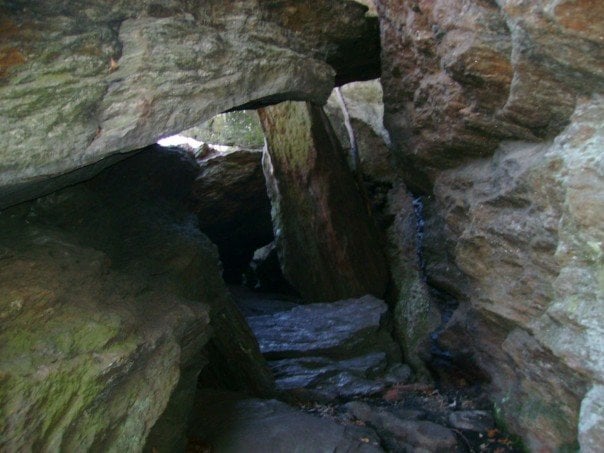
Following Lorimer's death in 1937, his estate transferred the property to Montgomery County in 1940 for use as a public park. The park's central feature is Council Rock, a sandstone outcropping above the creek that local and regional tradition identifies as a Lenape council site. The Lenape were the indigenous people of the lower Delaware Valley, and the Pennypack Creek corridor was an important Lenape transit and settlement route prior to European displacement during the late seventeenth and early eighteenth centuries.
Lorimer Park has operated continuously since 1940 as a Montgomery County public park, with hiking trails along the creek, equestrian access, and seasonal nature programming. The Mausoleum-like stone pyramid that local folklore associates with the property is a private burial monument located on adjacent or formerly-adjacent land rather than within the public park itself.
Sources
- https://en.wikipedia.org/wiki/Lorimer_Park
- https://www.montcopa.org/733/Lorimer-Park
- https://en.wikipedia.org/wiki/George_Horace_Lorimer
Reported apparitions on winter trailsReports of an isolated stone monument glowing redAuditory reports of distant screams and smoke smell
Folklore around Lorimer Park has accumulated across decades of public-park use. The most commonly cited reports describe apparitions observed on winter evenings along the wooded trails north of the main parking area; an isolated stone pyramid set deep in the woods said to glow red on certain nights; and the suggestion of a mansion fire on the property in the late nineteenth century, with associated reports of screams and smoke smell.
These accounts do not align cleanly with the documented property history. George Horace Lorimer assembled the estate in the early twentieth century rather than the nineteenth; no major mansion fire is recorded on the property in primary archival sources. The stone pyramid is likely the private burial monument located on adjacent land, which appears red under certain lighting conditions due to the iron content of the stone rather than under unusual circumstances.
The park's most archivally substantive feature — Council Rock — is associated with documented Lenape council use rather than with paranormal folklore, and is most appropriately understood as a cultural-heritage site to be approached with respect. Visitors interested in Lenape history of the Pennypack Creek corridor should consult the cultural resources of the Lenape Nation of Pennsylvania directly.