Est. 1722 · National Historic Landmark (1972) · Only surviving residence of a Pennsylvania colonial governor · Home of Elizabeth Graeme Fergusson, early American woman writer
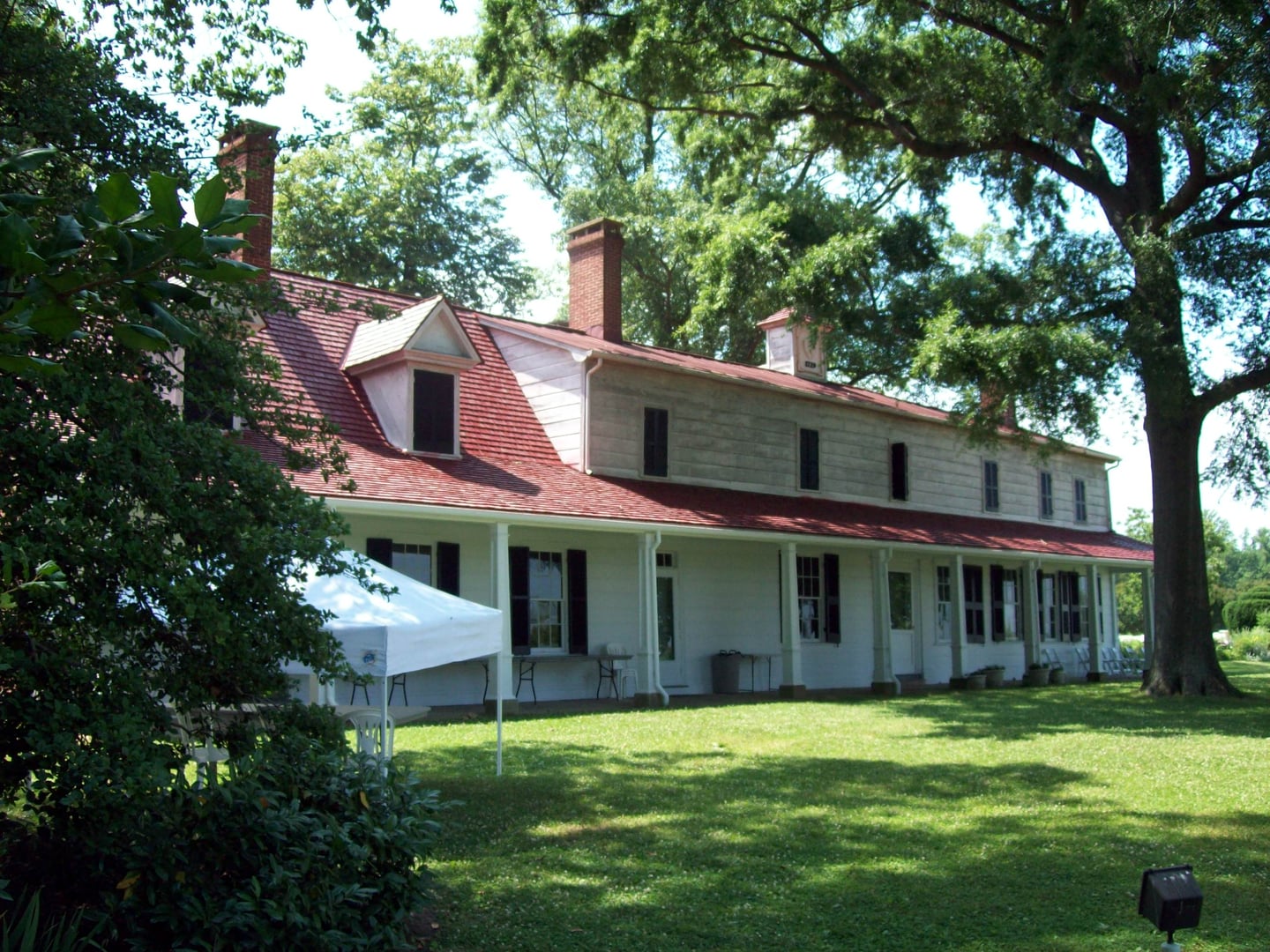
Sir William Keith, the deputy governor of Pennsylvania under the Penn family from 1717 to 1726, built a malt house and country residence on a 1,200-acre Horsham tract beginning in 1721. The two-and-a-half-story stone building, completed by 1722, was used initially as a brewing operation; Keith intended the estate, which he called Fountain Low, as both a political seat and a commercial enterprise. After Keith's political fortunes declined and he left the colony, the property was sold in 1739 to Dr. Thomas Graeme, a Scottish-born Philadelphia physician.
Under the Graeme family, the building was converted from a brewery to a refined country residence. Thomas Graeme's daughter Elizabeth Graeme Fergusson became one of colonial America's earliest published women writers and a central figure in mid-eighteenth-century Philadelphia literary circles; her literary salons at Graeme Park drew Benjamin Rush, Francis Hopkinson, and other figures of the Revolutionary generation. Elizabeth's first-floor parlor remains a focal point of the interpretive tour.
The property passed through several owners after the Revolution and was eventually deeded to the Commonwealth of Pennsylvania in 1958. It is operated as a historic-house museum by the Pennsylvania Historical and Museum Commission with on-site partnership from the Friends of Graeme Park. The Keith House was designated a National Historic Landmark in 1972 and is the only surviving residence of any of the colonial governors of Pennsylvania. The building retains substantial original paneled interior woodwork.
Sources
- https://en.wikipedia.org/wiki/Graeme_Park
- https://www.graemepark.org/
- https://www.phmc.pa.gov/Preservation/Pages/default.aspx
Reported apparition of a colonial-era woman near the house at night
The Keith House does not market itself as a paranormal site, and the Pennsylvania Historical and Museum Commission's interpretive program focuses on Sir William Keith's tenure, the Graeme family's literary legacy, and the building's surviving eighteenth-century interior. The folklore that has circulated around the property in regional ghost compendiums describes a colonial-era woman seen walking near the house at night, occasionally framed in local retellings as a victim of Revolutionary War-era violence.
This framing is not corroborated by the site's archival record. Elizabeth Graeme Fergusson, who is the only documented Revolutionary-era resident of the house, died in 1801 of natural causes after the war; she is buried in Christ Church Burial Ground in Philadelphia. Visitors interested in the property's authentic eighteenth-century history will find that the documented record is itself substantial — the building's surviving paneled rooms, Elizabeth Fergusson's salon culture, and the architectural progression from brewery to country house. Reports of after-hours apparitions on the grounds remain folklore.