Guided Tour
Historic Ramsey House Museum Tour
Docent-led tour of the 1797 stone home built by architect Thomas Hope for Francis Alexander Ramsey, covering early Knox County settlement.
- Duration:
- 1 hr
HauntBound archive · catalog record
Reported phenomena, as catalogued
1797 stone-and-marble house museum east of Knoxville where staff openly identify multiple named spirits and an annual 'Spirits Within' candlelit paranormal tour runs each October.
2614 Thorngrove Pike, Knoxville, TN 37914
Research updated September 2026
Age
All Ages
Cost
$
Standard museum admission; separate ticket for 'Spirits Within' Halloween tour
Access
Limited Access
Two-story 1797 stone house with steep historic stairs and gravel paths
Equipment
Photos OK
Est. 1797 · First stone house in Knox County · Designed by London-trained architect Thomas Hope (c. 1795-1797) · Home of Francis Alexander Ramsey, surveyor and Blount College trustee · Listed on the National Register of Historic Places (1969) · Operated as a museum by the Association for the Preservation of Tennessee Antiquities since 1952
Francis Alexander Ramsey (1764-1820), a Scotch-Irish immigrant from Pennsylvania who arrived in what is now Greene County, Tennessee in 1783, commissioned the house at the Swan Pond plantation near the confluence of the French Broad and Holston Rivers. He hired Thomas Hope, a London-trained architect and builder who likely completed the work between 1795 and 1797. The result was a two-story Late Georgian residence built primarily of local pink marble with blueish-gray limestone belts and corner trim, distinguishing it as the first stone house in Knox County.
Ramsey was a prominent figure in early Tennessee: a surveyor, an associate of territorial governor William Blount, and a trustee of Blount College, the institution that became the University of Tennessee. The house remained in the family for generations and saw use by Confederate and Union forces during the Civil War.
The Association for the Preservation of Tennessee Antiquities' Knoxville Chapter purchased the house in 1952 and operates it today as a public history museum. The property encompasses approximately 101.5 acres including visitor facilities, gardens, and an interpretive farm landscape.
The Ramsey House was added to the National Register of Historic Places on December 23, 1969, recognized for both its architectural significance as the work of Thomas Hope and its association with the Ramsey family. The annual 'Spirits Within' Halloween paranormal tour, hosted by the museum each October, is openly marketed by staff and acknowledges the home's well-developed ghost lore.
Sources
Ramsey House is unusual among Knoxville haunted sites in that its institutional staff openly catalogue named spirits in the house. According to VisitKnoxville, the documented entities include Billy, described as an eight-year-old boy who taps employees on the arm; Ann, a tall woman with a bun hairstyle who is said to have died in 1816; Reynolds; and Seth, who is noted for cursing. Shadow figures and disembodied footsteps have also been reported.
US Ghost Adventures' Knoxville haunted-places writeup repeats the named-spirit roster and describes additional sightings of a 'woman in black' wandering the home. The pattern of multiple named entities tied to a specific historic family residence is uncommon and gives Ramsey House strong, repeatable lore.
The museum has formalized the paranormal element of its programming through the annual 'Spirits Within' candlelit Halloween tour, which is publicly advertised on the museum's official website. Because the lore is published in tourism-board content, ghost-tour writeups, and reflected in museum programming, it is unusually well-corroborated for a Knoxville historic home; nonetheless, eyewitness accounts in published sources are largely anonymous staff reports, and we did not locate formal paranormal-investigation documentation.
Notable Entities
Docent-led tour of the 1797 stone home built by architect Thomas Hope for Francis Alexander Ramsey, covering early Knox County settlement.
Annual candlelit October paranormal tour featuring the named spirits associated with the house.
Some links on this page may earn HauntBound a small commission when you book, at no extra cost to you. Our editorial picks are independent. Full disclosure
Every HauntBound history is researched from documented sources. We clearly separate verified historical fact from paranormal folklore.
Free Guide
11 verified stops, rated for families, mapped in order. Free.
One email to confirm, then the guide link. Unsubscribe anytime.
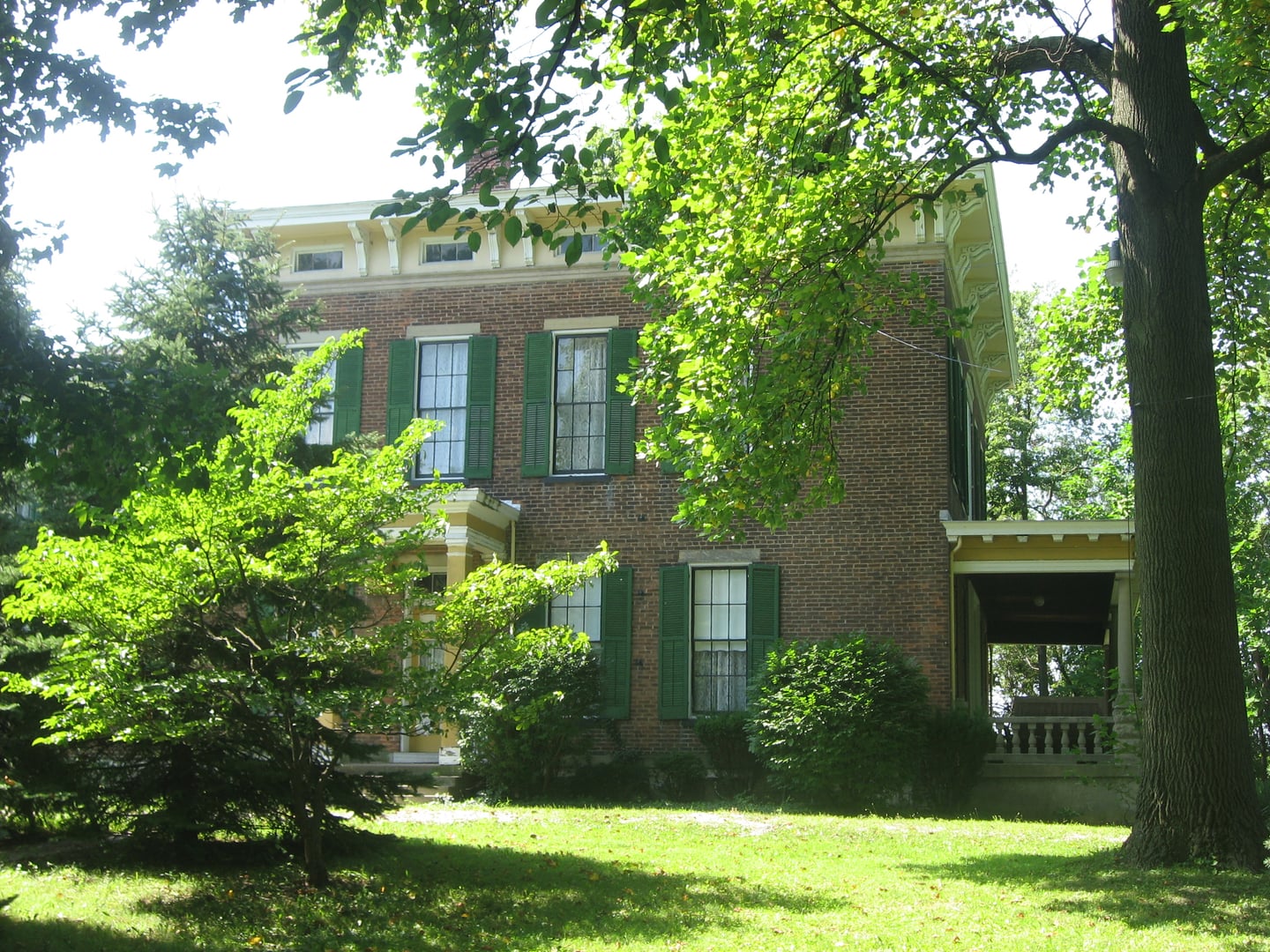
Indianapolis, IN
Hannah House is an 1858 Italianate mansion at 3801 Madison Avenue on the south side of Indianapolis, built by Alexander Hannah, an Indiana businessman who returned wealthy from the California Gold Rush. The property is listed on the National Register of Historic Places.
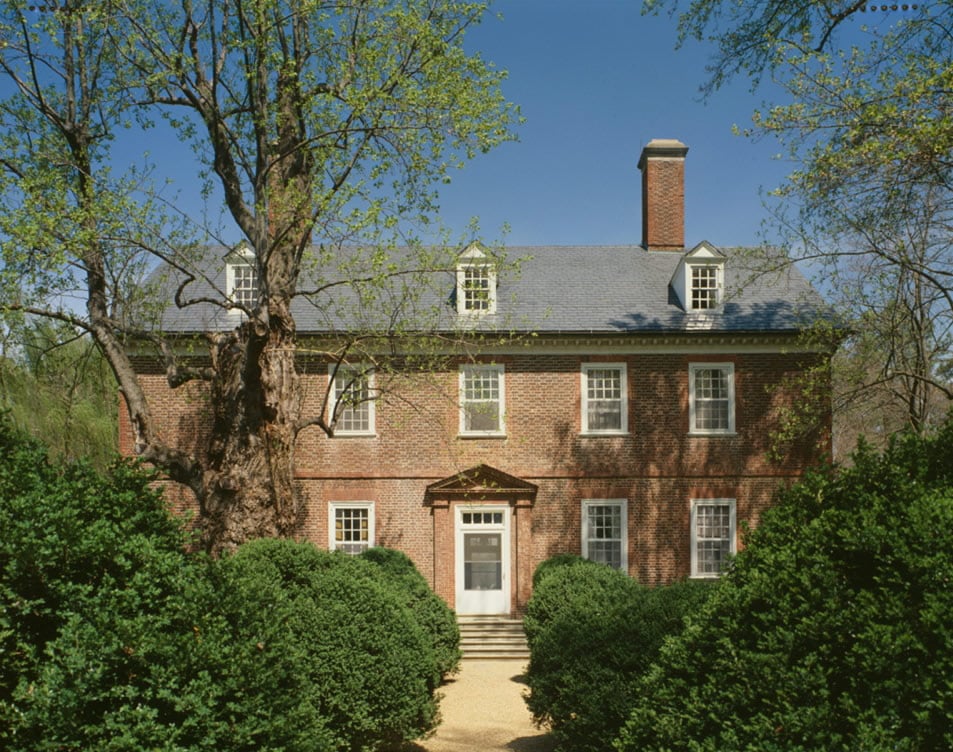
Charles City, VA
Benjamin Harrison IV built the current mansion at Berkeley Plantation in 1726, making it one of the oldest three-story brick houses in Virginia. The plantation became the birthplace of President William Henry Harrison in 1773 and the ancestral seat of a family that produced a signer of the Declaration of Independence and two U.S. Presidents. During the Civil War, General McClellan used the mansion as his headquarters and the cellar held Confederate prisoners.
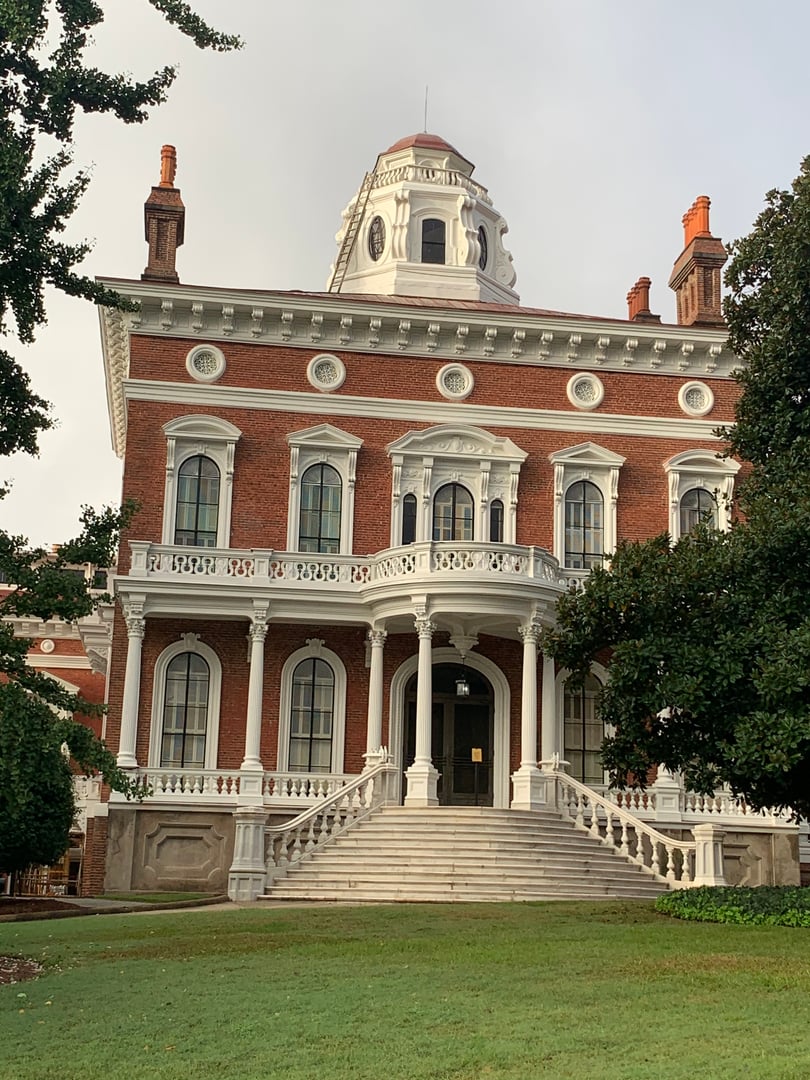
Macon, GA
Built between 1855 and 1859 for businessman William Butler Johnston at a cost of approximately $100,000, the Italian Renaissance Revival mansion at 934 Georgia Avenue has been called the 'Palace of the South' and is a National Historic Landmark. The house remained in Johnston hands through the Civil War, spared when Sherman's march to the sea bypassed Macon; it passed to the Johnstons' daughter Mary Ellen and her husband, Judge William Felton, in 1896. The Hay family acquired the house in 1926 and donated it to The Georgia Trust for Historic Preservation in 1977.