Est. 1849 · Washington Irving Burial · National Register of Historic Places (2009) · Rural Cemetery Movement
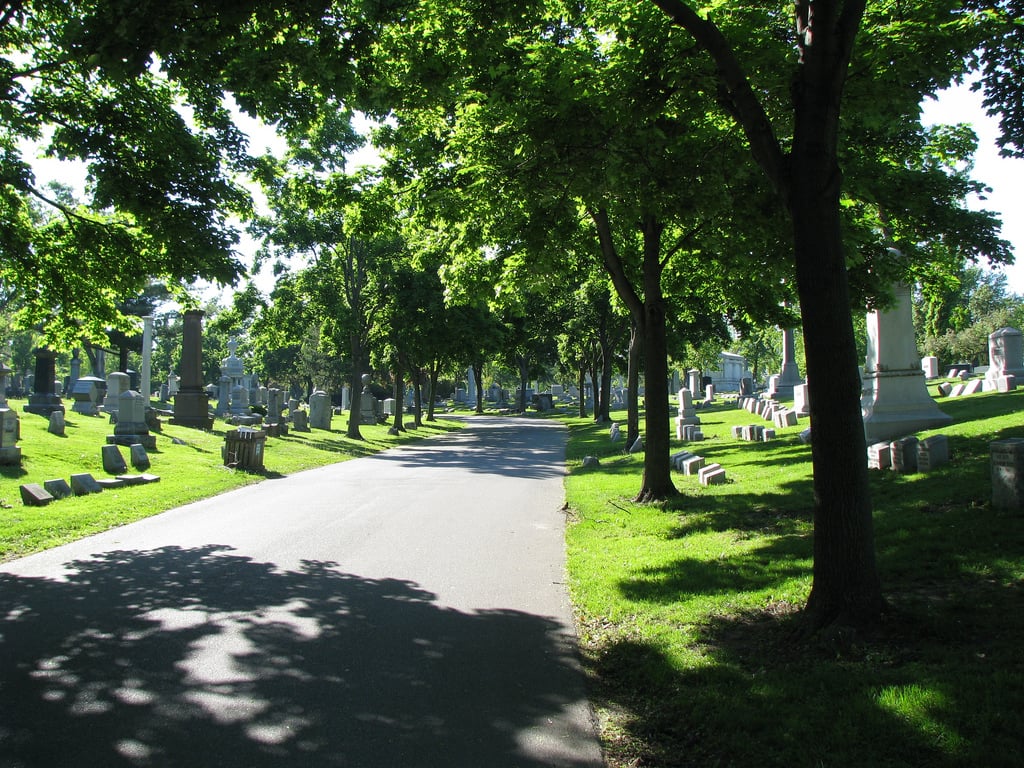
Sleepy Hollow Cemetery is a nonprofit, nonsectarian burying ground on the east bank of the Hudson River, north of Tarrytown. Incorporated as Tarrytown Cemetery in 1849 and renamed Sleepy Hollow in 1865, it grew out of the mid-19th-century rural cemetery movement that produced Mount Auburn outside Boston, Green-Wood in Brooklyn, and Laurel Hill in Philadelphia.
Washington Irving (1783-1859) was among the original incorporators and is buried in the Irving family plot alongside his parents, brothers, nephews, and nieces. Irving's gravestone, a modest marble slab, has been the cemetery's most-visited grave for more than a century and a half. His 1820 story The Legend of Sleepy Hollow, written while Irving was living in England, drew on Hudson Valley landscape and Dutch-American folklore for its setting; the village (then called North Tarrytown) renamed itself Sleepy Hollow in 1996 in tribute.
The cemetery is contiguous with — but legally separate from — the Old Dutch Burying Ground, which dates to the 17th century and surrounds the c. 1685 Old Dutch Church of Sleepy Hollow. The older churchyard is the setting of the Ichabod Crane chase sequence in Irving's story.
Other notable interments include industrialist Andrew Carnegie, William Rockefeller, automotive executive Walter Chrysler, cosmetics entrepreneur Elizabeth Arden, philanthropist Brooke Astor, journalist Whitelaw Reid, and several generations of the Beekman, Van Tassel, and Van Cortlandt families.
The cemetery was listed on the National Register of Historic Places in 2009. It remains an active burying ground.
Sources
- https://en.wikipedia.org/wiki/Sleepy_Hollow_Cemetery
- https://sleepyhollowcountry.com/sleepy-hollow-cemetery/
- https://www.wgpfoundation.org/historic-markers/headless-horseman/
- https://visitsleepyhollow.com/see/headless-horseman-statue/
ApparitionsCold spots
The literary haunt at Sleepy Hollow is one of the strongest examples of folklore feedback in American letters. Washington Irving drew the figure of the Headless Horseman from oral traditions circulating in Dutch-American Hudson Valley communities since the late 18th century, in which an unnamed Hessian artilleryman killed at the Battle of White Plains was said to ride the byways looking for his head. Irving's 1820 publication in The Sketch Book of Geoffrey Crayon, Gent. crystallized the story; its later cultural prominence then fed back into local folklore.
Local lore holds that the Hessian is buried in the Old Dutch Burying Ground adjoining the cemetery. The William G. Pomeroy Foundation marker installed in the village describes the Hessian tradition. A bronze statue of the Headless Horseman riding in pursuit of Ichabod Crane stands at the village entrance.
Reported phenomena at Sleepy Hollow Cemetery itself focus on the rustic wooden bridge over the Pocantico River near the natural Cascade Pool. The bridge is a later addition to the landscape, not the original Irving-era span, but visitors describe a heightened atmospheric quality there during autumn fog. Apparition reports are more frequently associated with the older Burying Ground than with the 19th-century cemetery proper.
The cemetery's interpretive offerings emphasize Hudson Valley literary, social, and industrial history rather than paranormal claims.
Notable Entities
The Headless Horseman / The Hessian
Media Appearances
- Setting for Washington Irving's The Legend of Sleepy Hollow (1820)