Est. 1851 · Site of February 16, 1862 Fort Donelson surrender · Only surviving Civil War major surrender structure · Fort Donelson National Battlefield · Birthplace of the 'Unconditional Surrender' Grant nickname
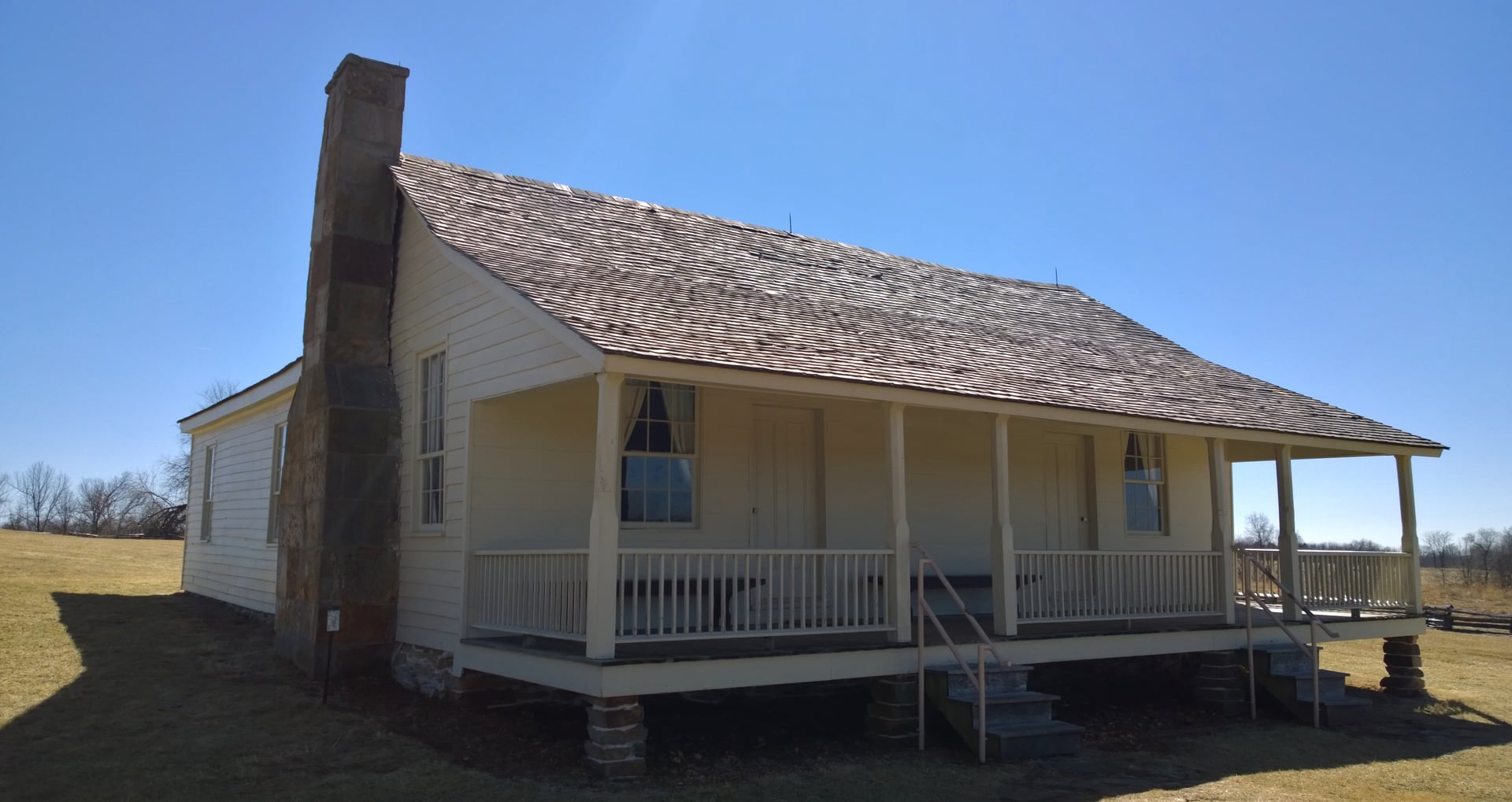
The Dover Hotel was built between 1851 and 1853 on the banks of the Cumberland River and on Petty Street, the main road into the town of Dover, Tennessee. Its location made it one of the first buildings travelers saw on arrival by riverboat.
During the Battle of Fort Donelson in February 1862, the Dover Hotel served as the headquarters of Confederate General Simon B. Buckner. On February 16, 1862, after the Confederate position had collapsed, Buckner met with Union General Ulysses S. Grant inside the Dover Hotel to discuss terms. Grant's famous reply, 'No terms except an unconditional and immediate surrender can be accepted,' gave him the nickname 'Unconditional Surrender' Grant and produced the first major Confederate surrender of the Civil War. After the battle, Union troops used the hotel as a hospital.
Over subsequent decades the building was variously known as the Dover Hotel, the Commercial Hotel, and the Hobing Hotel. By the late 1920s it was in poor condition and slated for demolition, but the Fort Donelson House Historical Association formed to preserve it. After restoration, the building reopened to the public in 1930. It was donated to Fort Donelson National Battlefield in 1959 and is the only original major surrender structure remaining from the Civil War.
Sources
- https://www.nps.gov/fodo/learn/photosmultimedia/tourstop10.htm
- https://www.battlefields.org/visit/heritage-sites/dover-hotel-surrender-house-fort-donelson-national-battlefield
- https://www.nps.gov/fodo/planyourvisit/upload/Dover-Hotel-Brochure-2008_Accessible.pdf
- https://www.tngenweb.org/stewart/SH.htm
Sensed presence of a Federal officerCold spots
National Park Service volunteers and visitors at the Surrender House have reported sensing a Federal officer's presence in the building, particularly on the upper floor where Grant and Buckner are believed to have met on February 16, 1862. A site volunteer's account, summarized in the Shadowlands archive and reflected on Tennessee paranormal sites, describes a sensed presence of a Federal officer rather than a dramatic apparition. The phenomena are framed soberly by NPS staff as part of the site's living memory and reflect the building's long use as a wartime hospital and headquarters.