Est. 1917 · New York City Landmark · Artists' Colony History · Silent Film Era · Literary History
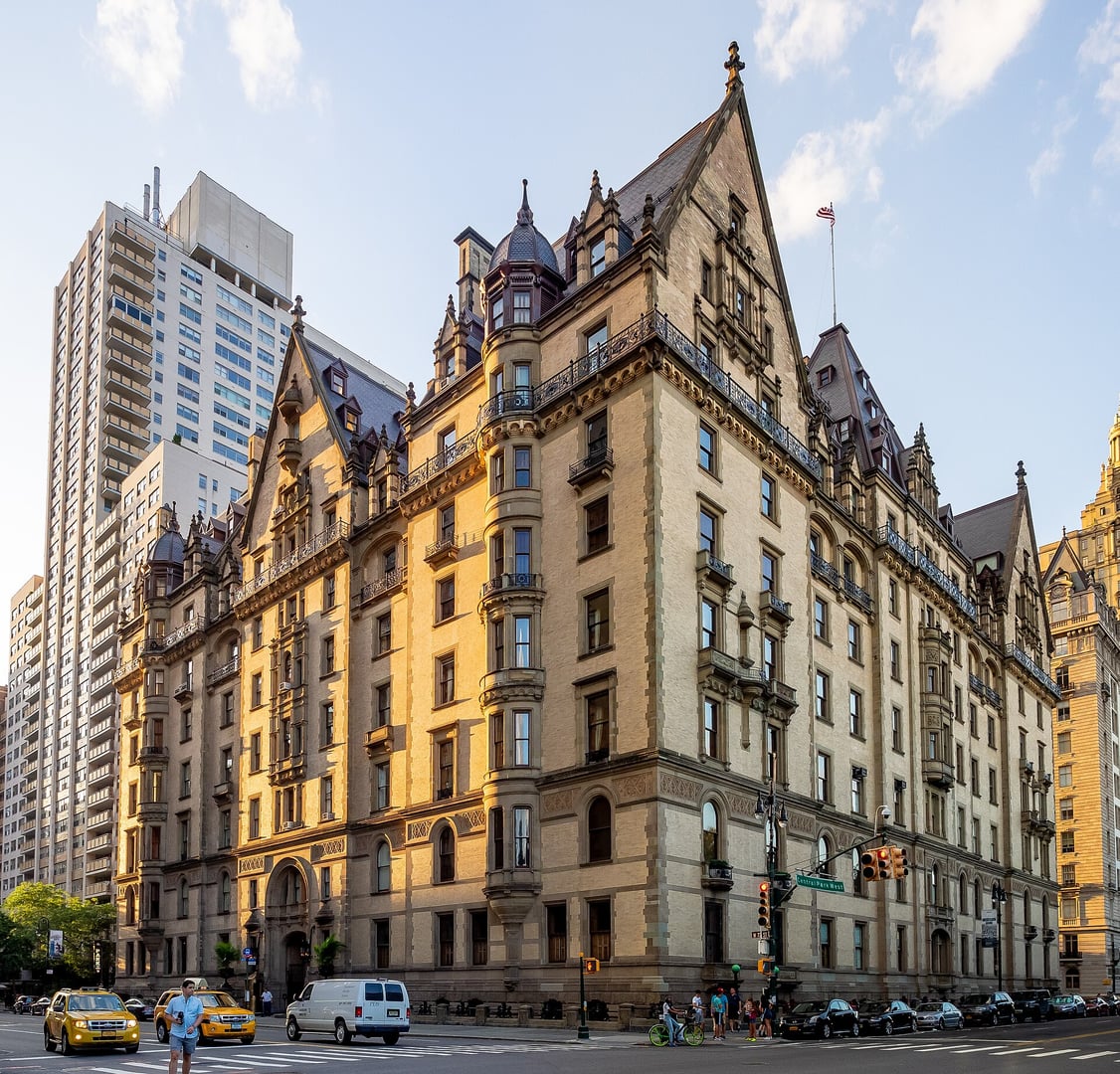
In 1914, a consortium of artists purchased a lot on West 67th Street, half a block from Central Park, for $250,000. Their vision was a building that would serve as both residence and studio — a structure where the architecture itself would accommodate the specific needs of working artists: high ceilings, large north-facing windows, and enough square footage for canvases, sculpture, and the social life that sustained an early-twentieth-century art career in New York.
George Mort Pollard designed the 17-story Gothic Revival building, which opened in 1917. The facade features carved gargoyles representing painters, sculptors, and writers. Apartments were built with 20-foot atelier ceilings and six-room floor plans; the original amenities included a swimming pool, rooftop squash courts, a ballroom, and a dumbwaiter system that delivered meals from a second-floor kitchen.
The building attracted an extraordinary density of talent. Noël Coward lived there. So did Norman Rockwell, Isadora Duncan, New York City Mayor John V. Lindsay, and Alexander Woollcott. Rudolph Valentino maintained a one-bedroom duplex from 1922 to 1923, during the peak of his screen career. Writer Fannie Hurst spent decades in the building before her death there in 1968.
The most documented tragedy occurred in 1929, when writer Harry Crosby — a nephew by marriage of J.P. Morgan Jr., founder of the literary Black Sun Press, and one of the period's more flamboyant expatriates — died in a murder-suicide in his studio in the building. Crosby shot his companion, Josephine Bigelow, and then himself. The event made national headlines.
In 1970, new ownership converted the building to a full cooperative, resulting in evictions of many longtime residents after contentious litigation. The building currently operates as a prestigious residential co-op with 119 units. Howard Chandler Christy's murals of frolicking figures remain on the walls of the ground-floor restaurant, now operating as The Leopard at des Artistes.
Sources
- https://en.wikipedia.org/wiki/Hotel_des_Artistes
- https://www.landmarkwest.org/1-west-67th-street/
ApparitionsPhantom smellsTouching/pushing
The reported paranormal activity at Hotel des Artistes is modest in scale compared to the grandeur of its history. The building appears on Upper West Side haunted location lists primarily on the strength of two names: Rudolph Valentino and Harry Crosby.
Valentino's association is based on his documented residency from 1922 to 1923. He died in 1926. The ghost accounts describe his image appearing in hallway mirrors and a smell of exotic cologne — a detail that aligns with Valentino's reputation as one of the most image-conscious figures of the silent film era. Whether these reports represent genuine unexplained phenomena or the power of suggestion operating in a building with strong cultural associations is impossible to determine from available documentation.
The 1929 Crosby murder-suicide is historical fact. Harry Crosby shot Josephine Bigelow and then himself in a studio in the building on December 10, 1929. The event was extensively covered by New York newspapers. The Crosby family attempted to suppress details; they were unsuccessful.
Fannie Hurst's death in her apartment in 1968, after decades of residence, adds another layer to the building's biography of human ending. The building has been home to people for more than a century, and some of them died there.
The single paranormal claim from the original report — that a ghost at the Hotel des Artistes likes to touch people — has no corresponding account in accessible sources beyond the original Shadowlands entry. No independent accounts of physical contact phenomena appear in coverage of this building.
Notable Entities
Rudolph Valentino