Est. 1902 · Kirkbride Plan Main Building (Demolished) · Bowen Building (Demolished 2016) · Pollak Tuberculosis Hospital (Surviving) · Dr. George Zeller Reform Era · Four On-Site Patient Cemeteries
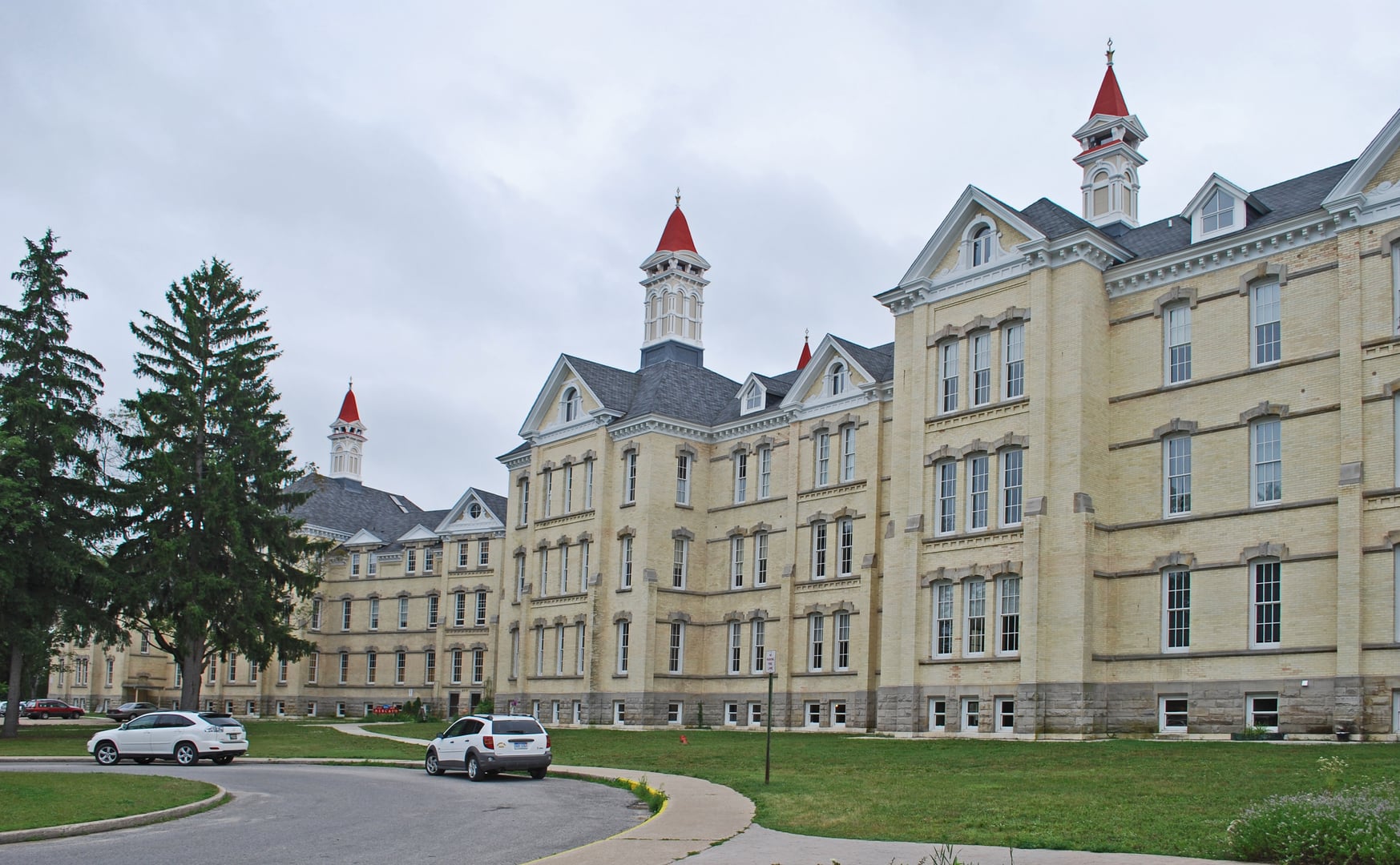
The Illinois General Assembly established the Illinois Asylum for the Incurable Insane in 1895 to receive long-term patients transferred from other state institutions. Construction began on a bluff above the Illinois River in Bartonville, immediately south of Peoria. The hospital opened on February 10, 1902 as the Illinois Hospital for the Incurable Insane and was renamed Peoria State Hospital in 1909. At its peak the complex comprised 63 buildings, including a Kirkbride Plan main building, residential cottages on the cottage plan adopted in early-20th-century institutional design, a nurses' training school opened in 1906, and the Pollak Tuberculosis Hospital.
Dr. George Zeller served as the first superintendent and is credited with introducing humane reforms including the elimination of restraints and the use of occupational therapy. Zeller documented his patients in published memoirs, and one of his most cited records concerns Manuel Bookbinder, an attendant on the burial crew known to staff and patients as Old Book. Bookbinder was reported to have wept openly at every patient burial. Zeller's account of Bookbinder's own funeral describes the assembled mourners observing his figure crying at the old elm in the potter's field while his coffin remained in place at the graveside.
The Bowen Building, the nurses' dorm and administration building, was demolished in 2016 by the Save the Bowen nonprofit to repay loans. The hospital closed in 1973 due to funding and staffing shortages following decades of patient population decline. The Pollak Hospital, the only surviving hospital building on the grounds, now houses the Peoria State Hospital Museum and supports a public tour and paranormal-investigation program. Four cemeteries on the property hold patient burials, most marked only by numbered cast-iron stakes.
Sources
- https://en.wikipedia.org/wiki/Peoria_State_Hospital
- https://www.peoriastatehospital.com/tours
- https://www.peoriastatehospital.com/psh-history
- https://www.atlasobscura.com/places/peoria-state-hospital
- https://www.almanac.com/man-who-cried-everyone
ApparitionsPhantom footstepsDoors opening/closingPhantom voicesEMF anomaliesCold spotsDisembodied screaming
Dr. George Zeller's published account of Manuel Bookbinder's funeral, recorded in his early-20th-century memoirs, remains the most-cited paranormal narrative associated with the hospital. Zeller wrote that Bookbinder, a non-verbal attendant who served on the burial crew and was observed by staff to weep at every patient burial, was himself buried at the old elm in the potter's field. Zeller and more than a hundred staff and patients reportedly observed Bookbinder's figure standing at the elm and crying as his coffin was lowered. The story has been reproduced in the Almanac and in Atlas Obscura's coverage of the hospital.
The Pollak Hospital, the only surviving hospital building, anchors the modern paranormal program. Public investigations have logged equipment-based readings on the upper floors and basement, and tour participants have reported footsteps and doors closing in empty corridors. The four on-site cemeteries hold the graves of an estimated 4,000 patients, most identified only by numbered cast-iron stakes that have been recovered from underbrush during preservation work.
The museum operates the public investigation program on a four-Saturday cycle each year. Tour guides cover the Bookbinder narrative, the building histories, and the cemetery preservation effort, presenting witness reports as documented testimony rather than confirmed activity.
Notable Entities
Manuel Bookbinder (Old Book)Dr. George Zeller's Patients
Media Appearances
- Atlas Obscura
- The Old Farmer's Almanac
- Ghost Hunters: Prescription for Fear (S9E3) (2013)
- Ghost Asylum: Peoria State Hospital (S4E3) (2016)
- Fractured Spirits: Hauntings at the Peoria State Hospital by Sylvia Shults (2012)