Est. 1900 · Logging Heritage · Early Hydropower
Mount Pleasant developed in the late nineteenth century as a logging and milling community at the confluence of the Chippewa River with several smaller drainages. The dam structures at what is now Mill Pond Park provided water power for a sawmill and, later, generated early electricity for the surrounding settlement.
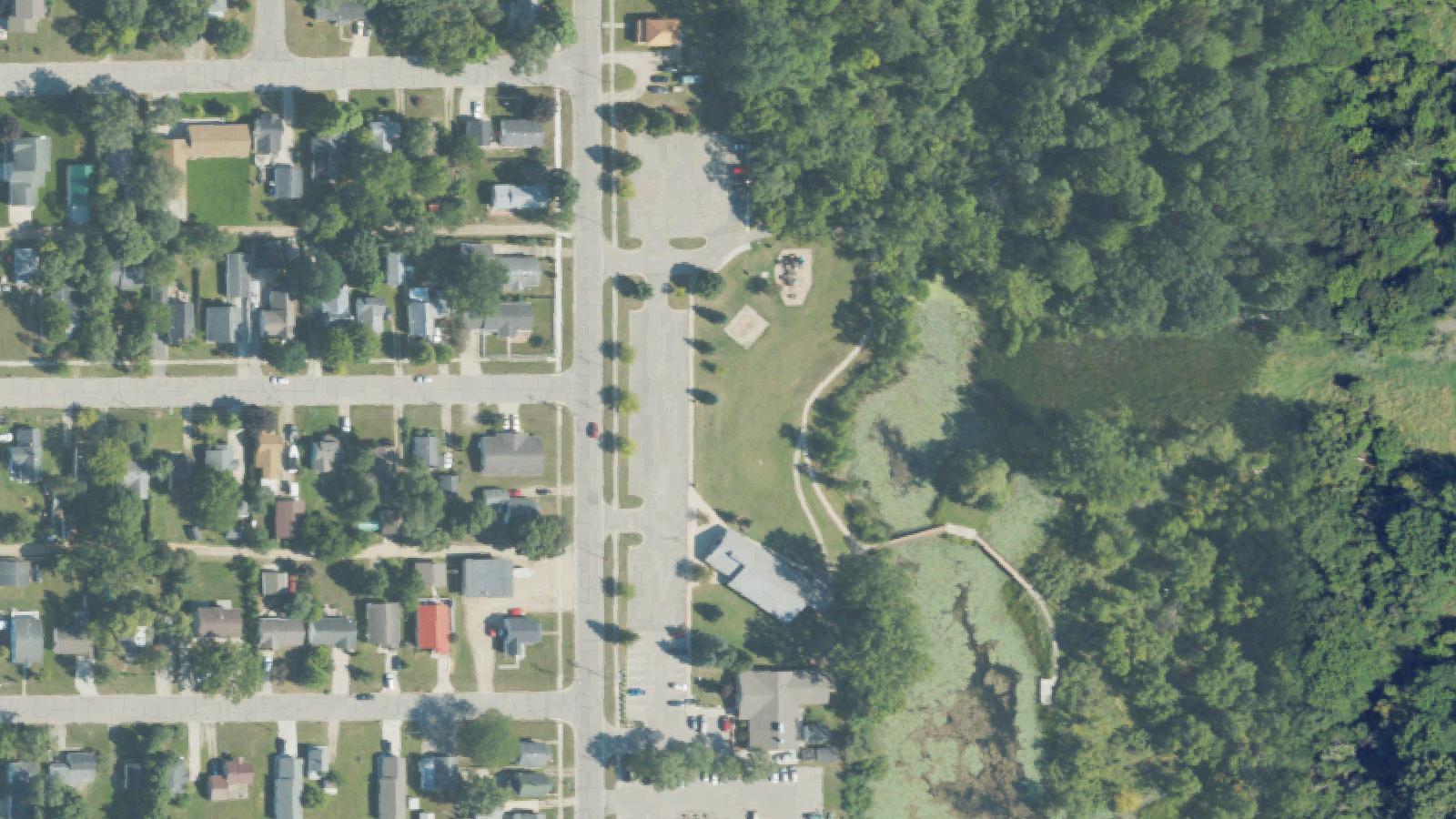
The park itself spans 90 acres of mostly wooded wetland in the geographic center of the city, bordered by Broadway Street to the north and High Street to the south. The Chippewa River runs the full length of the park. Today it includes a canoe landing, a 400-foot beginner whitewater course designed for novice paddlers, a fishing deck, barrier-free nature trails, a playground, a swimming beach off Leaton Street, and a rentable picnic shelter. Parking and the main entrance are at the south end on Adams Street, with a path connecting north across the road to the adjacent Nelson Park.
Mill Pond is the centerpiece of Mount Pleasant's parks-and-recreation programming and is the venue for periodic community events through the spring, summer, and fall.
Sources
- https://www.mt-pleasant.org/business_detail_T13_R15.php
- https://meetmtp.com/places/mill-pond-park/
- https://cms2.revize.com/revize/mtpleasant/parks/Millpond%20Park.pdf
- https://www.alltrails.com/trail/us/michigan/mill-pond-park-loop-trail
- https://www.ghostquest.net/blog/top-3-most-haunted-places-in-mount-pleasant-michigan
Shadow figuresApparitionsPhantom voicesTouching/pushing
Mill Pond Park's folklore is geographically diffuse. The reports are not anchored to a specific structure or feature, which is unusual for a haunted-place tradition; they cluster around the wooded interior of the park rather than the dam, the rapids course, or the picnic areas.
The oldest version of the story, repeated in the original Shadowlands entry, describes silent figures with dimly red eyes seen at the edge of the wooded sections after dark. Aggregator listings expand on this framing with reports of unexplained whispers and a sense of being watched or followed during evening walks. A handful of accounts mention scratches found on visitors' arms or claw-mark patterns appearing in photographs taken at the park, attributed to encounters with unseen entities.
None of these reports have been published by an organized investigation team. The site is open during daylight hours and is heavily used by Mount Pleasant residents for paddling, fishing, swimming, and family programming. The folklore is best understood as a local tradition layered onto an otherwise unremarkable urban park.