Oldest Inn in Wisconsin · Cornish Mining Heritage · Iowa County Frontier Justice · National Historic District
The land under Walker House was first worked by Cornish miners in the 1820s, when they carved caves directly into the limestone and sandstone rock of Mineral Point. Those caves — accessible today as part of the inn's Cornish Pub — predate the building above them by a decade.
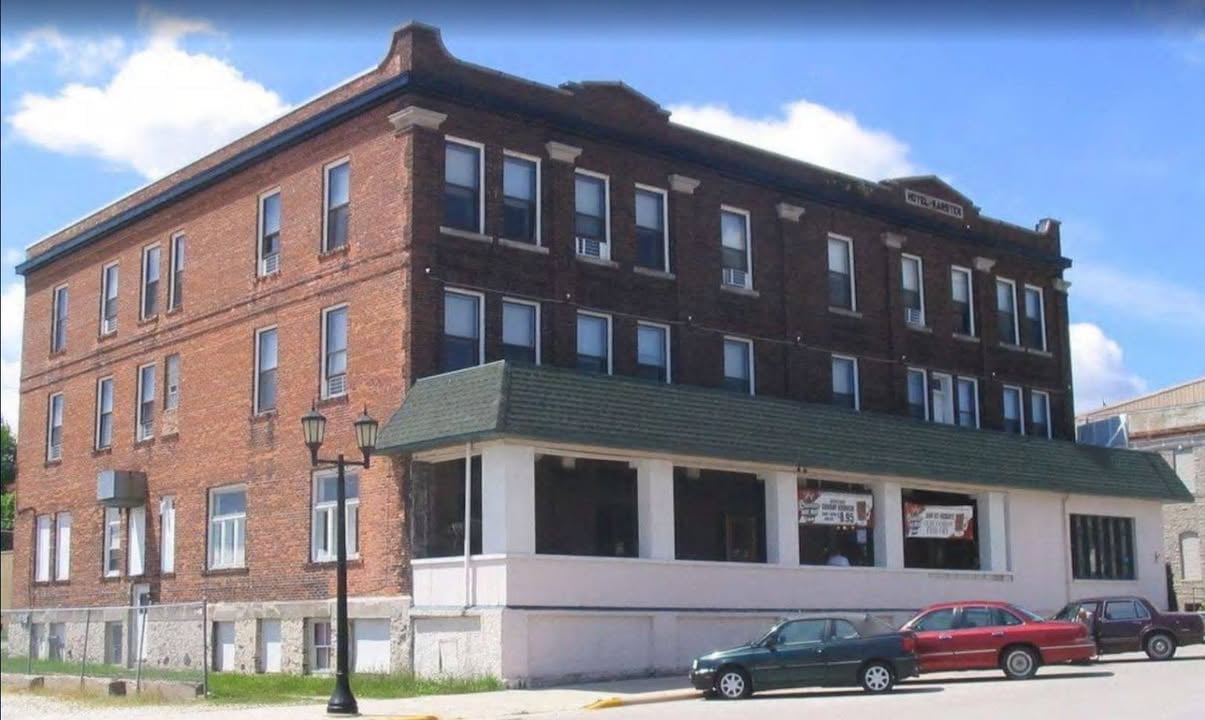
William Walker acquired the lots in 1845, began building a home by 1848, added a tavern in 1857 and a boarding house by 1859, and opened a stone hotel in 1862. By the late 1850s, the structure had grown to a three-story, 15,000-square-foot building serving as a lodging house for miners and travelers moving through Iowa County.
The single event most cited in the building's history occurred on November 1, 1842, when a man named William Caffee was hanged from a scaffold erected in the inn's yard. Caffee had been convicted of shooting another man during a dispute. Historical accounts note the condemned man was brought to the inn on his own coffin, reportedly marking the occasion with empty beer bottles. His subsequent execution in the inn's yard established the building's connection to the most visible form of frontier justice.
The inn closed in 1957 and sat vacant through 1964, subject to vandalism and deterioration, before Ted Landon purchased the property and began restoration. It reopened as a tavern and inn in 1974. A 1978 sale brought Dr. David Ruf as owner with Walker Calvert managing the property. The current owners, Dan and Kathy Vaillancourt, have continued the inn's operation and its role as one of Mineral Point's central institutions.
Walker House was named by the Food Network as one of the spookiest restaurants in Wisconsin. It remains among the most booked inns in the surrounding area, according to the owners.
Sources
- https://en.wikipedia.org/wiki/Walker_House_(Mineral_Point,_Wisconsin)
- http://thewalkerhouse.org/lodging/
- https://www.mineralpoint.com/list/member/walker-house-138
- https://www.foodnetwork.com/restaurants/wi/the-walker-house-restaurant
- https://www.scribd.com/document/716665081/Haunted-inn-Wisconsin
- https://hauntedsalem.wordpress.com/2020/12/02/the-walker-house/
ApparitionsCold spotsPhantom soundsPhantom footstepsPhantom voicesDoors opening/closingPoltergeist activity
The paranormal record at Walker House is notable for its specificity and the number of reported presences. Owner Kathy Vaillancourt has stated that psychics and paranormal investigators working the building over its modern operating history have identified 22 distinct presences.
William Caffee, hanged in the inn's yard on November 1, 1842, is the most frequently cited identity. The mischief attributed to him is deliberately inconvenient rather than threatening: locking employees in the walk-in freezer, turning doorknobs without opening doors, generating sounds of heavy breathing on the second floor. Poltergeist activity in the main dining room and kitchen — objects displaced, surfaces disturbed — has been reported by multiple staff members.
The structure's layered history gives it multiple potential origins for unexplained phenomena. The Cornish miners' cave spaces beneath the inn predate the above-ground building by a decade. The scaffold stood in the yard. Decades of miners, travelers, and frontier residents passed through rooms that are now guest accommodations.
Visible evidence of the building's unease: floating heads seen by witnesses, cold gusts in enclosed spaces, voices from rooms confirmed empty. These accounts do not derive from a single source but from recurring independent reports across the building's modern operation.
The inn's dual identity — one of Wisconsin's most historically significant structures and its most frequently visited haunted inn — has made it a destination for both heritage travelers and paranormal investigators. The owners position both equally on the property's marketing.
Notable Entities
William Caffee
Media Appearances
- Haunted Heartland (2nd ed.), by Michael Norman — chapter 'Return of the Hanged Man' (Mineral Point) (University of Wisconsin Press) (2017)