Est. 1796 · First chartered private nonprofit cemetery in the United States (1797) · Early American planned-cemetery layout predating the rural-cemetery movement · Henry Austin's 1845 Egyptian Revival gateway, a leading U.S. example of the style · National Historic Landmark (2000)
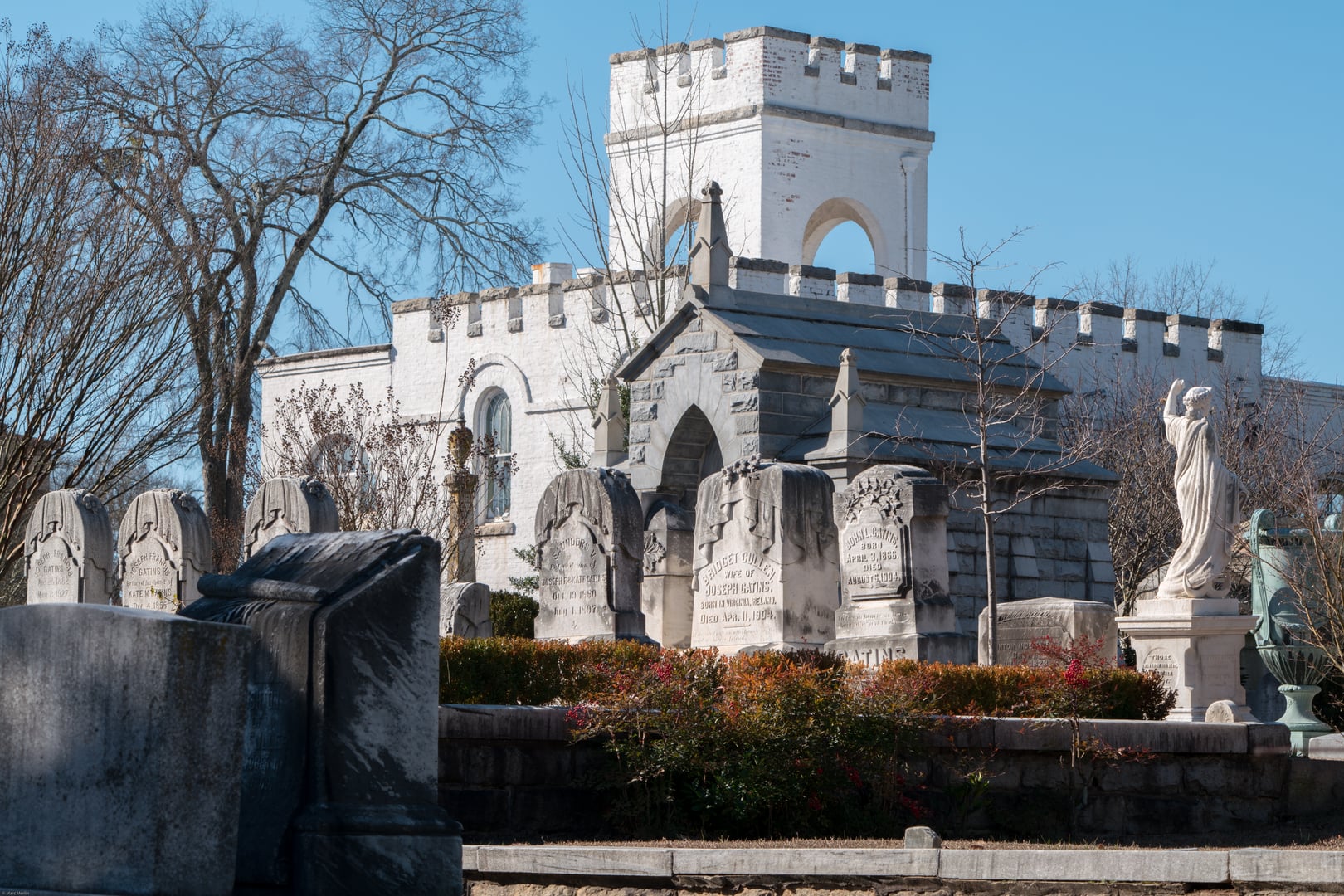
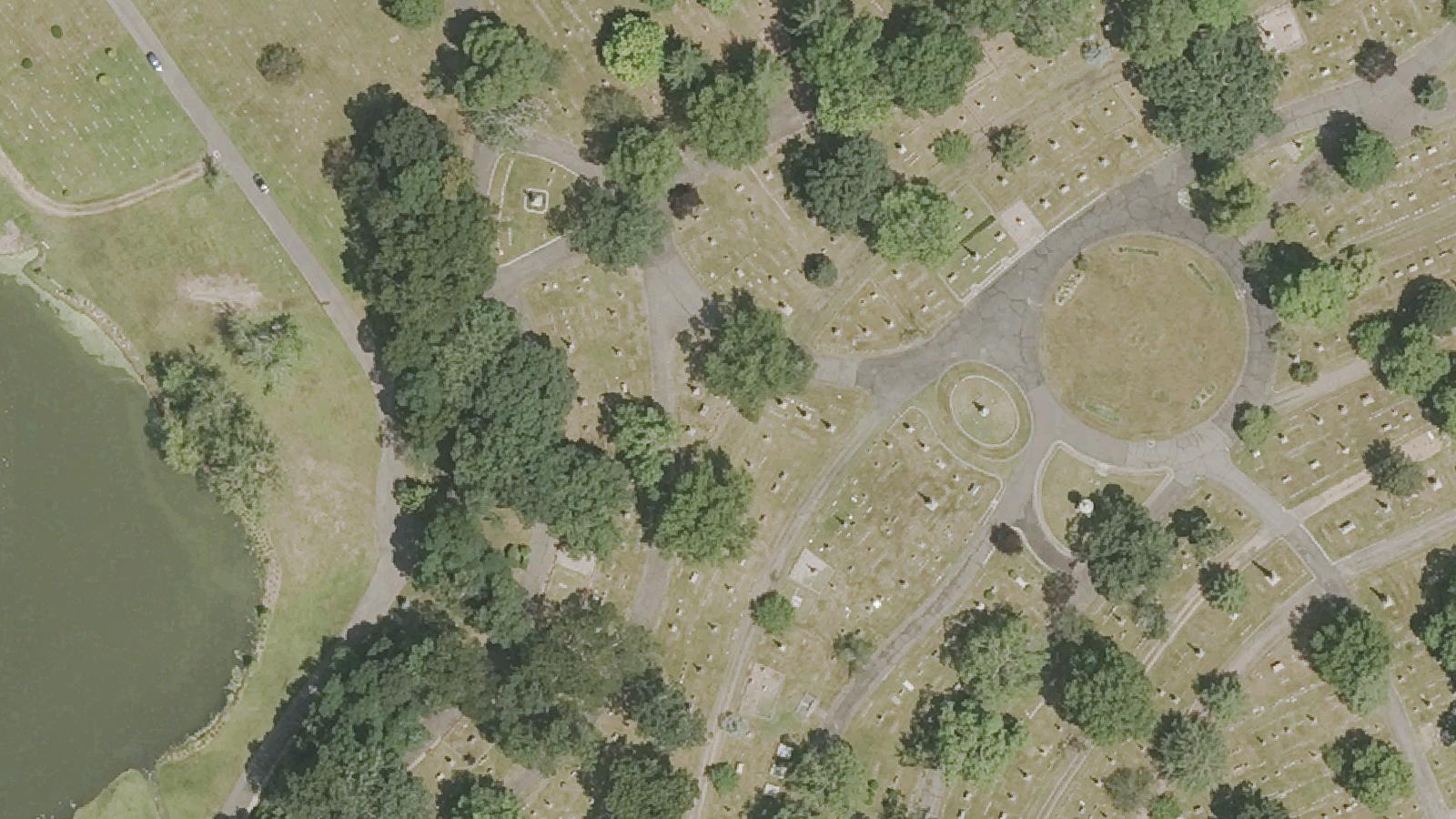
Grove Street Cemetery was organized in 1796 at the initiative of U.S. Senator and New Haven businessman James Hillhouse, who invited other prominent families to establish a planned burial ground on farmland just outside the colonial town. It was incorporated in October 1797 to relieve the crowded burial ground on the New Haven Green, and is widely cited as the first private, nonprofit cemetery chartered in the United States. From the outset, the grounds were laid out with permanent family plots, ornamental plantings, and paved and named avenues — a layout that anticipated the rural-cemetery movement by several decades.
The Egyptian Revival entrance gateway facing Grove Street was designed by New Haven architect Henry Austin in 1845, with carving executed by sculptor Hezekiah Augur. Austin used Egyptian motifs because their funerary associations were considered fitting; the pylon lintel carries the inscription 'The Dead Shall Be Raised' (1 Corinthians 15:52), a Christian gloss on what contemporaries regarded as a pagan architectural language. Above the inscription is a winged orb flanked by two uraei. The gate is one of the leading surviving examples of the Egyptian Revival in the United States.
The cemetery is bounded on three sides by the Yale University campus and contains the graves of Eli Whitney, Noah Webster, Roger Sherman, Walter Camp, and a long list of Yale presidents and faculty. In 2000 the cemetery was designated a National Historic Landmark for both its architectural and its planning significance.
Sources
- https://en.wikipedia.org/wiki/Grove_Street_Cemetery
- https://www.grovestreetcemetery.org/overview
- https://sah-archipedia.org/buildings/CT-01-009-0029
- https://nhpt.org/grove-street-cemetery
General sense of presence near the Egyptian Revival gatewayAtmospheric / liminal impressions reported by ghost-walk participants
Local folklore collected on the New England Folklore blog records a 19th-century legend that Yale medical students dug tunnels into Grove Street Cemetery to acquire cadavers for dissection in an era when legal supply was scarce; the story circulated for decades alongside national 'resurrection man' panics of the period. The blog frames the tale as folklore rather than documented fact.
A second strand of lore, repeated by US Ghost Adventures and other New Haven ghost-walk operators, claims Yale secret societies hold nighttime gatherings among the headstones. None of these accounts are documented in newspaper reporting; they circulate as oral tradition and tour-guide narrative.
The cemetery itself is included as a stop on the long-running New Haven ghost walks, where guides emphasize the Egyptian Revival gateway's biblical inscription, 'The Dead Shall Be Raised,' as setting the tone for the visit. Reported phenomena at the cemetery itself are diffuse — atmospheric impressions and a general sense of presence — rather than specific apparition stories tied to named individuals.