Self-Guided Visit
Visit Midnight Mary's grave
Locate the pink-granite Hart monument and read the unusual full-narrative inscription that has fueled local legend for over 150 years.
- Duration:
- 30 min
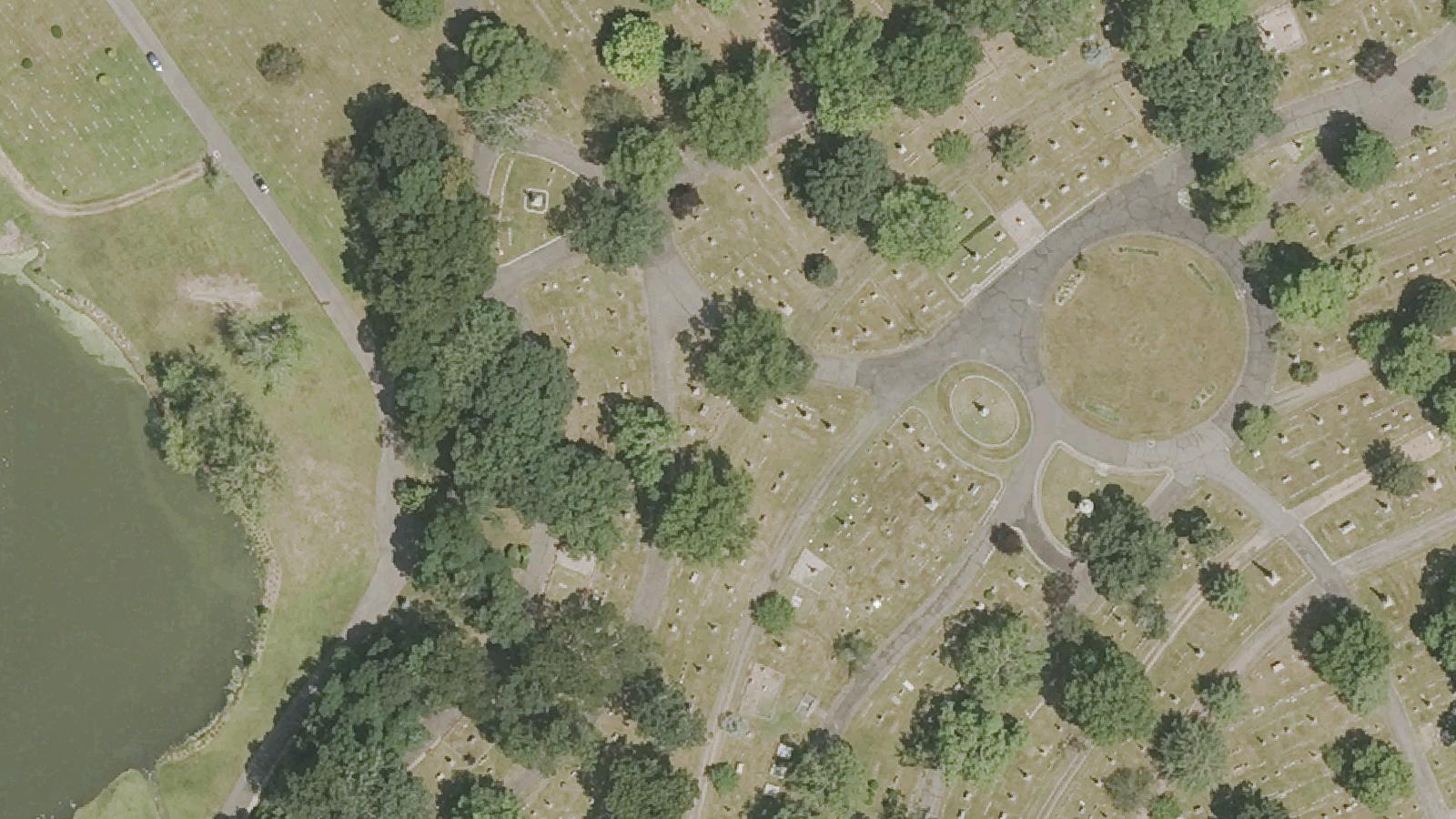 Aerial survey · USDA NAIP · public domain
Historic 1872 New Haven cemetery whose most famous monument — the pink granite grave of Mary E. Hart — carries an unsettling Job 34:20 epitaph that local lore has reread as a curse since the late 19th century.
769 Ella T. Grasso Boulevard, New Haven, CT 06519
Research updated May 2026
Age
All Ages
Cost
Free
Free to visit during posted cemetery hours.
Access
Wheelchair OK
Paved drives with grass shoulders.
Equipment
Photos OK
Est. 1872 · Historic west-New Haven cemetery, active since the mid-19th century · Mary E. Hart monument with unusual narrative inscription (1872) · Cataloged in Yale University's Yale Inscriptions project
Evergreen Cemetery occupies a long parcel on what is now Ella T. Grasso Boulevard on the west side of New Haven. By 1872 it was already an active burial ground used by middle-class New Haven families. Mary E. Hart — by surviving family accounts likely a seamstress — was born December 16, 1824 and lived an otherwise unremarkable New Haven life. On October 15, 1872, at approximately noon, she collapsed suddenly while preparing for her day's work. She remained unconscious until her death later the same day, and was buried in Evergreen.
Her monument is a pink granite stone unusual for its narrative inscription, which reads in part: 'At high noon, just from, and about to renew her daily work, in her full strength of body and mind, Mary E. Hart, having fallen prostrate, remained unconscious, until she died at midnight.' Beneath the biographical text is an abridged passage from Job 34:20: 'The people shall be troubled at midnight and pass away.' The combination of the precise hour of death and the somber biblical citation is what gave the grave its enduring local fame.
The Evergreen Cemetery Association continues to operate the grounds as an active cemetery, and the Hart monument remains in its original location. The grave is documented in the Yale University 'Yale Inscriptions' project, which catalogs notable New Haven epitaphs.
Sources
According to folklore documented by Damned Connecticut, the New England Folklore blog, and Yale Inscriptions, two related legends attach to Mary E. Hart's monument. The first claims that Hart's sudden collapse was misdiagnosed as death — possibly a stroke or catalepsy that mimicked death in a pre-modern medical era — and that she was buried alive. A version of the tale says her family, troubled by a dream in which she pleaded for help, exhumed the coffin and found evidence she had revived in the grave. The Yale Inscriptions project notes this 'premature burial' motif is a recurring 19th-century folkloric pattern and is not supported by contemporary newspaper accounts.
The second strain, recounted by New England Folklore, casts Hart as a vanishing hitchhiker: her ghost is said to be encountered along Winthrop Avenue at night, sometimes asking for a ride to her former home, and disappearing before the destination. Both strands of lore reframe the Job 34:20 inscription as a curse — local tradition warns that disturbing the grave after midnight invites misfortune or sudden death.
The Hart grave is a regular stop on New Haven's ghost walks. No reported phenomena tied to the grave have been documented in newspaper reporting; the lore is folkloric, oral, and tour-guide tradition.
Notable Entities
Media Appearances
Locate the pink-granite Hart monument and read the unusual full-narrative inscription that has fueled local legend for over 150 years.
Some links on this page may earn HauntBound a small commission when you book, at no extra cost to you. Our editorial picks are independent. Full disclosure
Every HauntBound history is researched from documented sources. We clearly separate verified historical fact from paranormal folklore.
Free Guide
10 verified stops, rated for families, mapped in order. Free.
One email to confirm, then the guide link. Unsubscribe anytime.
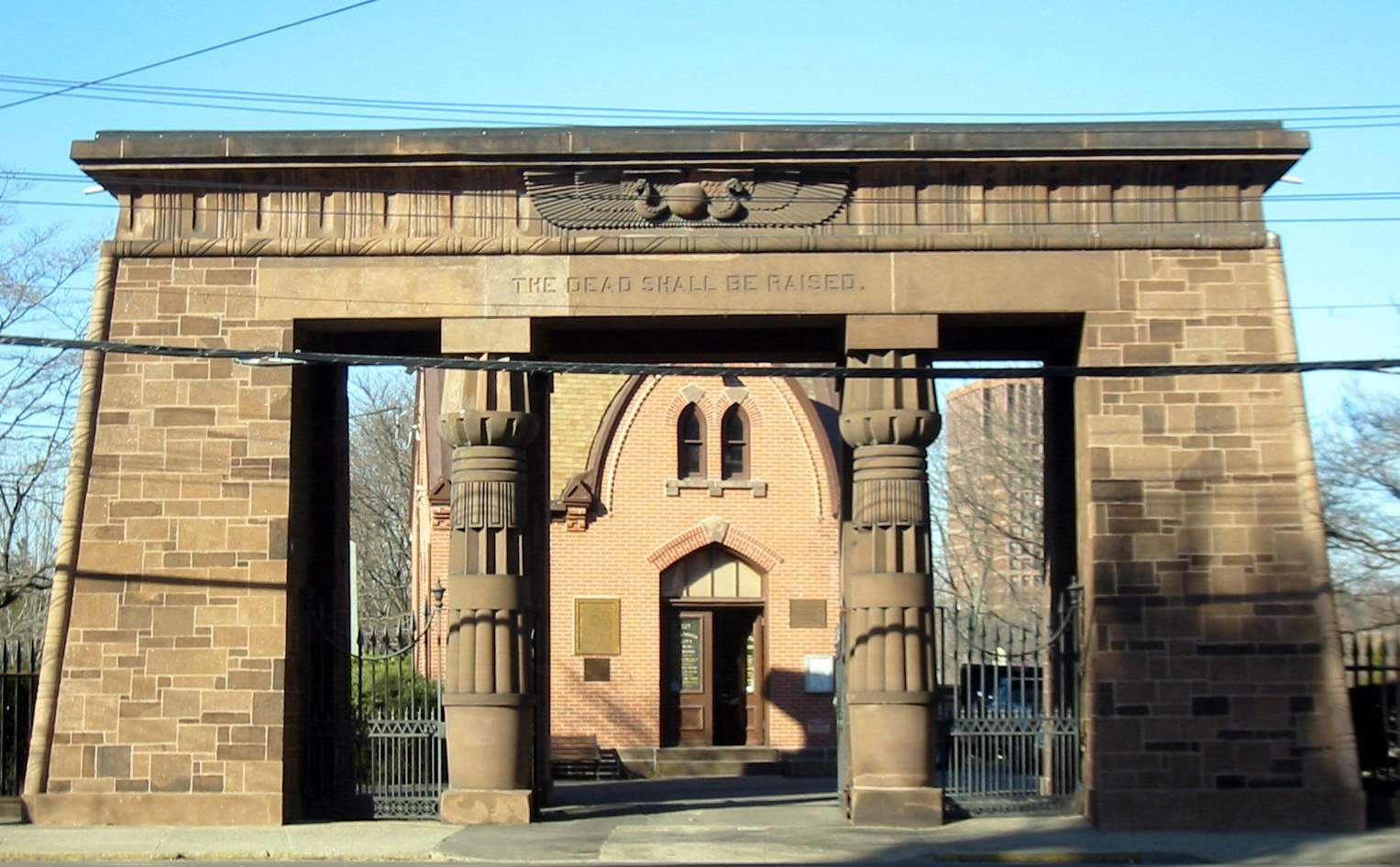
New Haven, CT
Grove Street Cemetery was organized in 1796 as the New Haven Burying Ground and incorporated in October 1797, the first chartered private nonprofit cemetery in the United States. Its 1845 Egyptian Revival brownstone gateway, designed by New Haven architect Henry Austin and carved by Hezekiah Augur, is a leading example of the style in America. The cemetery was designated a National Historic Landmark in 2000.
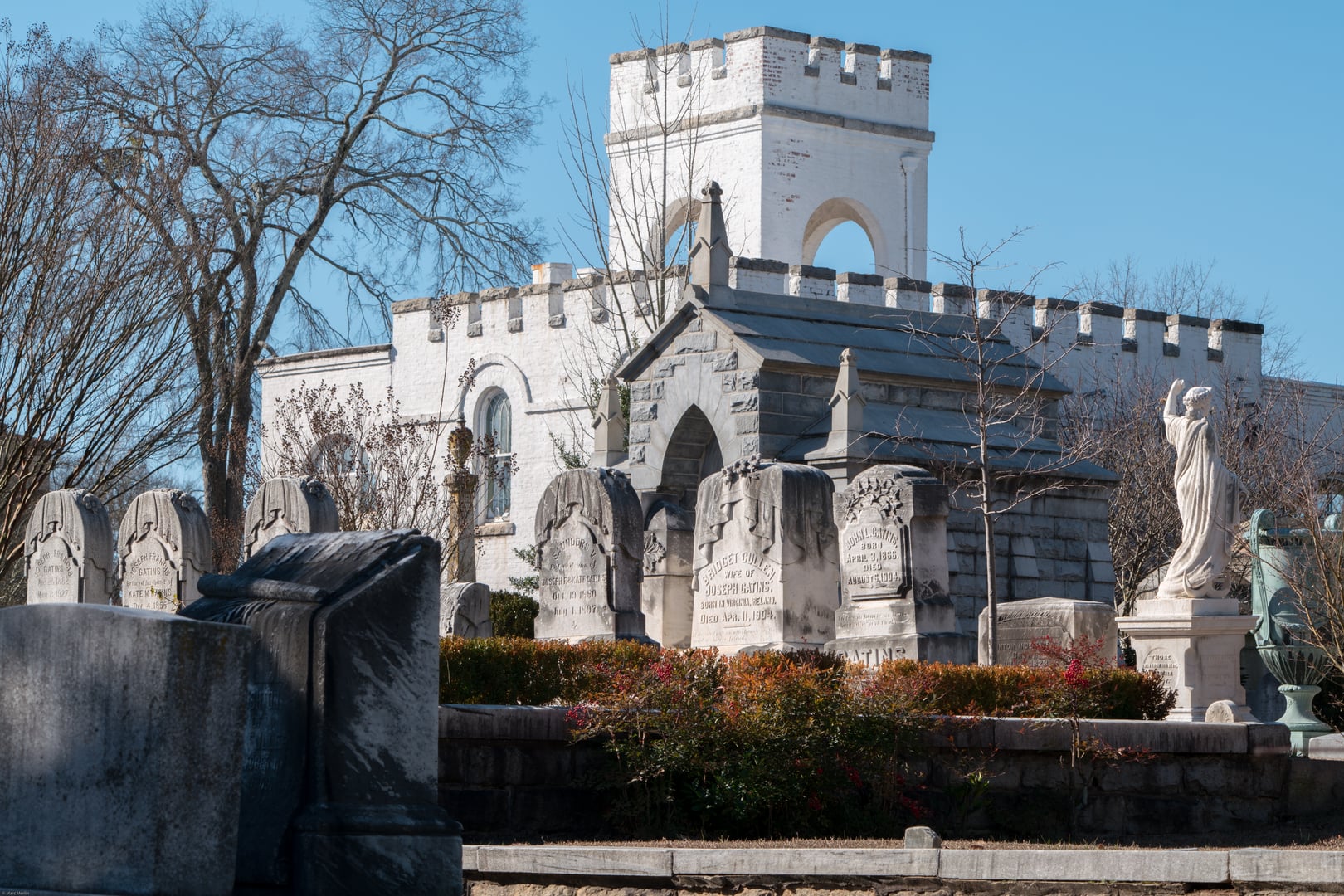
Atlanta, GA
Historic Oakland Cemetery was chartered in 1850 as the six-acre 'Atlanta Cemetery,' renamed Oakland in 1872, and expanded to 48 acres. Approximately 70,000 people are interred, including roughly 6,900 Confederate soldiers (3,000 unidentified), four Confederate generals, six Georgia governors, 27 Atlanta mayors, Margaret Mitchell, golfer Bobby Jones, and Maynard Jackson, Atlanta's first African American mayor. The cemetery was listed on the National Register of Historic Places on April 28, 1976.
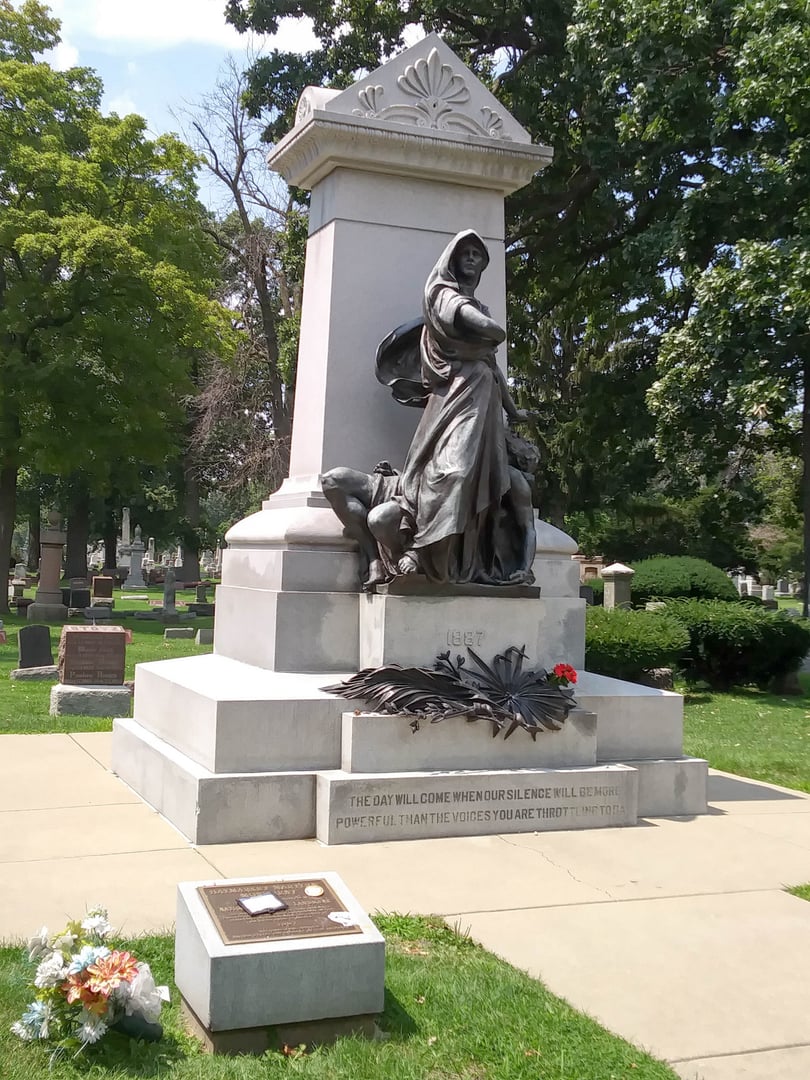
Forest Park, IL
Forest Home Cemetery in Forest Park, Illinois, grew from two adjacent cemeteries — German Waldheim (established 1873) and Forest Home (1876) — which merged in February 1969. The 220-acre site was chosen as a non-denominational burial ground, a policy that made it the only Chicago-area cemetery willing to accept the bodies of the Haymarket defendants in 1887.