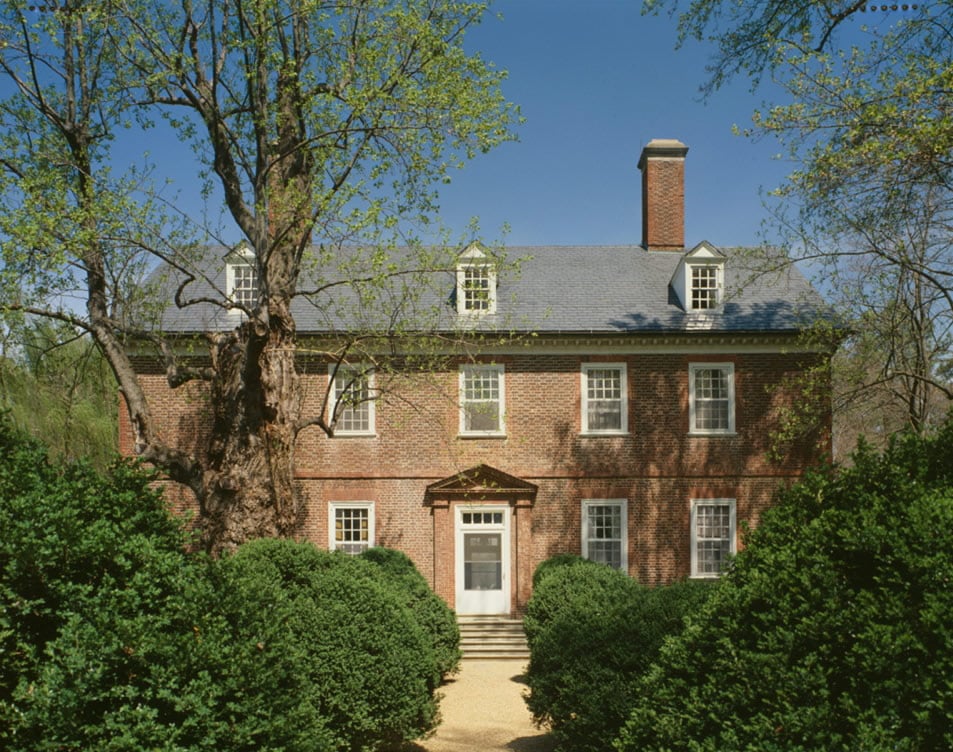
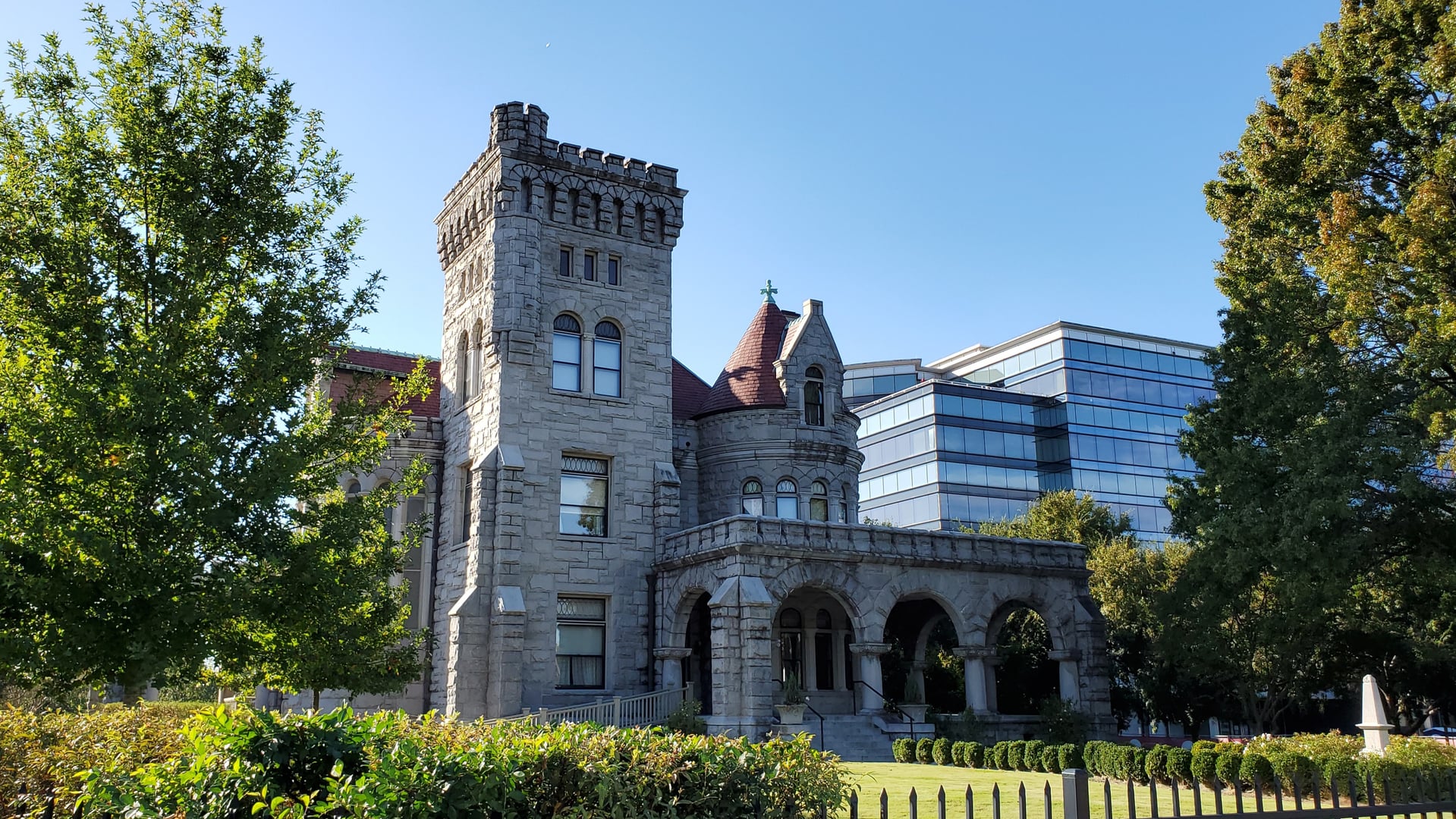
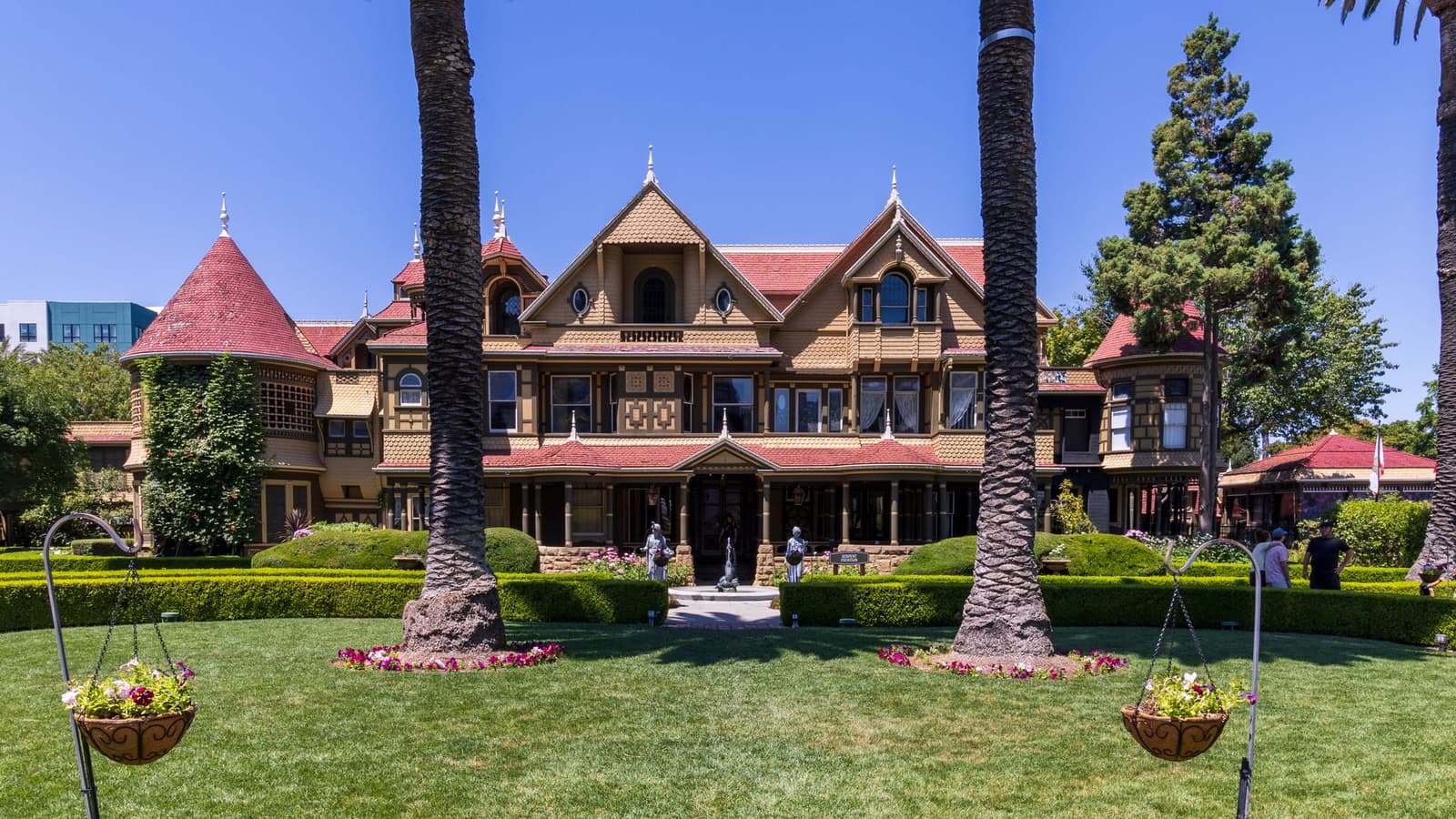
Est. 1892 · National Register of Historic Places · Black Hills Mining-Era Architecture · Eisendrath Queen Anne Design
Harris and Anna Franklin commissioned Chicago architect Simeon D. Eisendrath to design a Queen Anne residence on Van Buren Street overlooking the booming Black Hills mining town of Deadwood. Completed in 1892, the home featured radiant heat, running water, electric service, and a private telephone line — state-of-the-art domestic technology for the era. Contemporary Deadwood newspapers described the residence as the grandest house west of the Mississippi.
Harris Franklin died in 1923; Anna had predeceased him. Their son Nathan ran the family commercial holdings and was elected Deadwood mayor in 1914, defeating incumbent William E. Adams. In 1920 Adams — the merchant and former mayor he had unseated — purchased the Franklin home together with his wife Alice; they bought it during his return term as mayor (1920–1924). In June 1925, while Alice was in California for the birth of their first grandchild, she died of cancer; their daughter Helen, distraught at the loss, died the following day in early labor, along with the infant. These losses came five years after the purchase. Adams remarried in 1927 to Mary Mastrovich; he suffered a stroke at a bank board meeting on June 7, 1934, and died nine days later. Mary lived in the home until her own death, preserving the contents intact.
In 1992 the Deadwood Historic Preservation Commission acquired the property and restored it as a house museum. More than 80 percent of the furnishings are original to the Adams family — preserved largely because Mary Adams retained the contents intact after W.E.'s death. The house is operated by Deadwood History, Inc., and is listed on the National Register of Historic Places.
Sources
- https://www.deadwoodhistory.com/about-us/properties/historic-adams-house/
- https://www.cityofdeadwood.com/historic-preservation/page/historic-adams-house
- https://usghostadventures.com/deadwood-ghost-tour/adams-house/
- https://www.cityofdeadwood.com/hpc/page/william-emery-adams
- https://www.kotatv.com/content/news/Historic-Adams-House-combines-history-paranormal-activity-496636011.html
- https://www.bhparanormal.com/historic-adams-house-investigation/
- https://www.hauntedrooms.com/south-dakota/ghost-hunts/historic-adams-house
- https://www.everythingsouthdakota.com/historic-adams-house-deadwood-south-dakota/
- https://www.kotatv.com/2021/10/26/an-investigation-into-adams-house-hauntings/
- https://www.deadwood.com/event/paranormal-investigations-of-the-adams-house/
ApparitionsShadow figuresObject movementPhantom smellsLights flickeringResidual haunting
Adams House staff have collected paranormal accounts continuously since the museum opened in the mid-1990s. The most-cited phenomena cluster around William E. Adams, the Deadwood mayor and merchant who bought the house in 1920 and died there in 1934. A museum director recorded an incident in which lights came back on in the closed building after she had switched them off and confirmed with staff that no one remained inside. On a separate evening she described seeing the shadow of a tall thin man pacing in an upstairs window from the parking lot below. The cigar-smoke detail, Adams was a documented cigar smoker, appears in multiple staff accounts.
Mary Adams, William's second wife, who kept the house and its contents intact until her own death in 1993, is remembered for a rocking chair. Staff and visitors have observed it rocking on its own when the room was otherwise still, sometimes during tours when guides have called attention to it. The reports have continued long enough that the rocking-chair phenomenon is incorporated into the museum's standard tour narrative.
The family's history of cumulative loss — three children to childhood illness, the first Mrs. Adams, the Adams's only surviving daughter Helen, and the brief childhood of Helen's own child — gives the house a documented emotional weight. The Black Hills Paranormal Investigations group has published several investigation reports on Adams House activity, and US Ghost Adventures includes the house on its Deadwood ghost tour. Deadwood History, Inc., supports paranormal programming as a complement to the documentary tour, treating the reports as authentic visitor experience without endorsing supernatural interpretation.
Notable Entities
William E. AdamsMary Adams
Media Appearances
- Black Hills Paranormal Investigations published reports
- Regional television coverage (KOTA)