Est. 1950 · Yakima Valley Healthcare · Polio-Era Founding · Mid-Century Hospital
Yakima Valley Memorial Hospital was founded out of a single family's loss. In 1943, Yakima accountant Edwin B. Mueller's daughter Carol was diagnosed with severe polio and admitted to the children's ward at St. Elizabeth's Hospital, then Yakima's only inpatient medical facility. Carol died, and her father resolved that no other Yakima parent should be separated from a critically ill child for lack of hospital capacity.
The articles of incorporation as a nonprofit charitable organization were filed in May 1944. Construction proceeded on a site in what was then the lower orchards just outside the Yakima city limits. The building was complete on June 3, 1950, and the hospital opened to patients on June 20 of that year with 146 beds, 155 employees, and more than 200 volunteer auxiliary members.
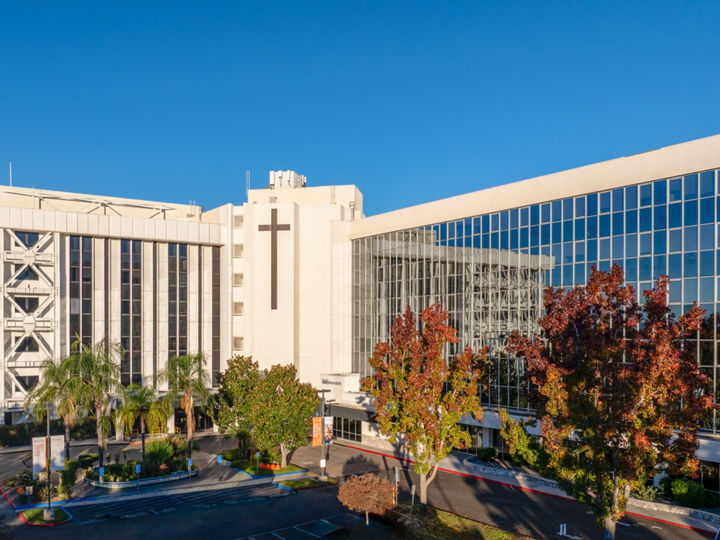
The hospital expanded steadily through the second half of the twentieth century. In 2016, following an affiliation with Virginia Mason Medical Center in Seattle, Yakima Valley Memorial Hospital became Virginia Mason Memorial Hospital. A merger with MultiCare Health Systems completed in 2023, and the facility operates today as MultiCare Yakima Memorial Hospital. The address remains 2811 Tieton Drive.
Sources
- https://en.wikipedia.org/wiki/Yakima_Valley_Memorial_Hospital
- https://www.yakimaherald.com/news/local/happened/it-happened-here-yakima-valley-memorial-hospital-opens-in-1950/article_42d9b9aa-d8f4-51c0-9778-78685f0712e3.html
- https://www.multicare.org/find-a-location/multicare-yakima-memorial-hospital/about/
ApparitionsCold spotsDoors opening/closingEquipment malfunctionPhantom voicesShadow figures
The Yakima Memorial folklore concentrates on two interior locations within the older sections of the hospital. The first is a single elevator described in multiple staff accounts as moving between floors without occupants. Witnesses report the elevator doors opening and closing on their own and unexplained cold drafts within the car when they ride it.
The second cluster of reports centers on the corridor near the morgue. Staff describe the sense of being observed when no one is present, and peripheral motion at the edge of vision: a figure walking, running, or sitting that resolves into nothing when the witness turns to look directly. Visitors and patients elsewhere in the hospital have reported isolated incidents of disembodied voices and unexplained presences.
One published anecdote describes a patient struggling with a bathroom door who felt a calming presence and assistance from an unseen man, only to discover afterward that the door in the configuration described did not exist. Accounts of this type circulate in Pacific Northwest paranormal compilations rather than in the hospital's official communications. As an active medical center, MultiCare Yakima Memorial does not host paranormal investigation, and folklore is not part of the hospital's public-facing identity.