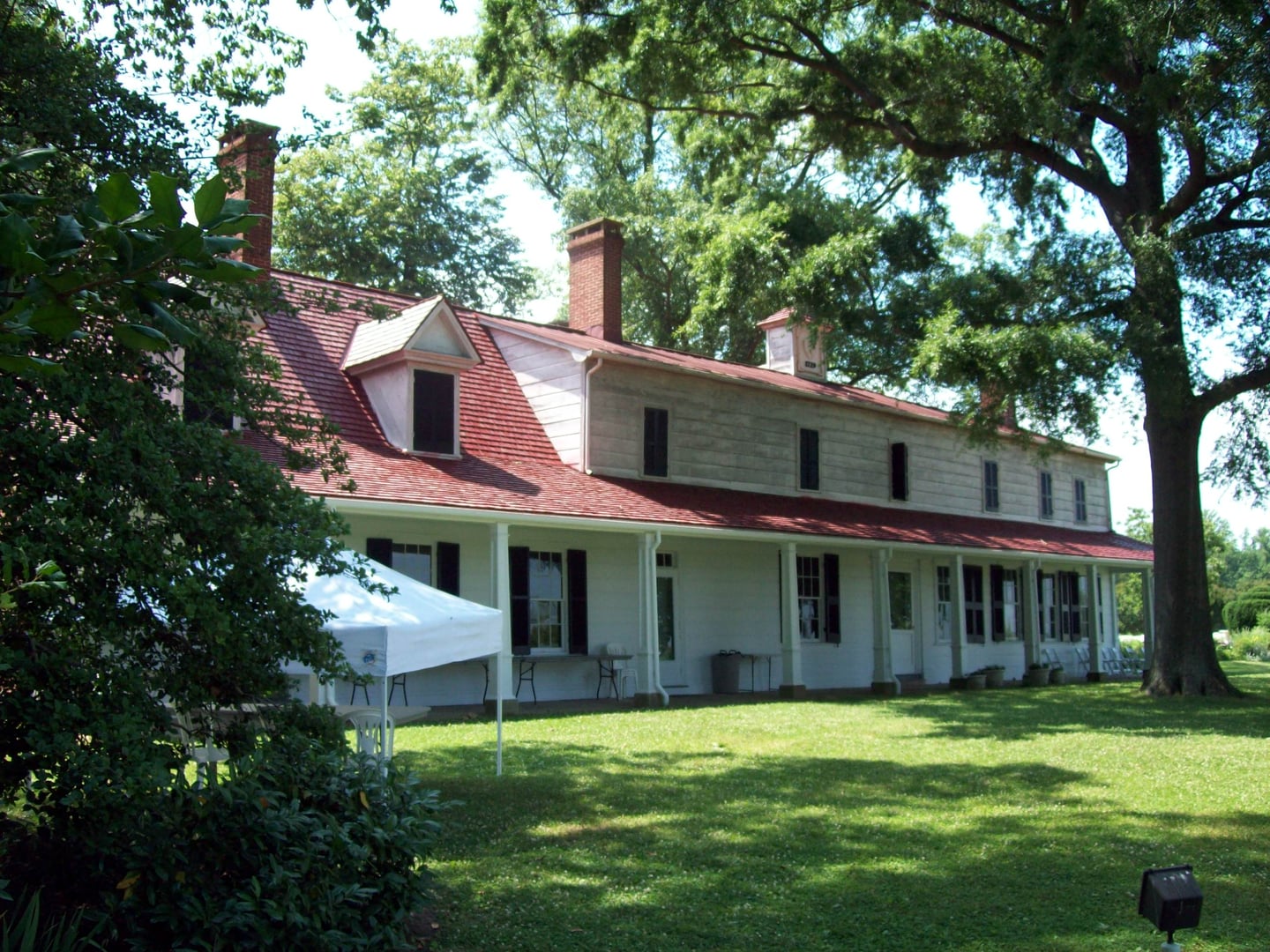
Est. 1759 · George Washington's Cambridge headquarters (July 1775 – April 1776) · Home of Henry Wadsworth Longfellow (1837–1882) · Site of Longfellow's poem 'Haunted Houses' (1858) · National Historic Site (NPS unit since 1972)
The Georgian mansion at 105 Brattle Street was built in 1759 for John Vassall, a 21-year-old member of a wealthy Loyalist West Indies sugar-trading family. The Vassalls fled to Boston at the outbreak of the Revolution and the house was confiscated by the Patriot Committee of Safety.
In July 1775, after George Washington took command of the Continental Army on Cambridge Common, he moved into the house and established it as his headquarters. He occupied it from July 16, 1775 until April 4, 1776, planning the Siege of Boston from its rooms. Martha Washington joined him in Cambridge in December 1775.
After the war, the house passed through several owners. In 1837 a young Harvard professor named Henry Wadsworth Longfellow rented rooms in the house; in 1843 he married Frances 'Fanny' Appleton, and her father purchased the house as a wedding gift. Longfellow lived there for the remainder of his life and wrote much of his major work, including 'Paul Revere's Ride' (1860) and the 1858 poem 'Haunted Houses,' which was inspired by the building.
On July 9, 1861, Fanny Appleton Longfellow's summer dress caught fire when sealing wax or a candle ignited the fabric while she was sealing a lock of one of her children's hair. Longfellow was severely burned trying to extinguish the flames. She died of her injuries the following day, July 10, 1861. Longfellow never fully recovered emotionally; his iconic full beard concealed scars from the incident. He remained in the house until his own death in 1882.
The house was donated to the National Park Service by the Longfellow family in 1972 and is now administered as Longfellow House–Washington's Headquarters National Historic Site, preserving Longfellow-era furnishings, his library and study, and a significant manuscript and photograph archive.
Sources
- https://www.atlasobscura.com/places/longfellow-house
- https://www.literarytraveler.com/articles/the-longfellow-house/
- https://en.wikipedia.org/wiki/Longfellow_House%E2%80%93Washington's_Headquarters_National_Historic_Site
- https://www.nps.gov/long/learn/historyculture/fanny-longfellow.htm
Sensed presence of Fanny Appleton Longfellow
The Longfellow House is unusual among the Cambridge haunted sites in that its 'haunting' is partly self-authored by its most famous occupant. In 1858, Henry Wadsworth Longfellow wrote 'Haunted Houses,' a poem inspired by his own home. Its opening lines are among the most-quoted in American Gothic verse:
'All houses wherein men have lived and died
Are haunted houses. Through the open doors
The harmless phantoms on their errands glide,
With feet that make no sound upon the floors.'
Three years later, in July 1861, Fanny Appleton Longfellow died from a household fire while sealing a small lock of one of her children's hair with hot sealing wax — her summer dress ignited from the wax or candle. Longfellow himself was severely burned attempting to extinguish the flames. He grew his iconic full beard to conceal facial scars and is widely understood to have never fully recovered emotionally from the loss.
Per Atlas Obscura's entry on the house, the surviving family and subsequent visitors have reported feeling Fanny's presence in the rooms where she lived. The lore is gentle, melancholy, and protective rather than threatening. The literary frame supplied by Longfellow's own 1858 poem gives the site an unusually self-aware paranormal interpretation: the Longfellow household understood itself, in part, as a haunted house.
No dramatic apparition stories, specific named-witness incidents, or recurring sightings have been recorded in NPS interpretation; the lore lives in the conjunction of the poem, Fanny's tragic death, and the preserved domestic interior.
Notable Entities
Fanny Appleton Longfellow (1817–1861)Henry Wadsworth Longfellow (poet, 1807–1882)
Media Appearances
- 'Haunted Houses' (1858) by Henry Wadsworth Longfellow