Est. 1755 · Fort Ontario State Historic Site · Fort Ontario Emergency Refugee Shelter · Great Lakes port history
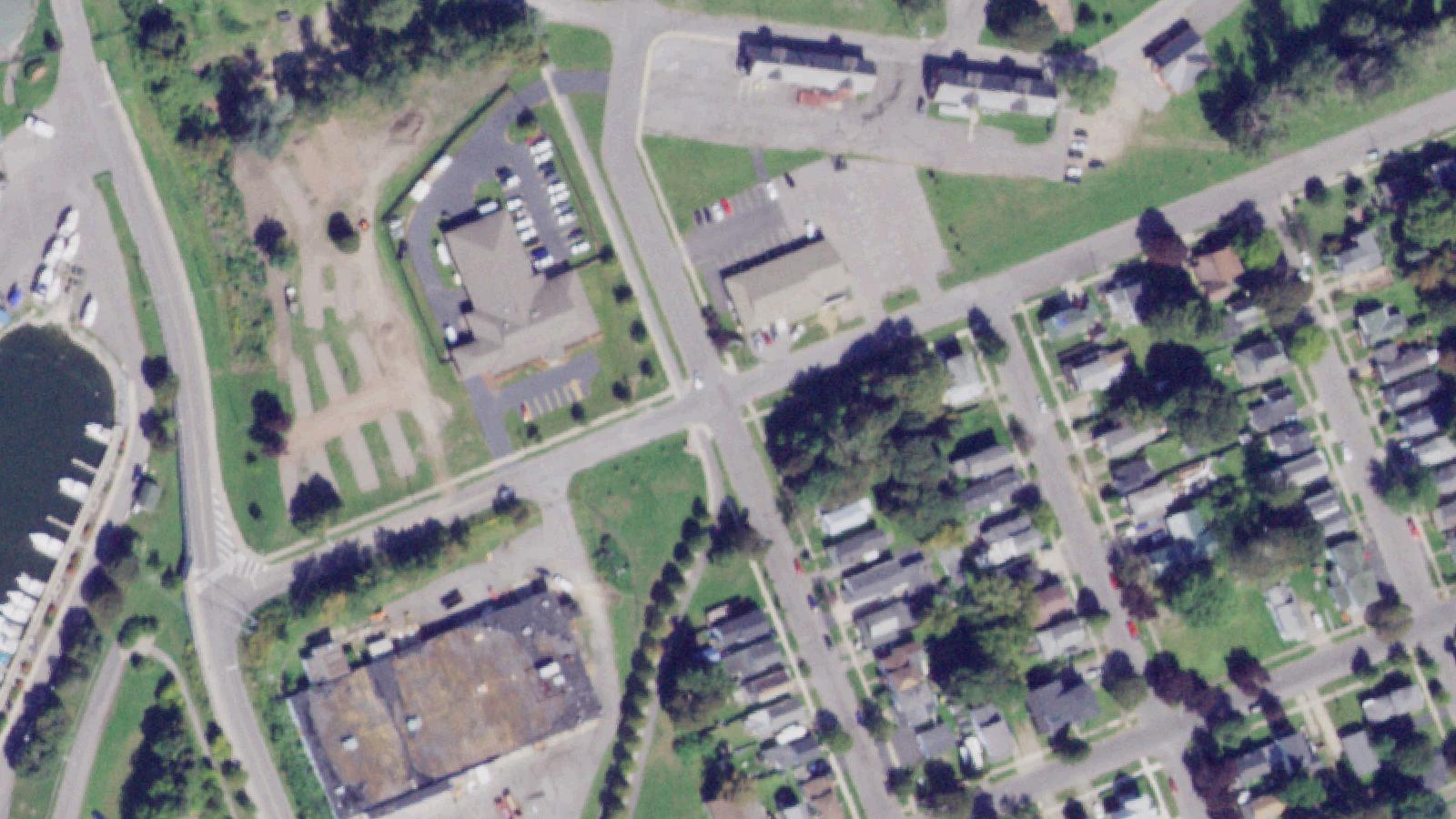
Fort Ontario was first built by the British in 1755 on a bluff overlooking the mouth of the Oswego River where it enters Lake Ontario. The fortification was destroyed and rebuilt several times during the French and Indian War, the American Revolution, and the War of 1812. The current star fort dates largely to a mid-19th-century rebuild, with later modifications during both World Wars. From 1944 to 1946 the site served as Fort Ontario Emergency Refugee Shelter, the only camp in the United States for European refugees during the Holocaust.
Oswego itself was a major Great Lakes port and rail hub during the 19th century. Rail lines ran along the waterfront to serve the harbor, lumber yards, and milling operations. The track behind the fort referenced in local lore is now disused; the broader rail and harbor infrastructure has been substantially removed or repurposed as the lakefront has been redeveloped for parks and public access.
Fort Ontario itself is a New York State Historic Site, open seasonally for tours, school programs, and ghost-themed events in October.
Sources
- https://hauntedhistorytrail.com/explore/fort-ontario-state-historic-site
- https://lite987.com/the-haunting-of-fort-ontario-in-oswego-ny-cny-paranormal/
- https://oswegonow.net/news/oswego-county/fort-ontario-and-its-haunted-history/
ApparitionsPhantom footsteps
The most consistently reported phenomenon along the rail bed is a small floating light that resembles a kerosene lantern, traveling at roughly walking pace. Witnesses have described the light from both Fort Ontario grounds and the surrounding neighborhood. Local accounts, including reporting by Oswego Now, place the figure of a soldier on the tracks behind the fort.
The original Shadowlands narrative escalates the figure into a Civil War soldier said to have been decapitated by a cannonball, walking the rails in search of his head. This specific framing is not corroborated by Fort Ontario's published interpretive history. Fort Ontario's well-documented ghosts, by comparison, include British Lieutenant Basil Dunbar, who lost a duel at the fort in 1759, and George Fikes, a Loyalist soldier who died in a 1782 fever epidemic. Neither is associated specifically with the lakeshore rail line.
The lantern light remains one of Oswego's enduring local stories, reported by visitors who have no prior connection to the fort's published lore.