Est. 1726 · Harvard's second-oldest surviving building · George Washington's first Cambridge headquarters, July 1775 · Memorial to enslaved people at Harvard (2016) · Old Cambridge Historic District contributing structure
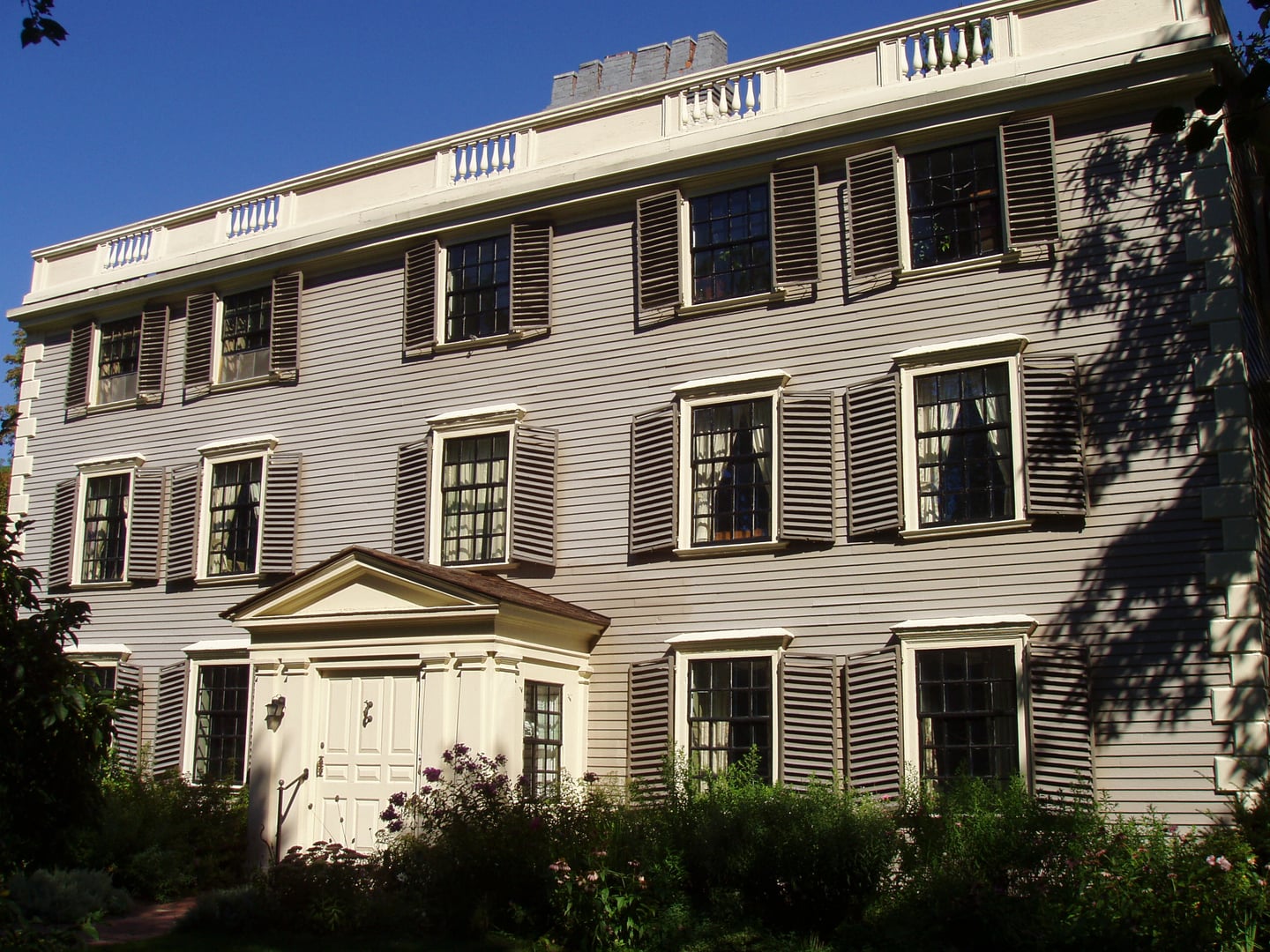
Wadsworth House was constructed in 1726 as a residence for Benjamin Wadsworth, Harvard's ninth president. The yellow clapboard structure faces Massachusetts Avenue at the edge of Harvard Yard and is the second-oldest surviving Harvard building, after Massachusetts Hall (1720). Nine Harvard presidents lived in Wadsworth House between 1726 and 1849, after which it was converted to office and faculty use.
During the Siege of Boston, General George Washington made Wadsworth House his headquarters for approximately two weeks in July 1775 after taking command of the Continental Army on Cambridge Common. He vacated the building in mid-July when the larger Vassall House on Brattle Street (the modern-day Longfellow House) became available. Wadsworth House continues to serve as offices for the Harvard Alumni Association and the Office of the University Marshal.
In April 2016, Harvard installed a bronze plaque at the building memorializing Titus, Venus, Juba, and Bilhah — four enslaved Africans who lived and worked at Wadsworth House under the households of Presidents Benjamin Wadsworth and Edward Holyoke during the 18th century. The marker resulted from a years-long research effort by the Harvard & the Legacy of Slavery Initiative (then the Slavery and Justice Project) and was unveiled by President Drew Faust and U.S. Representative John Lewis.
Wadsworth House is a contributing structure to the Old Cambridge Historic District and an anchor of Harvard's architectural memory, occupying the corner of Harvard Yard most visible to passing pedestrians on Massachusetts Avenue.
Sources
- https://news.harvard.edu/gazette/story/2014/10/harvards-haunted-houses/
- https://www.thecrimson.com/article/2023/10/29/ghosts-at-harvard/
- https://guides.library.harvard.edu/hua/wadsworthhouse
- https://legacyofslavery.harvard.edu/memorial-project/
- https://harvardindependent.com/harvard-ghost-stories/
- https://www.thecrimson.com/article/2019/10/31/ghost-town-harv-sq/
- https://www.harvardmagazine.com/harvard-history-traditions/wadsworth-house-harvard-history-enslaved-lives-washington
Apparition of a man in tricorn hat and cloakDisembodied throat-clearing sound
The most consistently reported phenomenon at Wadsworth House is a Revolutionary War-era figure descending the interior staircase. According to the Harvard Gazette's 2014 'Haunted Houses' feature, a cleaning lady working alone early one morning saw 'a grim character in a tricorn hat and cloak silently come down the stairs and go out the door.' The Harvard Crimson's 2023 campus ghost tour confirms multiple custodial sightings of 'a man in a tricorn hat and a cloak walk down the stairs and go out the door.' The figure does not appear to interact with witnesses.
A second account, published in the Harvard Gazette, comes from an IT specialist who reported being alone in the building late at night when he heard someone clear their throat — with the door immediately behind him closed and no one else on the floor. Both sightings have circulated in Harvard student folklore since the late 20th century and are routinely cited on Cambridge ghost tours.
The building's Revolutionary War association with George Washington's brief 1775 occupancy provides the historical anchor most often invoked to explain the tricorn-hat figure, though the witnessed garb is not specifically attributed to any named occupant. The lore is single-source in its specifics (the original Crimson account dates to 1997, with later reporting drawing on it) and Wadsworth House is not open to the public for paranormal investigation.
Notable Entities
Unidentified colonial-era figure (tricorn hat and cloak)