Est. 1897 · Victorian Civic Architecture · World War II Home Front · Depression-Era Community Center · Historic Theater Preservation
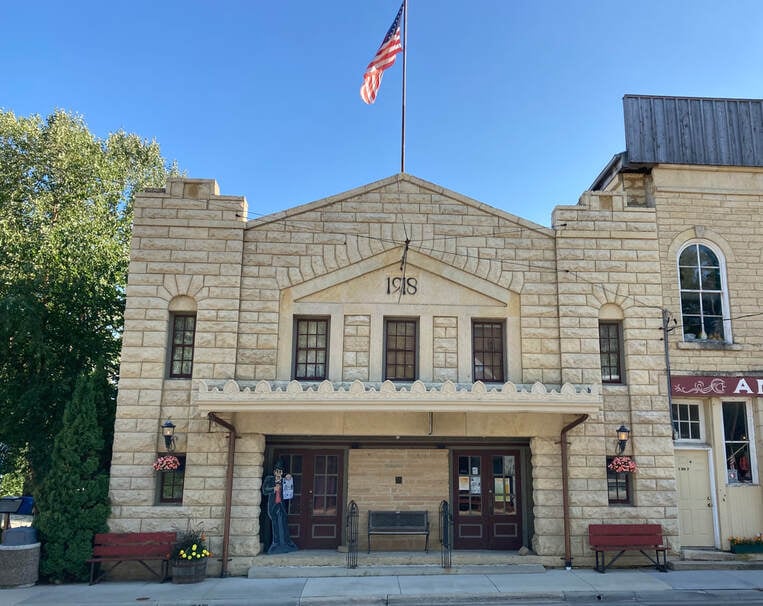
The Lancaster Opera House occupies a conjoined town hall and performance space at 21 Central Avenue in Lancaster, New York, constructed in 1897 to a design by Erie County architect George J. Metzger. The building's early programming centered on dances, recitals, commencement ceremonies, and traveling shows. By the 1920s and 1930s, musicals and minstrel shows were the primary draws.
During the Depression, the hall's identity shifted. The auditorium became a distribution point for food and clothing for Lancaster's struggling residents. During World War II, the dressing room beneath the stage was converted into a sewing room, and the auditorium floor was used to pack military parachutes.
After the war, the building gradually fell from regular use. Six years of grassroots fundraising and restoration work followed before Lancaster Opera House Inc., a 501(c)(3) nonprofit, formally reopened the building on September 20, 1981. The restoration preserved the original plasterwork, balcony, and stage configurations.
The venue operates today as a performing arts center with a full theatrical season. Its box office hours run Monday through Friday, 12 pm to 4 pm. The building was given to the National Register of Historic Places designation by Buffalo Architectural Horizons, which documented the structure as part of the region's Victorian-era civic architecture.
Sources
- https://www.lancasteropera.org/info/building/
- https://buffaloah.com/a/bflobest/lancaster/lancaster.html
- https://www.waymarking.com/waymarks/WM5W0Q_1894_Lancaster_NY_Town_Hall_Opera_House
ApparitionsObject movementPhantom soundsDoors opening/closingLights flickering
Two distinct figures have been reported at the Lancaster Opera House, both described as wearing 1920s-era clothing.
The Lady in Lavender appears in the balcony, observed from the main floor and described as watching the stage as though attending a performance. She has been seen by patrons during shows and by building staff during the hours before and after performances. Her identity has not been established from historical records.
William is the more active of the two. He is said to have died by hanging in the building's tower. Staff and performers have attributed a range of phenomena to him: objects moved or removed from known locations, breezes in sections of the building with no active ventilation, and rooms locked from the inside. The most dramatic reported incident — a television thrown across the stage during an active performance — was attributed to William by theater staff. Actors have reportedly developed the habit of addressing William directly when items go missing, asking him to return them, and describing the items as reappearing.
Joe Pieri of Paranormal Oddities has conducted and hosted after-hours ghost hunt events at the Opera House, bringing participants through the building's darker zones with investigation equipment.
A third figure, described informally as Henry, is said to appear in the building's kitchen area and to move in a manner suggesting intoxication. This account is drawn from local lore rather than a named investigation report.
Notable Entities
Lady in LavenderWilliam