Est. 1806 · National Historic Landmark · Henry Clay Political Legacy · Slavery in Antebellum Kentucky · Italianate Architecture
Henry Clay began acquiring the land that became Ashland in 1804 and built his original Federal-style country house there starting around 1806. Over the next four decades he expanded the property to more than 600 acres, running it as a working agricultural estate with hemp, livestock, and Thoroughbred breeding operations. Clay's national career — as U.S. Senator, three-time Speaker of the House, Secretary of State under John Quincy Adams, and three-time presidential candidate — made Ashland a landmark of antebellum political life. Visitors included Marquis de Lafayette and a steady procession of Whig figures.
Clay was a major slaveholder. Records show that 122 enslaved people lived and worked at Ashland between 1807 and 1865; at peak Clay enslaved roughly 60 people simultaneously. The estate's modern interpretation, led by the Henry Clay Memorial Foundation, includes the Traces: Slavery at Ashland tour, which centers the lives of the enslaved Dupuy family — including Charlotte 'Lotte' Dupuy, who sued Clay for her family's freedom in federal court in 1829 — alongside other documented enslaved residents. Clay's public posture on slavery was contradictory: he opposed its expansion and held leadership in the American Colonization Society while personally holding people in bondage throughout his life.
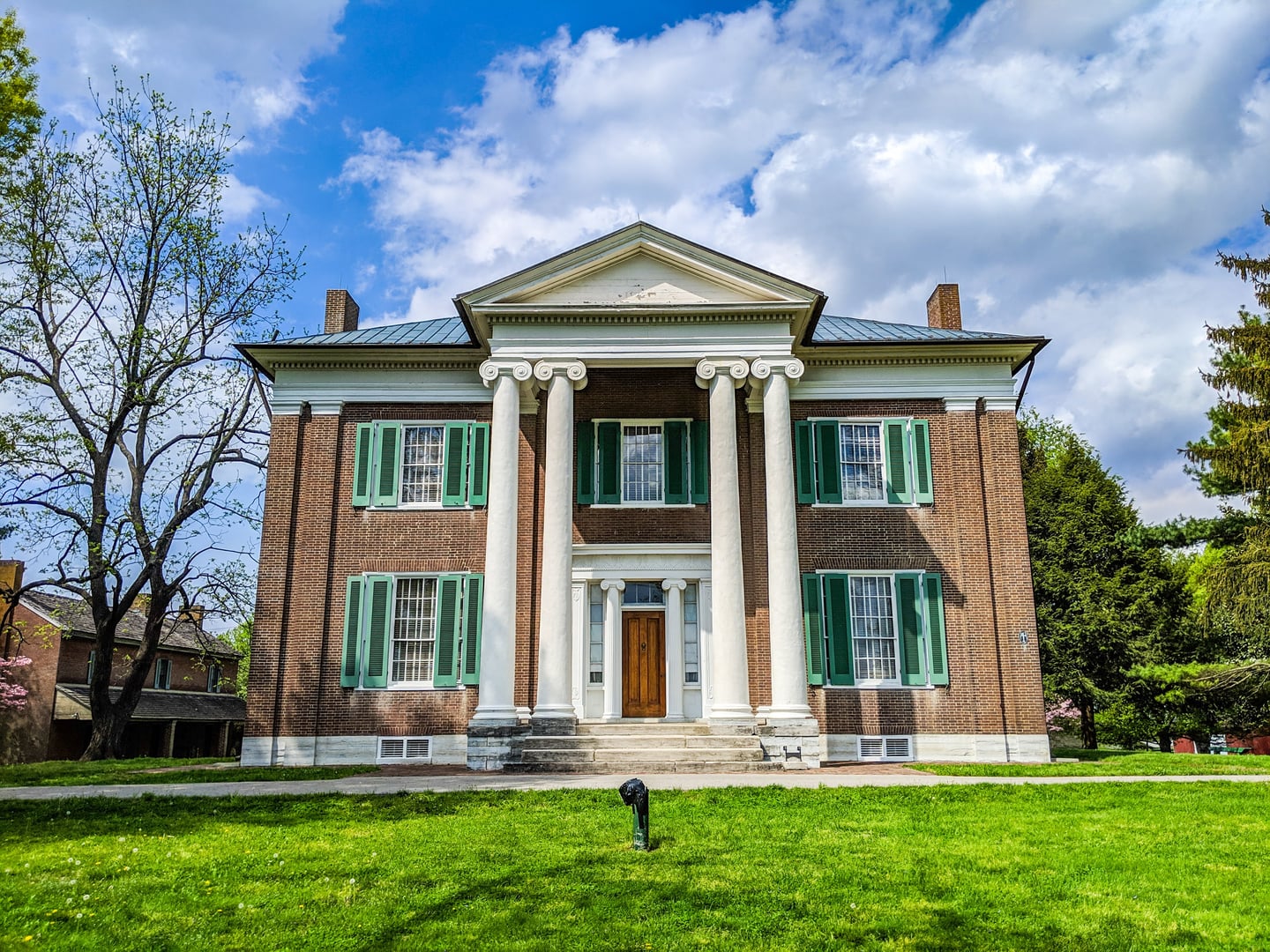
Henry Clay died at Ashland on June 29, 1852. After his death, his son James Brown Clay determined the original Federal mansion was structurally compromised and demolished it. The present Italianate brick house, designed by Cincinnati architect Thomas Lewinski, was completed in 1857 on the original foundation and using salvaged interior elements where possible. Subsequent owners included Henry Clay's granddaughter Anne Clay McDowell. The Henry Clay Memorial Foundation acquired the property in 1948 and operates it as a house museum today.
Ashland was designated a National Historic Landmark in 1960. The surviving acreage — roughly 17 acres of the original 600-plus — preserves the main house, the ice house, the smokehouse, the formal gardens, and a portion of the working landscape. The estate is interpreted both as Clay's political and domestic stage and as a site where enslaved labor sustained one of the most prominent careers of the early American republic.
Sources
- https://en.wikipedia.org/wiki/Ashland,_The_Henry_Clay_Estate
- https://henryclay.org/about/henry-clay-memorial-foundation/
- https://www.lex18.com/news/henry-clay-estate-offering-bi-weekly-tours-of-slavery-at-ashland-exhibit
Apparition
The principal Ashland ghost story centers on Henry Clay himself. According to multiple Lexington-area haunted-place writeups, Clay's apparition has been observed in what was originally the red parlor of the 1857 reconstruction, the room now interpreted as his study. The figure is consistently described in the same terms: white-haired, wearing a black frock coat, leaning against the fireplace mantelpiece as if surveying the room and its contents. The accounts emphasize an attitude of quiet attention rather than agitation — a man checking on his possessions.
The lore reads as a folk extension of Clay's deep, documented attachment to the estate. He referred to Ashland in correspondence as his refuge and spent the months between political campaigns walking the grounds, working on his farming operations, and writing speeches. He died in the house in June 1852. The framing in the apparition reports — Clay as patient observer rather than tormented spirit — matches the biographical record of a man whose chief private pleasure was being at home.
Reports are concentrated in the public rooms of the mansion rather than in the private upstairs quarters, and there are no widely circulated accounts of disruptive phenomena, photographic captures, or formal investigations of the property. The estate does not market itself as a haunted attraction; ghost lore is incidental to the museum's primary interpretation of Clay's political career and the lives of those enslaved at Ashland. Visitors interested in the apparition story should note that paranormal claims here are single-figure, single-room, and supported almost entirely by haunted-location blogs and tour-guide oral tradition.
Notable Entities
Henry Clay