Est. 1925 · Inland Empire Heritage · Dual-City Cemetery · Orange Grove History
The Inland Empire's urban expansion in the early 20th century created demand for formal burial infrastructure across San Bernardino County. Montecito Memorial Park was founded by the Hinze family in 1925, developed from orange grove land at the border of what was then the developing communities of Colton and Loma Linda. The Hinze family operated the funeral home and cemetery for generations before the property passed under the management of Dignity Memorial, the cemetery's current operator.
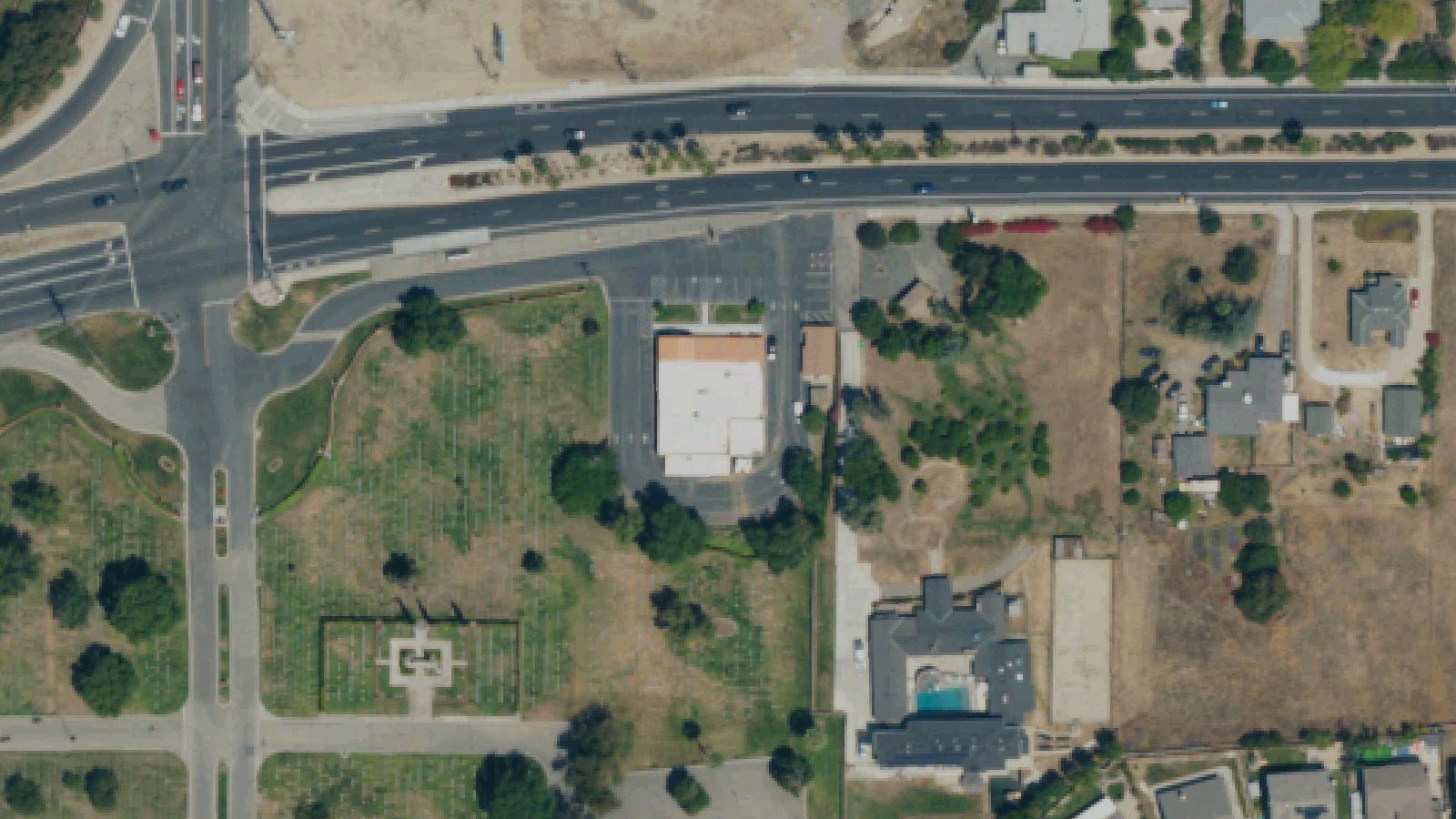
The park's unusual geography — spanning more than 100 acres across two municipal boundaries — is documented as a regional distinction: Montecito is the only cemetery in the United States that straddles two cities, with Colton on one side and Loma Linda on the other. The Loma Linda boundary became internationally notable when the city was identified as one of the world's five Blue Zones — geographic areas with statistically exceptional human longevity. The Blue Zone designation derives from the local Seventh-day Adventist community's diet, lifestyle, and longevity outcomes; the proximity of a major Loma Linda University Adventist healthcare campus has long shaped the character of the cemetery's eastern surroundings.
Resthaven Mausoleum, built within the cemetery in 1930, features a stained-glass interior and was the cemetery's first major above-ground burial structure — offering families an alternative to traditional ground burial during the Great Depression years. The mid-1950s expansion brought the addition of Cypress Chapel through Montecito Mortuary. Over the following seventy years, additional sections were developed as the cemetery expanded into a portion of its 100+ acres of undeveloped land.
The cemetery has served as the final resting place for Inland Empire residents for a century, with burials representing the region's demographic evolution from agricultural community to suburban center. The 1925 Hinze plat plan remains the structural foundation of the cemetery as it operates today.
Sources
- https://www.dignitymemorial.com/funeral-homes/california/colton/montecito-memorial-park-and-mortuary/2393
- https://bayercemeterybrokers.com/cemetery/montecito-memorial-park-colton/
- https://sbmonumental.com/montecito-memorial-park-and-mortuary/
- https://www.findagrave.com/cemetery/8166/montecito-memorial-park
- https://www.geni.com/projects/Montecito-Memorial-Park-Colton-California/4485072
ApparitionsPhantom voices
The accounts associated with Montecito Memorial Park are consistent in their focus on the main gate and the early-morning hours. Witnesses describe a figure dressed in white visible near the East Washington Street gate at approximately 2:00 a.m. The consistent instruction passed in local tellings — do not look directly at the gate — reflects a folk tradition of avoidance that appears across multiple regional cemetery legends in Southern California, including several documented at older Los Angeles County and Riverside County burial grounds.
When visitors comply with the instruction and keep their backs toward the gate, accounts hold that they report hearing a voice from behind them. The voice's content is not described in detail in available tellings — what is consistent is that turning toward the source produces silence, and the white figure that was reportedly at the gate is gone. The geometry of the experience (audible behind, invisible when faced) is a structural variant common to cemetery threshold legends and to a class of ghost-tradition encounters anthropologists classify as 'present-yet-absent' phenomena.
Halloween-season fog at the grounds is noted separately in local accounts. This is consistent with the inland valley weather patterns of the San Bernardino area, where marine layer pushed inland from the coast and overnight thermal inversions in the autumn months can produce low-lying ground fog. The fog blankets the cemetery's older Hinze-era sections more thickly than its more open mid-20th-century expansions, contributing to the sense among local visitors that the older portion of the grounds is more atmospherically charged.
The 100+ acres make Montecito one of the larger cemeteries in the Inland Empire, and the unusual two-city geography means visitors crossing the grounds from Colton-side to Loma Linda-side technically cross a municipal boundary mid-walk — a transition some local accounts have folded into the lore as a threshold worth noting.
No specific historical event, death, or named figure is attached to the white-figure accounts. They exist as site-specific folklore without documented origin, transmitted primarily through oral tradition among Inland Empire residents and through regional cemetery directories.
Where this legend is told