Est. 1871 · Utah Territorial History · Washington County Historical Society · Pioneer Architecture · Frontier Justice
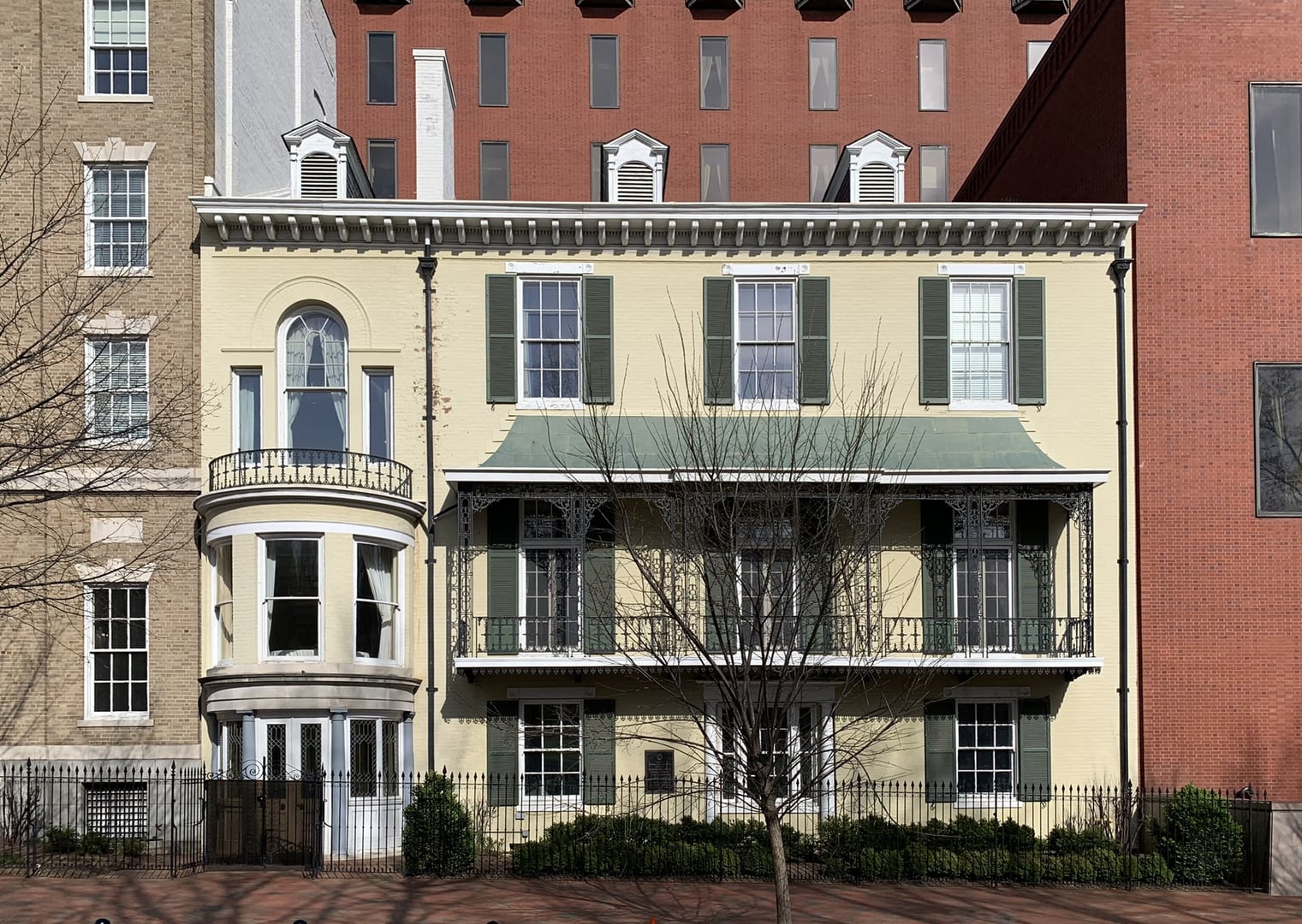
Augustus Hardy built his home at what is now 46 West St. George Boulevard around 1871, a period when St. George was a young Mormon pioneer settlement in the Utah Territory. The construction method — basalt rock foundation topped with double-thick adobe walls — reflects the practical material culture of the region, where locally quarried volcanic rock and earthen brick were standard.
Hardy served as sheriff of St. George during a period when frontier justice operated in a gray zone between law and community retribution. While holding a man accused of murder in the pioneer courthouse jail, Hardy was confronted by an armed group of vigilantes who forced their way into the house, took the jail keys from him, and removed the prisoner. The man was hanged from a tree nearby.
The bullet that struck a door during the confrontation left a hole that is still visible today — one of those rare material details that makes historical violence tactile and specific. The Washington County Historical Society includes the Hardy House on the St. George Historic Walking Tour.
The building now sits within Ancestor Square, a commercial block in the heart of downtown St. George, and has housed various retail and restaurant tenants over the years.
Sources
- https://wchsutah.org/homes/augustus-hardy-home.php
- https://www.hmdb.org/m.asp?m=59235
- https://scaryhq.com/haunted-hardy-house-restaurant-st-george-utah/
Shadow figuresApparitions
Paranormal accounts associated with the Hardy House are sparse and undetailed in available sources. A shadowy figure has been reported inside the building, with no further documentation of specific accounts, investigation records, or corroborating witness testimonies found through web research.
The building's most compelling element is not its documented paranormal reputation but its physical evidence: the bullet hole in the door. This detail — an artifact of a specific night when a sheriff was overpowered and a man was taken out to die — does what a historical marker alone cannot. It is the kind of detail that occupies a space between the abstract and the visceral without tipping into spectacle.
Whether any residual presence corresponds to the prisoner, the vigilantes, Hardy himself, or simply to the accumulated weight of a building that has housed so many lives across a century and a half remains an open question.