Civil War Battlefield · Red River Campaign · National Register of Historic Places · Arkansas State Park
On April 30, 1864, General Frederick Steele's Union forces were retreating from Camden, Arkansas, through flooded terrain, when Confederate troops caught them at the Saline River ferry crossing near present-day Leola. The resulting engagement lasted through the day and ended in a technical Union victory — Steele successfully crossed the bulk of his army — but at a cost that made tactical success nearly indistinguishable from defeat.
By proportional casualties, Jenkins' Ferry stands among the Civil War's most damaging single engagements. Confederate forces had pursued Steele from Camden following the Federal retreat after failing to hold southwest Arkansas. The Saline River, swollen with spring flooding, narrowed the Union army's options severely. Steele used the ferry site as a bridgehead, establishing a defensive perimeter while troops crossed on pontoon bridges.
The battle falls within the Red River Campaign of 1864, a strategic Federal effort to extend Union control into Texas via Louisiana and Arkansas that ultimately failed. Jenkins' Ferry is one of several engagements in the campaign's Arkansas theater — Poison Spring and Marks' Mill preceded it in the same spring.
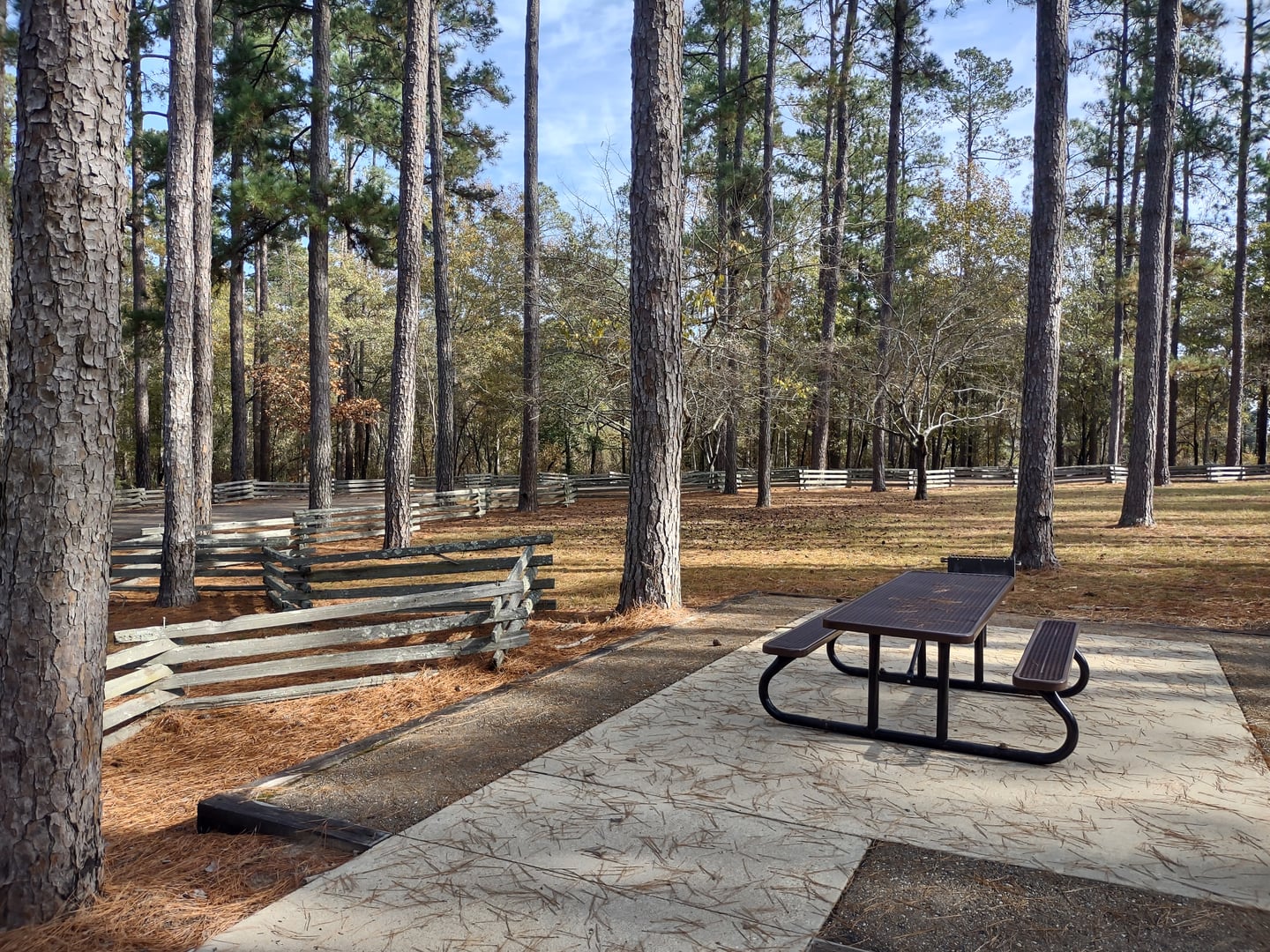
Jenkins' Ferry Battleground State Park was established to preserve the 67-acre site, which includes the approximate location of the pontoon bridge and the ground on which the Federal forces organized their defensive line. The park provides interpretive exhibits, a picnic pavilion, a swim area, and a boat launch on the Saline River. Contact: (501) 844-4176.
Sources
- https://en.wikipedia.org/wiki/Battle_of_Jenkins'_Ferry
- https://encyclopediaofarkansas.net/entries/engagement-at-jenkins-ferry-1136/
- https://www.arkansasstateparks.com/parks/jenkins-ferry-battleground-state-park
- https://www.battlefields.org/visit/heritage-sites/jenkins-ferry-state-park
OrbsPhantom soundsPhantom voicesResidual haunting
Civil War battlefields develop paranormal reputations in proportion to their casualty counts. Jenkins' Ferry — among the most proportionally costly single engagements of the war — generates accounts consistent with this pattern.
The pre-analyzed data for the location references orb phenomena at the site, auditory echoes interpreted as residual battle sounds, and disembodied cries from the river area. These are the standard categories of battlefield paranormal report: visual anomalies photographed in the field, sounds without source that overlap with the sounds of historical combat, and distress calls from the water that visitors attribute to the men who drowned or were wounded during the Saline crossing.
No specific investigation records, media coverage, or first-person witness accounts specific to Jenkins' Ferry State Park were located in non-aggregator sources during research. The battlefield's paranormal reputation exists in the same channel as its historical one: significant, documented, and largely visited by people who come for the history rather than the phenomena.
The park's interpretive exhibits provide the essential framework for understanding what happened on April 30, 1864. Whether the Saline River retains anything of that day in the way battlefield accounts suggest is a question the exhibits don't address.