Drive-By
Exterior architectural visit
View the Tudor-Gothic facade from Chapel Street and walk past the Old Campus gateway. Yale's official campus walking tours pass the building.
- Duration:
- 15 min
HauntBound archive · catalog record
Reported phenomena, as catalogued
U-shaped 1894 Charles C. Haight Tudor-Gothic dormitory on Yale's Old Campus, built by Cornelius Vanderbilt II in memory of his son William H. Vanderbilt II, who died of typhoid during his junior year at Yale.
1035 Chapel Street, New Haven, CT 06511
Research updated September 2026
Age
All Ages
Cost
Free
Exterior is fully visible from Chapel Street and Yale's Old Campus walks during open hours.
Access
Wheelchair OK
Sidewalk-level exterior access; Old Campus interior reached by gateway.
Equipment
Photos OK
Est. 1894 · U-shaped Tudor-Gothic Old Campus dormitory designed by Charles C. Haight · Gift of Cornelius Vanderbilt II in memory of his son William H. Vanderbilt II · Set the architectural template for Yale's later Collegiate Gothic dormitories
William Henry Vanderbilt II (born 1870) entered Yale College in 1889. During a tour of the western United States he contracted typhoid fever — local sources attribute the infection to a contaminated water pump — and he died in 1892 during his junior year. His father, railroad magnate Cornelius Vanderbilt II, commissioned a memorial dormitory for the Yale Old Campus.
The building was designed by Charles C. Haight, who chose a Tudor-Gothic vocabulary intended to read as a 'large Tudor gatehouse.' Completed in 1894, Vanderbilt Hall fronts Chapel Street and forms a U-shape opening onto Old Campus through a substantial arched gateway. The hall's Collegiate Gothic detailing influenced subsequent Yale dormitory architecture and helped set the Old Campus visual standard.
Vanderbilt Hall has been continuously occupied as a Yale residence since 1894 and currently houses first-year students of Branford and Saybrook colleges, divided between the two wings. The building is documented by Buildings of New England, Lost New England, Historic Buildings of Connecticut, and the Yale Daily News.
Sources
According to Ghosts of New Haven, the Yale Daily News, and US Ghost Adventures' New Haven Ghost Tour, students living in Vanderbilt Hall have for generations reported unexpected temperature drops — particularly noticeable in warm months — along with disembodied voices and doors opening and closing on their own. The activity is concentrated on the first floor in what the Yale Daily News calls the 'Vanderbilt suite,' a room reportedly held vacant and locked except in years when a member of the Vanderbilt family is admitted to Yale and assigned the suite.
The Yale Daily News reports that the suite has indeed been occupied periodically by Vanderbilt descendants, lending the tradition a kernel of documentary support; the room-assignment custom is treated as fact in campus reporting. The associated paranormal claims are treated as folklore. The presence is most often attributed not to William H. Vanderbilt II — the son in whose memory the hall was built — but to his father Cornelius, said in ghost-tour narratives to oversee any descendant residing in his namesake dorm.
Additional reports — figures glimpsed in the gateway arch, footsteps in upper corridors — are folkloric and circulate primarily via tour-guide narrative. The hall is an active student residence; visitors should view it from the public sidewalk only.
Notable Entities
Media Appearances
View the Tudor-Gothic facade from Chapel Street and walk past the Old Campus gateway. Yale's official campus walking tours pass the building.
Stop on US Ghost Adventures' New Haven Ghost Tour, which discusses Vanderbilt Hall lore from the public sidewalk.
Some links on this page may earn HauntBound a small commission when you book, at no extra cost to you. Our editorial picks are independent. Full disclosure
Every HauntBound history is researched from documented sources. We clearly separate verified historical fact from paranormal folklore.
Free Guide
10 verified stops, rated for families, mapped in order. Free.
One email to confirm, then the guide link. Unsubscribe anytime.
New Haven, CT
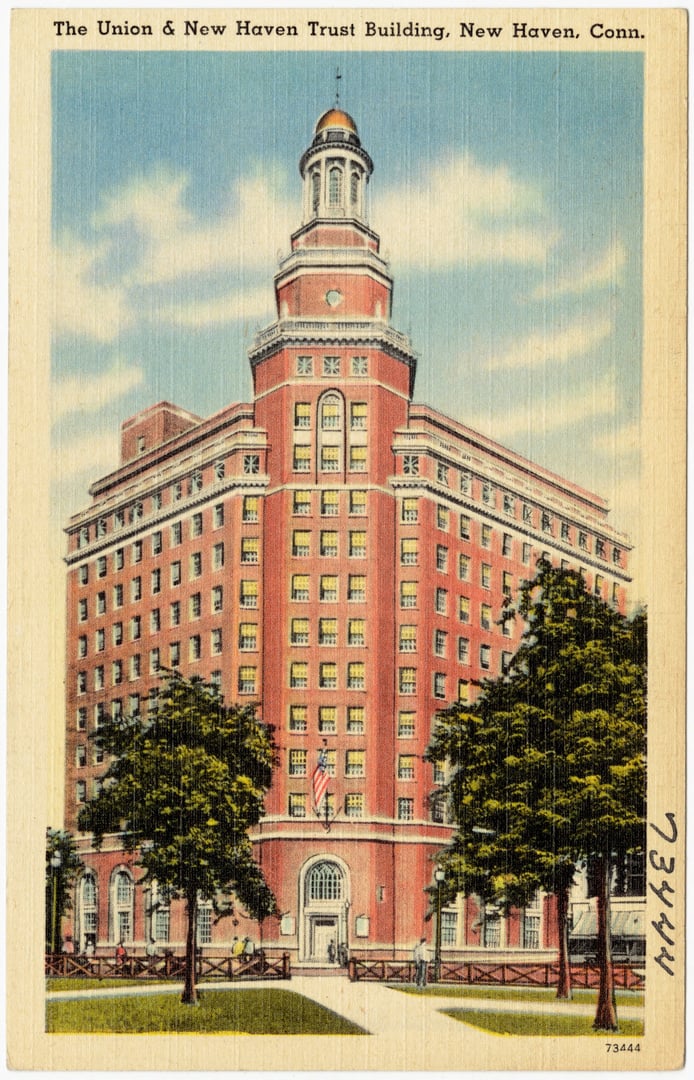
The 13-story Union and New Haven Trust Building was designed by New York architects Cross and Cross and completed in 1928 at the northeast corner of the New Haven Green. Its Colonial Revival massing and the cupola were specifically designed to echo the three churches on the Green; the cupola mirrors the design of the United Church on the Green. Union Trust departed for Stamford in 1981 and the building now contains a Wells Fargo branch on the ground floor.
Louisville, KY
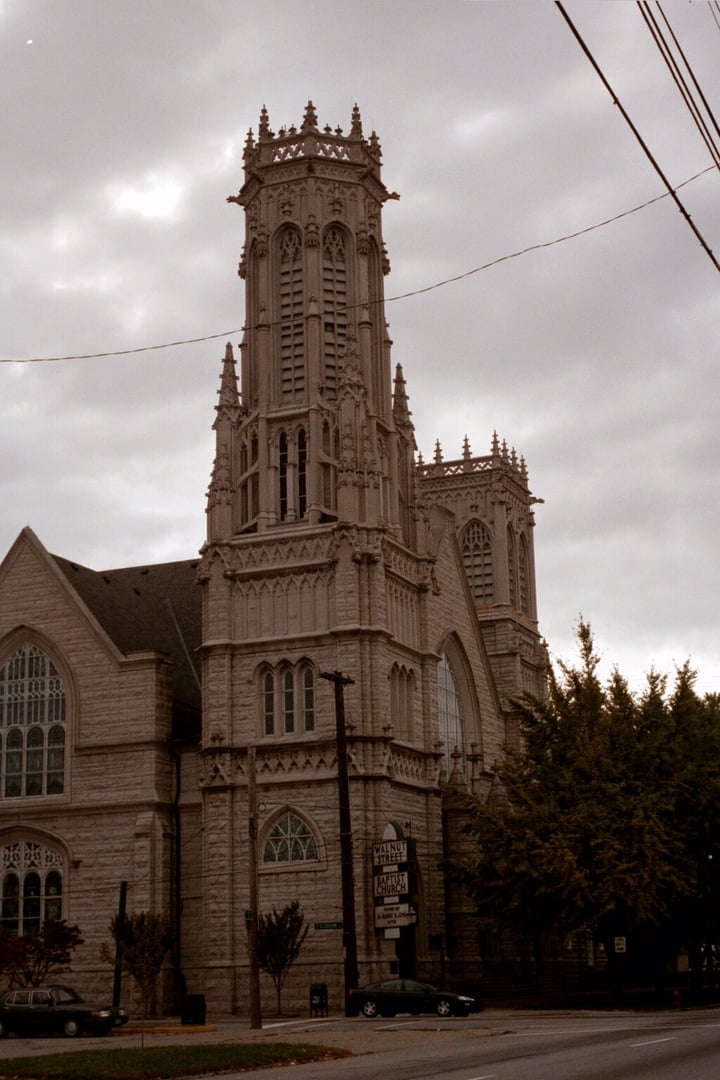
Walnut Street Baptist Church organized in 1849 and originally met at the corner of 4th and Walnut Streets (now Muhammad Ali Boulevard) in downtown Louisville. In 1902 the congregation moved into its current Gothic Revival sanctuary at the corner of South 3rd and St. Catherine Streets in Old Louisville, where it remains today. The building's gargoyle-decorated exterior and corner location have made it one of the most recognizable churches in the Old Louisville preservation district.
 Aerial survey · USDA NAIP
Cynthiana, KY
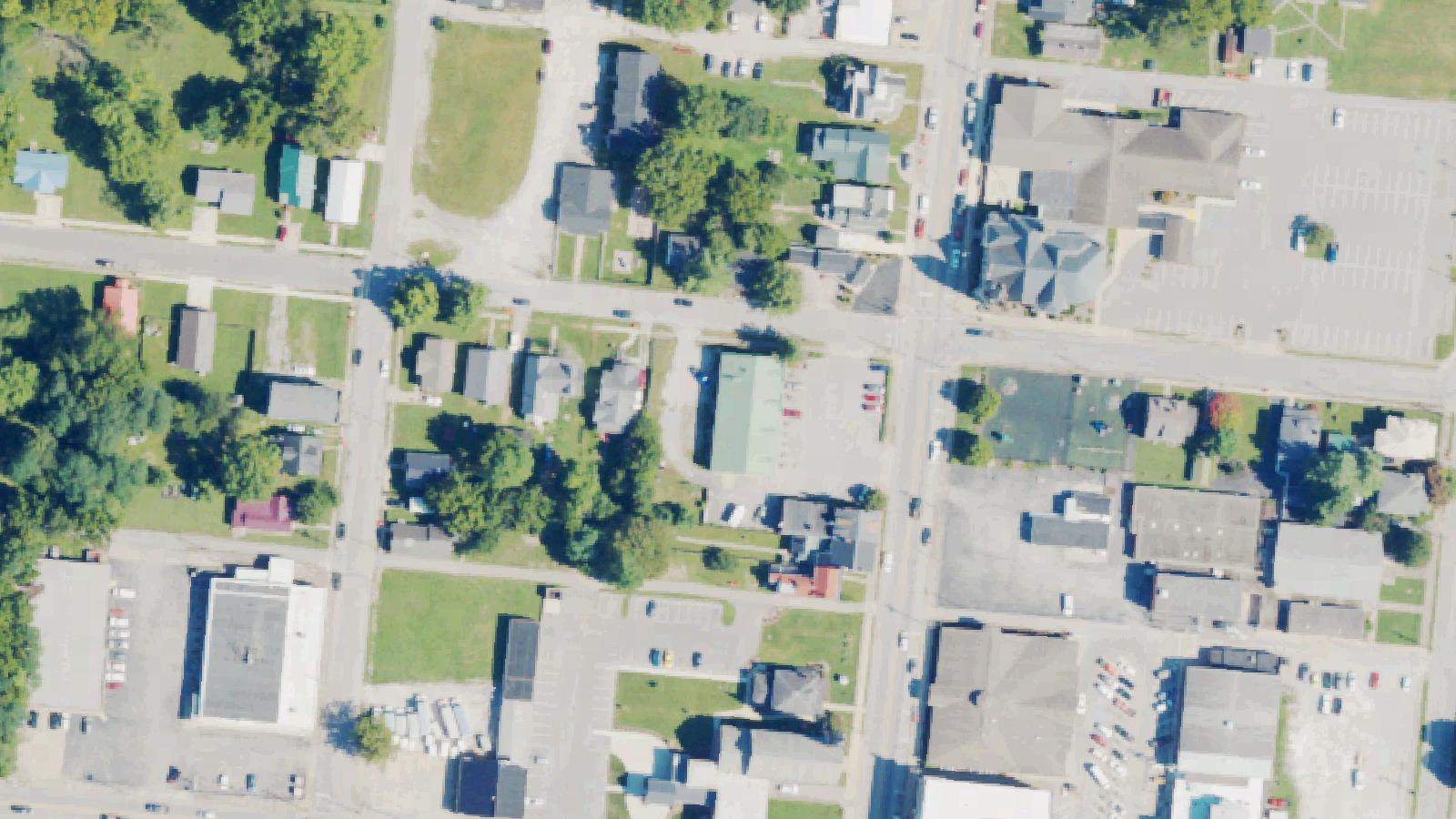
Built circa 1790 by Dr. James McPheefers and expanded in 1926, this log cabin at 111 Court Street is Cynthiana's oldest standing building. It has served as a law office and, most notably, as the home of WCYN radio station. WCYN began broadcasting in 1956 and the station has since relocated to South Main Street, but the log cabin remains associated with the station's early history and the building is a featured stop on the Cynthiana Ghost Walk.