Drive-By
Pack Square Exterior Visit
View the 15-story neo-Gothic Jackson Building from Pack Square, including the elaborate glazed terra-cotta ornament and the bullseye inlaid in the brick sidewalk at the building's base.
- Duration:
- 20 min
HauntBound archive · catalog record
Reported phenomena, as catalogued
1924 neo-Gothic skyscraper on Pack Square — Western North Carolina's first high-rise, marked by a sidewalk bullseye tied to Depression-era loss
22 S Pack Square, Asheville, NC 28801
Research updated September 2026
Age
All Ages
Cost
Free
Active office building — exterior viewing and the sidewalk bullseye are free; interior access is for tenants and visitors with appointments.
Access
Wheelchair OK
Downtown sidewalk; the bullseye is at street level on Pack Square.
Equipment
Photos OK
Est. 1924 · Western North Carolina's first skyscraper · Pack Square neo-Gothic landmark · Built on the site of W.O. Wolfe's tombstone shop · Tallest building on smallest lot in NC
The Jackson Building is a 15-story, 140-foot (43 m) steel-framed brick skyscraper completed in 1924 at 22 South Pack Square in downtown Asheville. Real estate developer Lynwood B. Jackson commissioned architect Ronald Greene to design the building in a neo-Gothic idiom as a statement of confidence in the 1920s Asheville real-estate boom.
The site Jackson chose, on the south side of Pack Square, had previously been occupied by the tombstone-cutting business of W.O. Wolfe — the father of novelist Thomas Wolfe. The lot measures only 27 by 60 feet, and the building is widely cited as holding the record for the tallest building on the smallest lot in North Carolina. At completion, the Jackson Building was the tallest structure in the state.
The steel-framed brick tower features elaborate glazed terra-cotta ornament in Gothic Revival style. Originally the roof carried more spires than survive today and a searchlight that reportedly cast a beam for 30 miles. The Jackson Building remains in active commercial office use a century after its opening.
A bullseye is inlaid in the brick sidewalk at the building's base on Pack Square. Local tradition holds that it marks the spot where a man — or men — landed after jumping from upper floors during the Depression. One verified case is documented: on April 3, 1930, 66-year-old real-estate broker Frederick M. Messler took his own life in a vacant eighth-floor office. His letters cited failing health and financial losses following the 1929 stock market crash. A landscape architect is said by one local historian to have placed the bullseye marker to commemorate the site, although the architect's identity and the marker's commissioning are not firmly documented.
Sources
Asheville Terrors, 828 News NOW, and Strange Carolinas tie the Jackson Building's ghost lore to the 1930 suicide of Frederick M. Messler. According to contemporaneous press accounts and later regional reporting, on April 3, 1930 Messler — a 66-year-old Asheville real-estate broker — rode the elevator to the eighth floor, entered a vacant office, and shot himself. His letters cited failing health and financial losses tied to the 1929 stock-market crash.
Later folklore expanded the count: a 2014 report referenced by ghost-tour writers claimed 17 suicide jumps from the building, but Strange Carolinas and 828 News NOW note that no source has been produced for that figure and that Messler's death remains the only documented case. Tour guides explain that one verified death has transformed into many similar legends over the decades.
The bullseye inlaid in the sidewalk at the building's base is the legend's visible anchor. One local historian quoted in the regional press has heard, but not confirmed, that a landscape architect placed the marker to commemorate the spot where Messler's body landed. Guides report that witnesses describe the top floor as haunted by a male apparition, with cold spots and unexplained sounds, and that visitors lingering near the bullseye describe sudden uneasiness — claims that rest principally on tour-operator tradition rather than independent documentation.
Notable Entities
Media Appearances
View the 15-story neo-Gothic Jackson Building from Pack Square, including the elaborate glazed terra-cotta ornament and the bullseye inlaid in the brick sidewalk at the building's base.
Some links on this page may earn HauntBound a small commission when you book, at no extra cost to you. Our editorial picks are independent. Full disclosure
This Asheville tour includes Jackson Building on its route.
Every HauntBound history is researched from documented sources. We clearly separate verified historical fact from paranormal folklore.
Free Guide
10 verified stops, rated for families, mapped in order. Free.
One email to confirm, then the guide link. Unsubscribe anytime.
Durham, NC
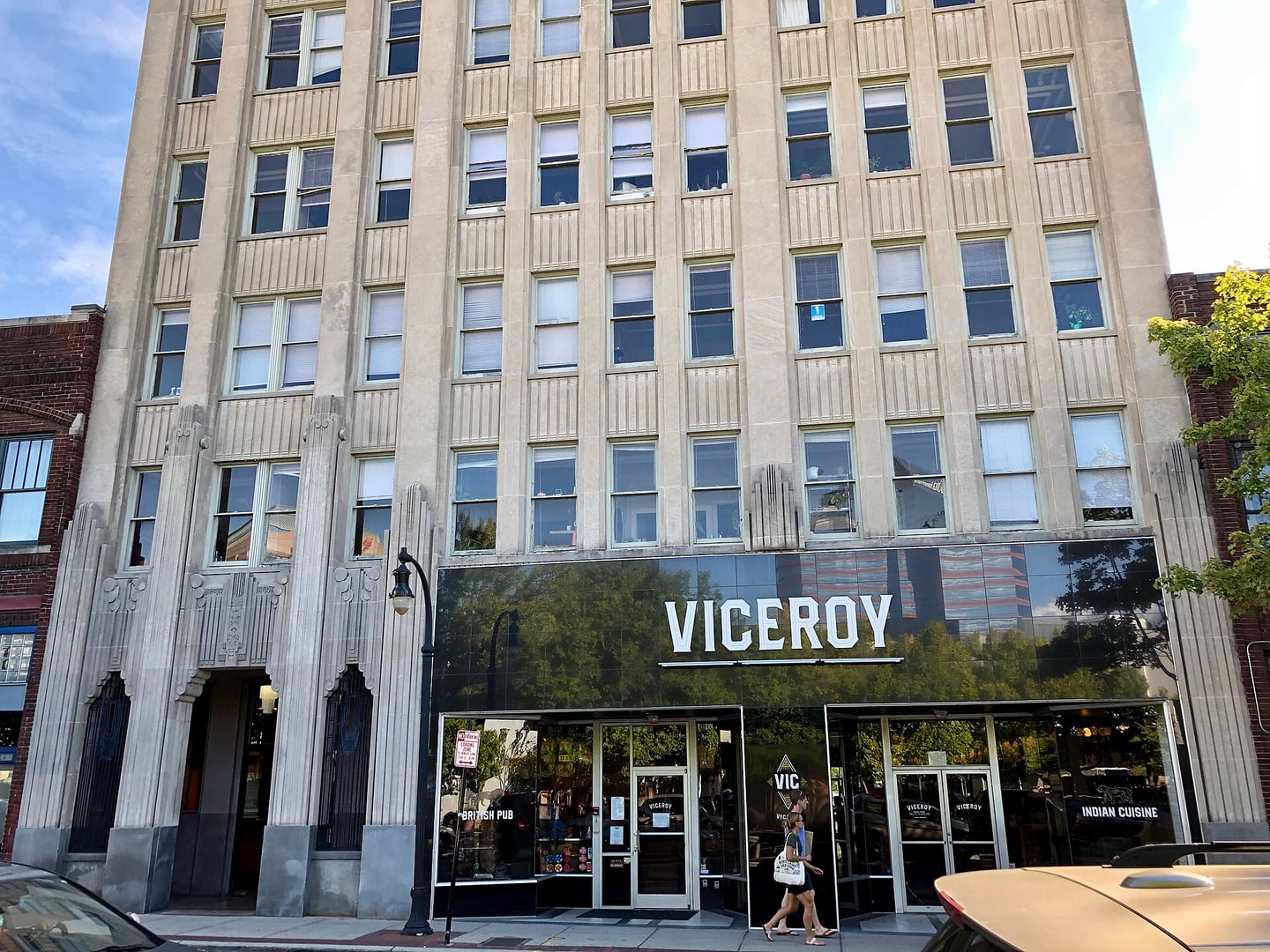
Completed in 1930 and designed by Durham architect George Watts Carr Sr. with George W. Kane as general contractor, the Snow Building is considered — alongside the Kress Building — one of Durham's two most elaborate Art Deco buildings. It was developed by Anna Exum Snow on family land gifted to her as a wedding present and continues to function as offices, retail, and a rooftop penthouse.
Charlotte, NC
Charlotte Fire Station No. 4 was built in the 1925 era and served as an active firehouse for decades. On April 1, 1934, firefighter Pruett L. Black was killed when he fell roughly 14 feet headfirst through the second-floor pole opening while responding to an alarm. The building later housed the Charlotte Firefighters Museum from 2002 to 2009 and is now an adaptive-reuse commercial property.
Los Angeles, CA
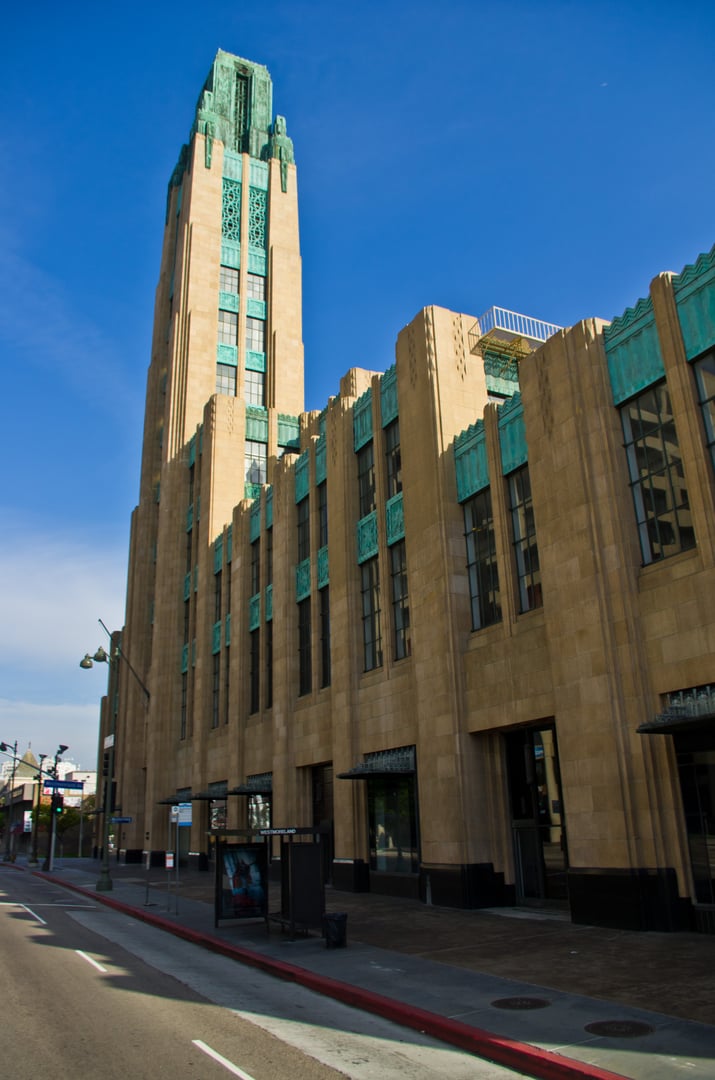
Bullocks Wilshire opened September 26, 1929, designed by architect Donald Parkinson as one of the first Art Deco department stores in the United States. Business partners John G. Bullock and P.G. Winnett built the structure after visiting the 1925 Paris Exposition of Decorative Arts, using the new aesthetic as their architectural model. The five-story building, topped by a 241-foot tower lit at night with violet beacons, attracted celebrity clientele from Hollywood's golden era for more than sixty years. Southwestern Law School purchased the building in 1994 and completed a $29 million restoration over a decade.