Est. 1776 · Revolutionary War Site · War of 1812 Defense · Civil War Fortification · Reconstructed Historic Fort
The point of rocky shoreline now occupied by Fort Nathan Hale Park has carried defensive fortifications since 1659, when colonial New Haven established an early earthwork against possible Dutch and Native attack. In early 1776, the Connecticut colony commissioned Black Rock Fort on the same point to defend the developing port of New Haven from the British navy.
In July 1779, British General William Tryon led the Tryon Raid against Connecticut's coastal communities. Black Rock Fort fell after its 19 defenders ran out of ammunition. The fort was burned and abandoned for the remainder of the war.
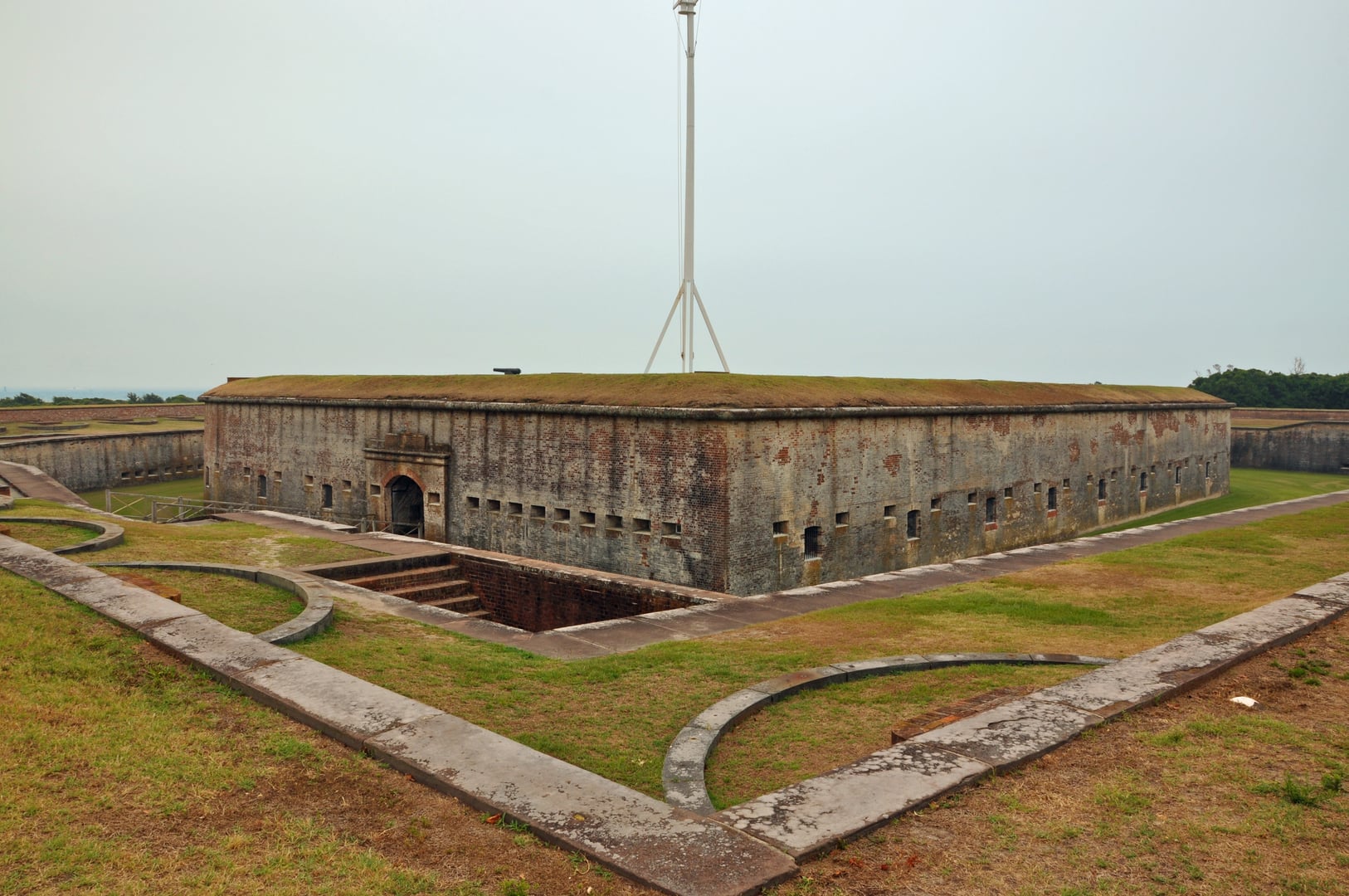
From 1807 to 1812, the federal government rebuilt the abandoned fort under the Second System of US coastal fortifications and renamed it Fort Nathan Hale, after the Connecticut-born Continental Army officer hanged by the British in 1776. The reconstructed fort mounted six guns and again defended the port from the British during the War of 1812. In 1863, during the Civil War, a second and larger Fort Nathan Hale was built immediately alongside the original, prompted by federal concern over Confederate naval raids. The Civil War-era fort saw no battle action.
Both forts were decommissioned after the Civil War and slowly deteriorated. The City of New Haven acquired the property and incorporated it into Fort Hale Park. In the late 20th century, both forts were reconstructed, with the moat, drawbridge, and bombproof bunker rebuilt to match historical drawings. The park also hosts a memorial flag court with reproductions of flags flown across the site's military history, including a copy of Bela Lyon Pratt's 1914 Yale-campus statue of Nathan Hale.
Sources
- https://en.wikipedia.org/wiki/Fort_Nathan_Hale
- http://www.fort-nathan-hale.org/
- https://www.cfgnh.org/articles/history-lives-at-fort-nathan-hale
ApparitionsOrbs
Fort Nathan Hale's haunting tradition is loose and largely tourist-driven. The Shadowlands report, which forms the basis for many secondary write-ups, describes glowing green orbs visible inside the gated underground bunkers and figures of soldiers along the beach and outside the bunkers. No named witnesses, dates, or investigations are attached to these accounts in the published sources we found.
The site's atmospheric quality is genuine. The reconstructed forts retain the original earthwork footprint, the bombproof bunker is dim and acoustically distinct from the surrounding park, and the harbor edge produces fog and condensation effects that visitors regularly remark on. The capture and burning of Black Rock Fort by Tryon's troops in 1779 is the only documented violent event at the site; whether contemporary atmospheric reports trace to it is interpretation rather than evidence.
The park is operated by the Fort Nathan Hale Restoration Project as a heritage site rather than a paranormal destination. The legends tend to circulate among regional ghost-tour aggregators rather than being part of the site's own programming.