Est. 1871 · National Register of Historic Places · Molly Maguire Hangings (1877) · Edward Haviland Designed · Operating County Jail Until 1995
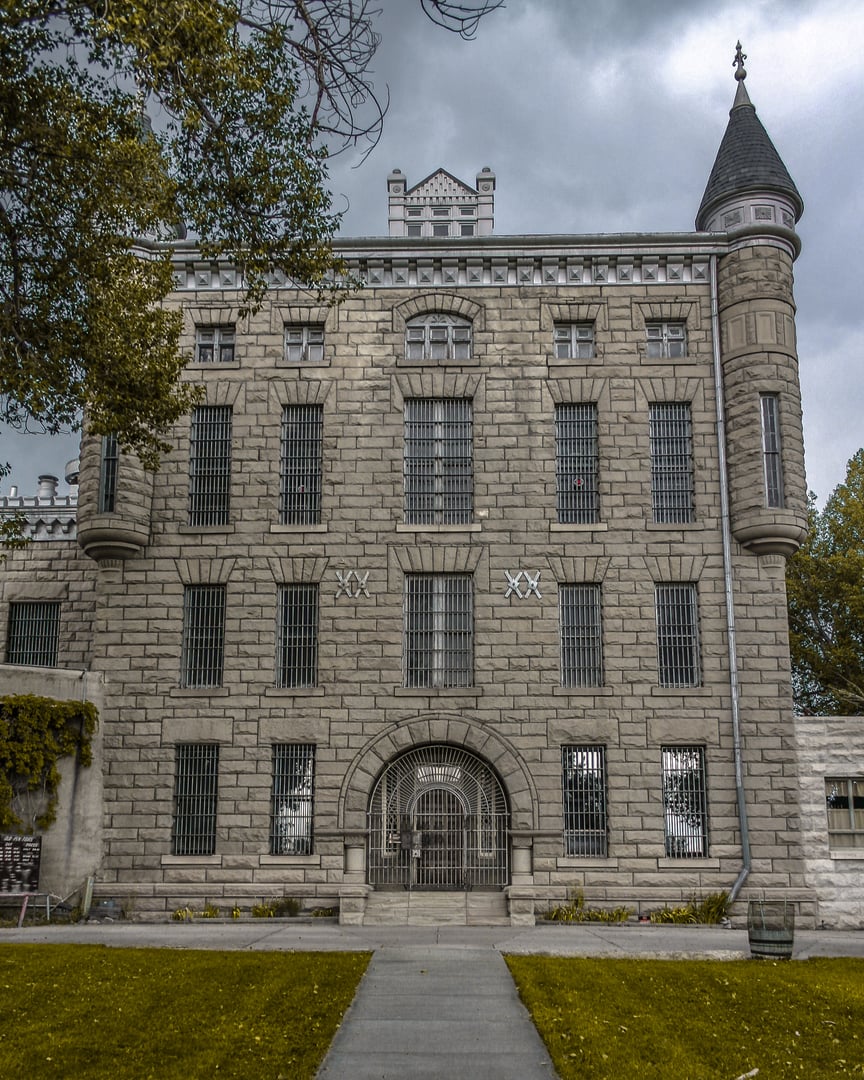
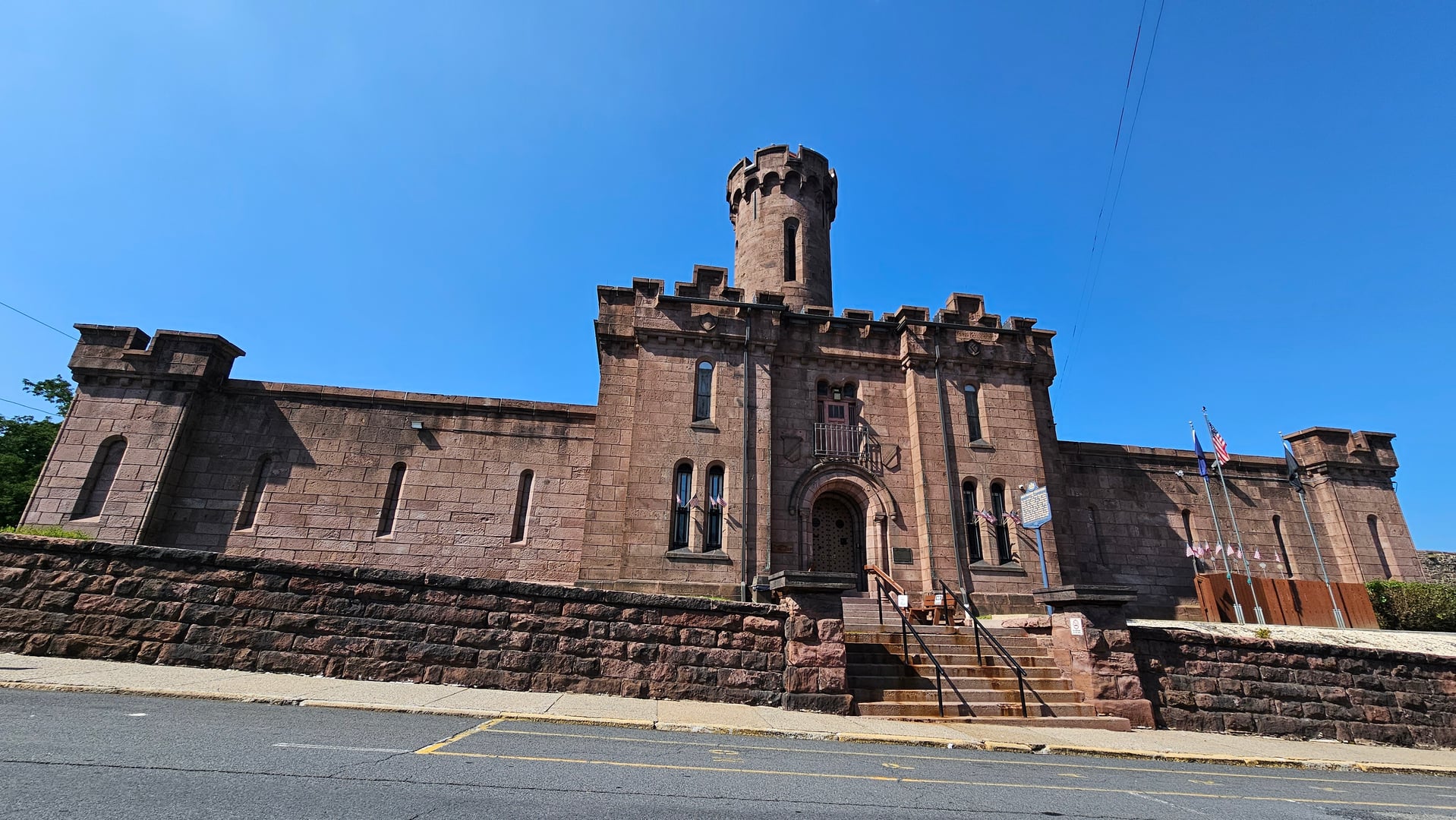
The Carbon County Jail was completed in 1871 in what was then Mauch Chunk, Pennsylvania — a coal-and-rail town that would later be renamed Jim Thorpe in 1954. Edward Haviland, son of the prominent prison architect John Haviland, designed the building in a stone-fortress idiom characteristic of mid-nineteenth-century American carceral architecture. The jail occupies a hillside lot at 128 West Broadway in the historic downtown, five walkable blocks from the Lehigh Valley Railroad station that anchors the town's tourism economy.
The jail's most consequential chapter began on June 21, 1877, the day American newspapers later called the Day of the Rope. Four men convicted of murders attributed to the Molly Maguires — a clandestine network of Irish American coal miners organized in response to working conditions and ethnic discrimination in the Pennsylvania anthracite fields — were hanged on the jail's interior gallows. Three more were hanged at the same gallows in subsequent months that year. The convictions had been secured in part on the testimony of Pinkerton agent James McParlan, whose infiltration of Irish miner communities became a foundational episode in American labor history and a contested chapter in Irish American memory.
The building remained an operating county jail for over a century, finally decommissioned in 1995 when Carbon County opened a new correctional facility. Local residents Thomas and Betty Lou McBride purchased the building for $160,000 to preserve it, and the McBride family operates the property today as the Old Jail Museum.
The jail was added to the National Register of Historic Places on November 8, 1974. The museum offers guided tours through the cell blocks, the warden's quarters, and the gallows, framed against the broader history of the Molly Maguires, the anthracite-coal labor wars, and Irish American immigration to the Lehigh and Schuylkill valleys.
Sources
- https://en.wikipedia.org/wiki/Carbon_County_Jail
- https://theoldjailmuseum.com/
- https://jimthorpecurrent.com/live/the-old-jail-museum-last-witness-to-molly-maguires-fate/
- https://uncoveringpa.com/old-jail-museum-jim-thorpe
- https://www.irishcentral.com/roots/history/molly-maguires-old-jail
Phantom footstepsPhantom voicesCold spotsApparitions
The most enduring artifact at the Old Jail Museum is the handprint inside Cell 17, the cell where Alexander Campbell spent the morning of June 21, 1877. According to the legend that has accompanied the cell since that day, Campbell pressed his hand against the wall and declared that the mark would remain as proof of his innocence in the murder for which he was about to hang.
Museum tour guides recount that the wall has been cleaned, painted over, and at one point fully torn out and replaced — and that the handprint has reappeared each time. The cell is now sealed, and visitors view the print through the barred opening in the cell door rather than entering. The persistence of the print is the museum's signature interpretive moment and is documented in coverage by Uncovering PA, the Jim Thorpe Current, and IrishCentral, among others.
Beyond Cell 17, atmospheric accounts collected from staff and visitors describe footsteps in empty corridors, the impression of voices in the basement dungeon, and cold spots in specific cells. The dungeon — a sub-grade row of solitary-confinement cells — is the most frequently cited location for these reports. Investigators visiting the museum have published various findings; the McBride family-operated tour does not present the building as an active paranormal-investigation product, instead foregrounding the building's role in Molly Maguire history.
For visitors, the lore here is inseparable from the labor-history substance of the site. The handprint operates simultaneously as folk artifact and as a piece of Irish American memory work, marking a contested verdict in nineteenth-century American mining history.
Notable Entities
Alexander Campbell — the handprint at Cell 17