Museum Visit
James White's Fort Museum Visit
Self-guided exploration of the reconstructed log fort, period furnishings, and exhibits on James White, Knoxville's 1786 founding, and frontier life.
- Duration:
- 1 hr
HauntBound archive · catalog record
Reported phenomena, as catalogued
Reconstructed 1786 log fort and museum on the founding site of Knoxville, where visitors and tour operators report a woman seen making a trundle bed on the second floor.
205 East Hill Avenue, Knoxville, TN 37915
Research updated May 2026
Age
All Ages
Cost
$
Adults $10; Seniors/AAA/Military $9; Children (5-17) $5
Access
Limited Access
Outdoor fort compound with packed-earth and gravel paths; second-floor cabin requires stairs
Equipment
Photos OK
Est. 1786 · Founding site of Knoxville, Tennessee (1786) · Original two-story log cabin built by Revolutionary War veteran James White · Renamed 'Knoxville' in 1791 after William Blount made it the territorial capital · Cabin preserved through multiple moves and returned near its original site · Operates today as an open-air history museum
James White (1747-1821) was an American politician, frontiersman, and Revolutionary War soldier who, in 1786, built the first permanent structure on what would become Knoxville: a two-story log cabin on a bluff above the Tennessee River. Two years later he enclosed the cabin with additional outbuildings and a stockade fence as protection against wild animals and frontier threats.
In 1791 William Blount, the territorial governor of the Southwest Territory, moved the territorial capital from the Rocky Mount area to White's Fort and renamed the settlement Knoxville in honor of Henry Knox, the Revolutionary War general and U.S. Secretary of War. The fort thus became the literal founding site of the city and an organizational center of early Tennessee government.
The original cabin was later incorporated as the kitchen of the Kennedy house, built in the 1830s on the property. When the Kennedy house was demolished in 1906 for downtown development, the original log structure was purchased by Isaiah Ford and moved to Woodlawn Pike, where it was preserved.
In the 1960s the cabin was returned to a site near its original location at 205 East Hill Avenue and incorporated into a reconstructed fort compound. James White's Fort operates today as a public history museum and is the meet-up point for several downtown Knoxville ghost walking tours.
Sources
The principal ghost story at James White's Fort centers on a female apparition seen on the second floor of the cabin. According to VisitKnoxville, the figure has been described as Mrs. Kennedy, a member of the family whose home incorporated the original cabin as its kitchen in the 1830s. The Kennedy house was demolished in 1906, but the log cabin survived multiple moves and was returned near its original site decades later.
Visitors report seeing the woman making a trundle bed on the second floor and descending the stairs. One frequently cited account, repeated by VisitKnoxville and US Ghost Adventures, describes a child reporting that the apparition told her to 'quit being rambunctious and go downstairs.' Another retelling has the figure stating that she is 'staying here while the house is being built,' suggesting a residual or time-displaced presence tied to the home's earlier 19th-century domestic life.
The fort is also a recurring stop and meet-up point for downtown Knoxville ghost walking tours. The lore is repeated in multiple tourism-board and ghost-tour sources, but specific named-witness accounts in published reporting remain limited; the woman-tending-the-bed story has the consistency typical of polished ghost-tour narrative.
Notable Entities
Self-guided exploration of the reconstructed log fort, period furnishings, and exhibits on James White, Knoxville's 1786 founding, and frontier life.
The fort serves as the meet-up point for several downtown Knoxville ghost walking tours.
Some links on this page may earn HauntBound a small commission when you book, at no extra cost to you. Our editorial picks are independent. Full disclosure
Every HauntBound history is researched from documented sources. We clearly separate verified historical fact from paranormal folklore.
Free Guide
11 verified stops, rated for families, mapped in order. Free.
One email to confirm, then the guide link. Unsubscribe anytime.
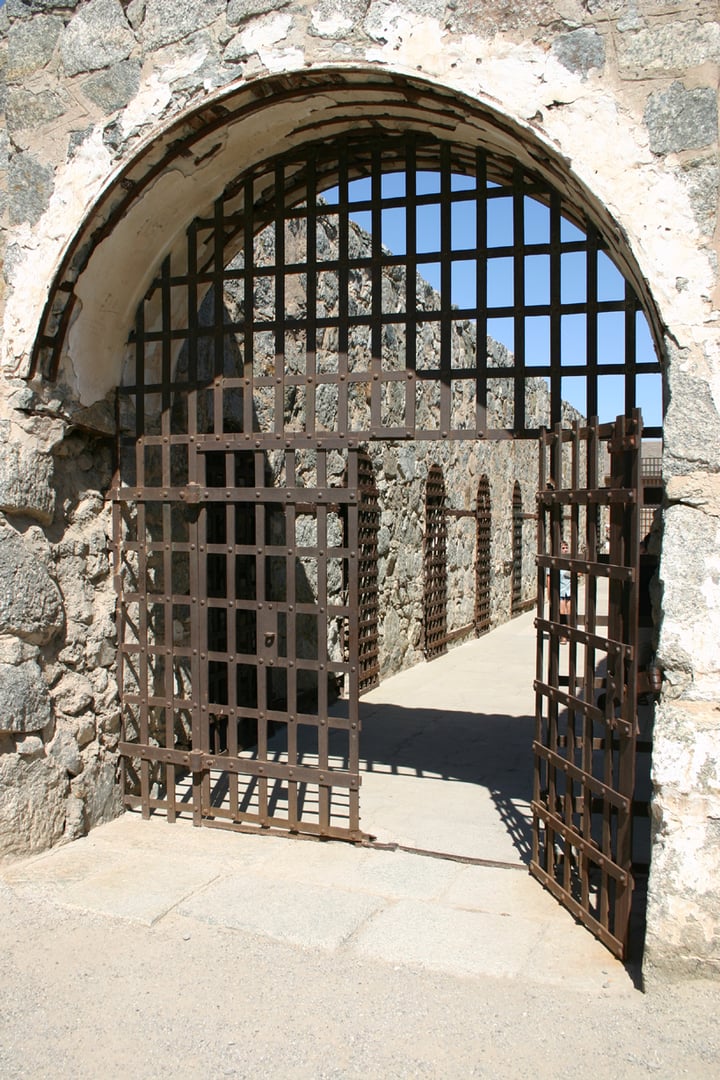
Yuma, AZ
Yuma Territorial Prison operated from 1876 to 1909 on a bluff overlooking the Colorado River in Yuma, Arizona. It held 3,069 prisoners during its 33-year operation, including 29 women. The facility became a state historic park and has been voted by USA Today readers as the Best Haunted Destination in the nation.
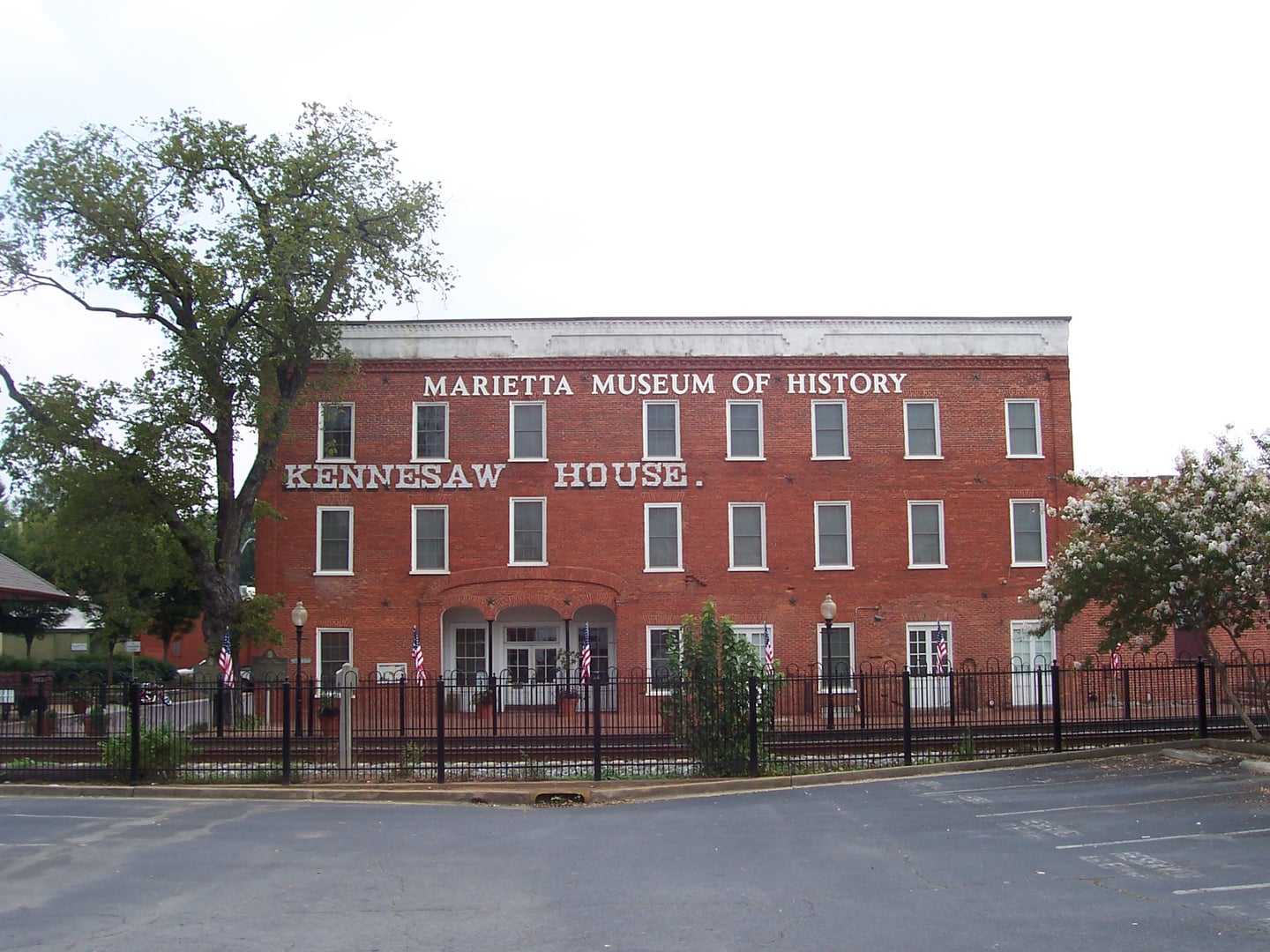
Marietta, GA
The Kennesaw House was built around 1845 as a cotton warehouse on what is now Marietta Square, adjacent to the railroad tracks that would define its Civil War history. Purchased by Dix Fletcher in 1855 and converted into the Fletcher House hotel, it served as both a staging point for the famous Great Locomotive Chase of April 1862 and as a hospital and morgue for Confederate and Union forces during Sherman's Atlanta campaign. Today it houses the Marietta History Center.
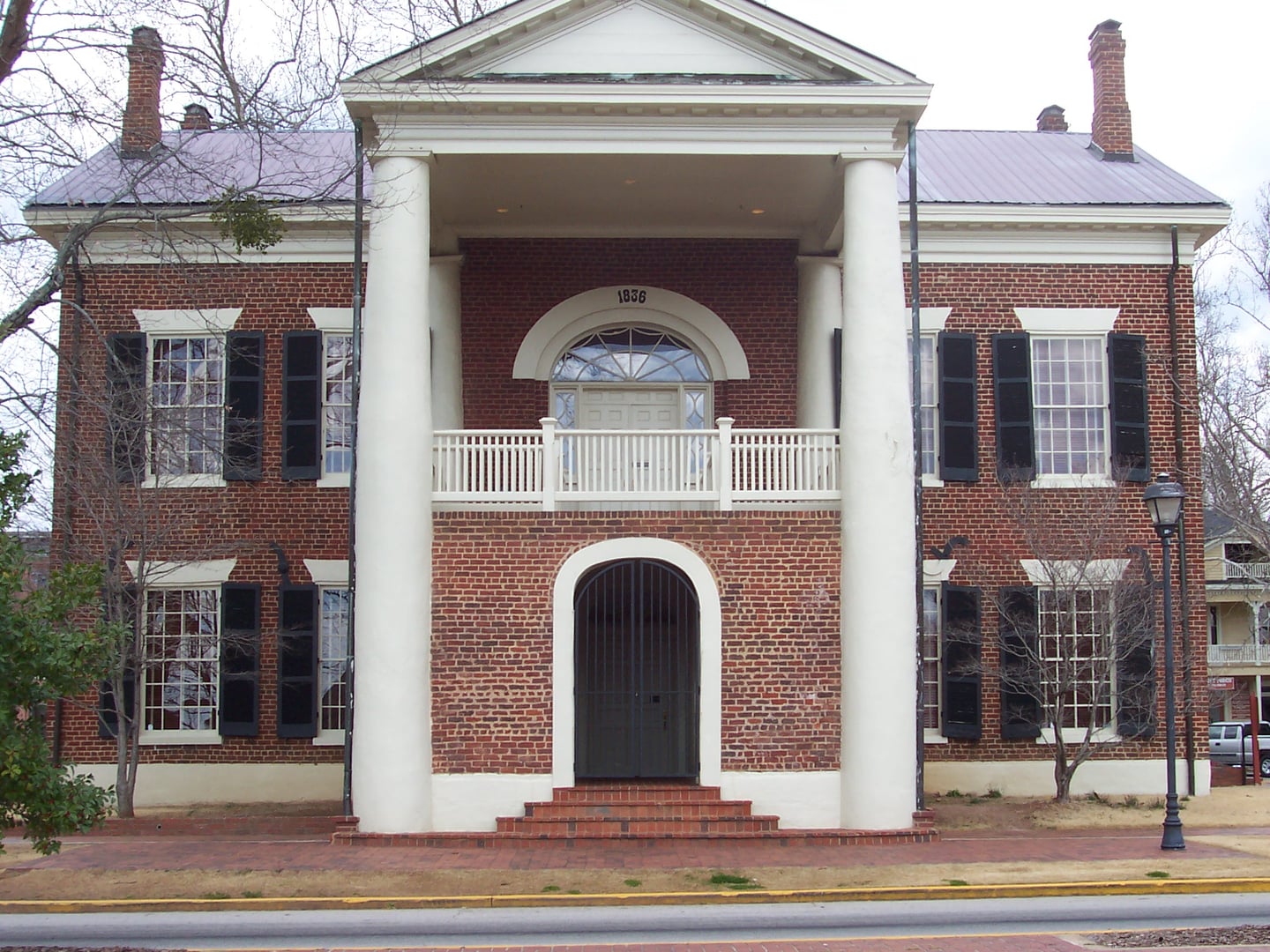
Dahlonega, GA
The Dahlonega Gold Museum occupies the 1836 Lumpkin County Courthouse, the oldest existing courthouse in Georgia. The building served as the seat of Lumpkin County government from 1836 to 1965 and is now a Georgia State Parks State Historic Site, with bricks containing trace amounts of gold.