Drive-By
Drive Nine Mile Bridge
A short crossing on a rural gravel road outside Auxvasse, locally associated with a long-running car-won't-start legend. Use turnouts only and watch for oncoming farm traffic.
- Duration:
- 20 min
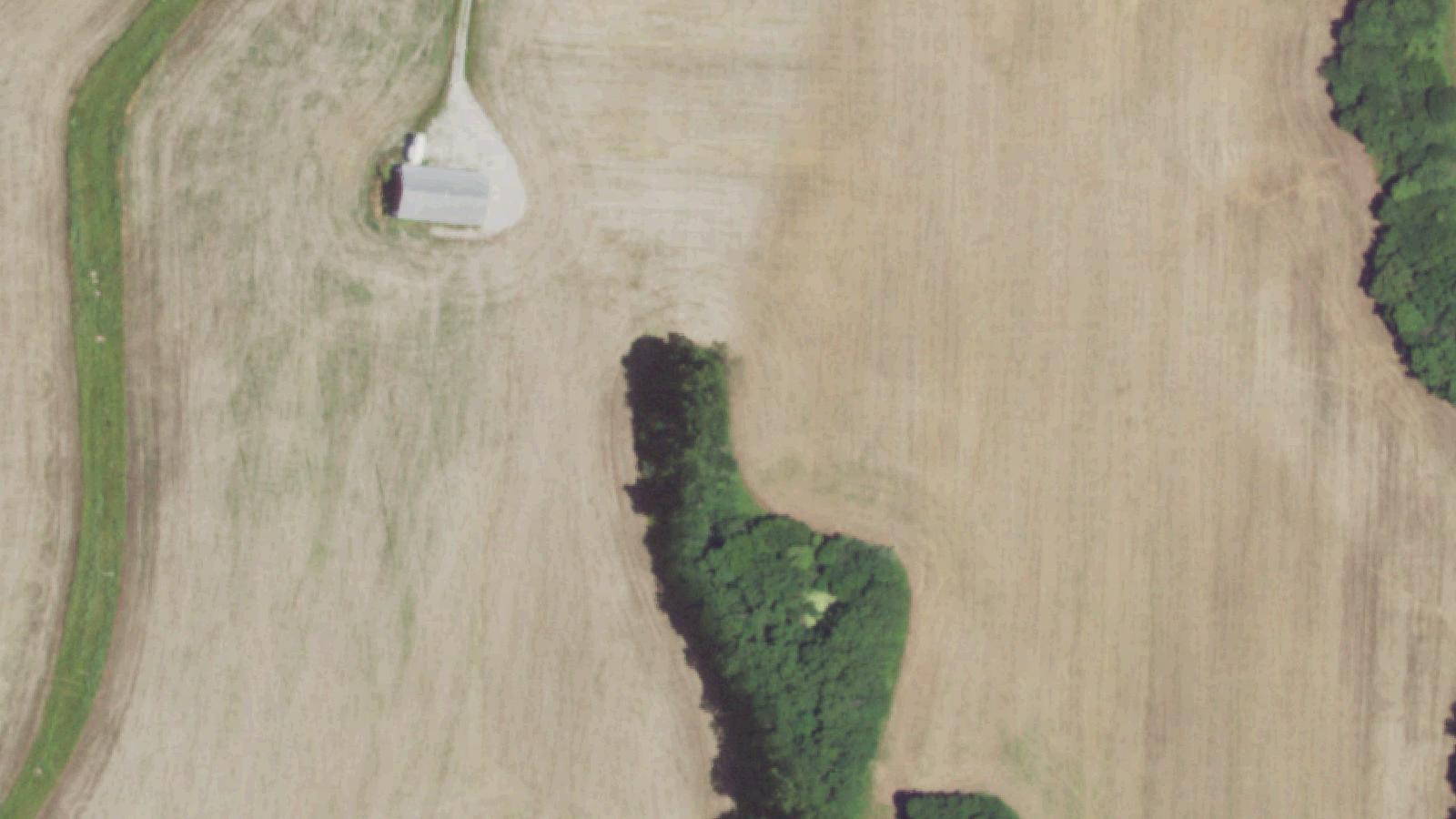 Aerial survey · USDA NAIP · public domain
A rural Callaway County bridge wrapped in long-running car-won't-start folklore
Auxvasse, MO
Research updated May 2026
Age
All Ages
Cost
Free
Public rural road. No fees.
Access
Limited Access
Gravel rural roadway, unlit at night
Equipment
Photos OK
Nine Mile Bridge crosses a creek on a rural road in Callaway County, Missouri, outside the small community of Auxvasse. The name reflects local folk-etymology rather than a verified historical record. No county history, newspaper archive, or state historical-society record accessed during research uniquely documents a specific named event tied to this bridge.
A long-running local legend describes the killing of enslaved African American people at or near the bridge during the antebellum era. The most active chronicler of the legend, the Haunts of Missouri project, explicitly classifies that claim as myth rather than documented fact. We follow that framing here: the racialized violence narrative associated with this bridge is folkloric, has not been substantiated by archival research, and should not be treated as confirmed history.
Broader context for the bridge is found in published histories of Auxvasse and Auxvasse Township maintained by the Kingdom of Callaway Historical Society and Wikipedia. The town of Auxvasse was platted in the 1870s along the Chicago and Alton rail line, and the rural road that crosses the bridge follows nineteenth-century township section lines. No archival reference to the bridge as a documented event site has been located through Callaway County or State Historical Society of Missouri collections.
Sources
Local tradition holds that Nine Mile Bridge is one of those rural Missouri spans where the laws of internal combustion politely suspend themselves after dark. The central legend instructs the visitor to drive onto the bridge, switch off the engine, and try to restart it. The car, the legend insists, will refuse to turn over until it has been pushed clear of the deck. The Haunts of Missouri site, which tracked the bridge for years, notes that the trick has never actually worked for the people who tried it.
A secondary set of stories attaches a wider range of reported phenomena to the bridge and to the small cemetery on the hill above it. Visitors who sit on the rail with their shoes off and their feet over the creek report a faint tickling sensation on their soles. Cars left parked on the gravel are sometimes reported to return with handprints and footprints on the hood and windshield. Distant pinpoint lights — described variously as eyes, lanterns, or reflections — appear at the tree line, the bridge underside, and the cemetery above. The silhouette of a woman is sometimes reported walking the deck at night.
The historical lore that explains these phenomena involves antebellum racial violence at the site. Local chroniclers, including the Haunts of Missouri author, classify that backstory as myth rather than verified history. The bridge is real, the legend is durable, and the documentary record is empty.
A short crossing on a rural gravel road outside Auxvasse, locally associated with a long-running car-won't-start legend. Use turnouts only and watch for oncoming farm traffic.
Some links on this page may earn HauntBound a small commission when you book, at no extra cost to you. Our editorial picks are independent. Full disclosure
Every HauntBound history is researched from documented sources. We clearly separate verified historical fact from paranormal folklore.
Free Guide
11 verified stops, rated for families, mapped in order. Free.
One email to confirm, then the guide link. Unsubscribe anytime.
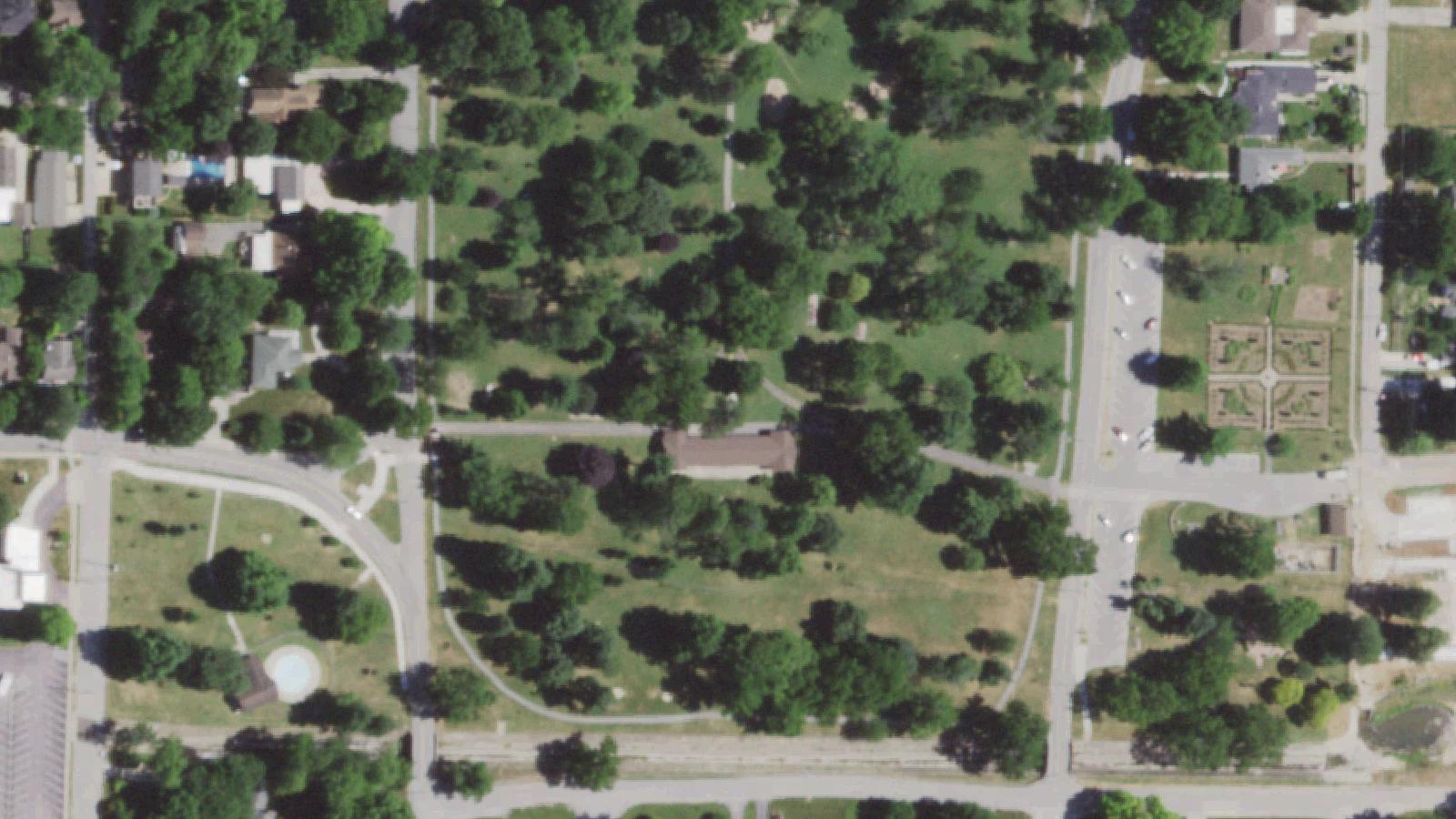 Aerial survey · USDA NAIP
Springfield, MO
Phelps Grove Park was established in 1914 as one of the first parks acquired by Springfield's Park Board. Named for Gov. John S. Phelps and his wife Mary Whitney Phelps, whose homestead once occupied the land, the park features fieldstone pavilions and bridges constructed during its founding period. The park has evolved from its origins as a private estate into a 95-acre public green space.
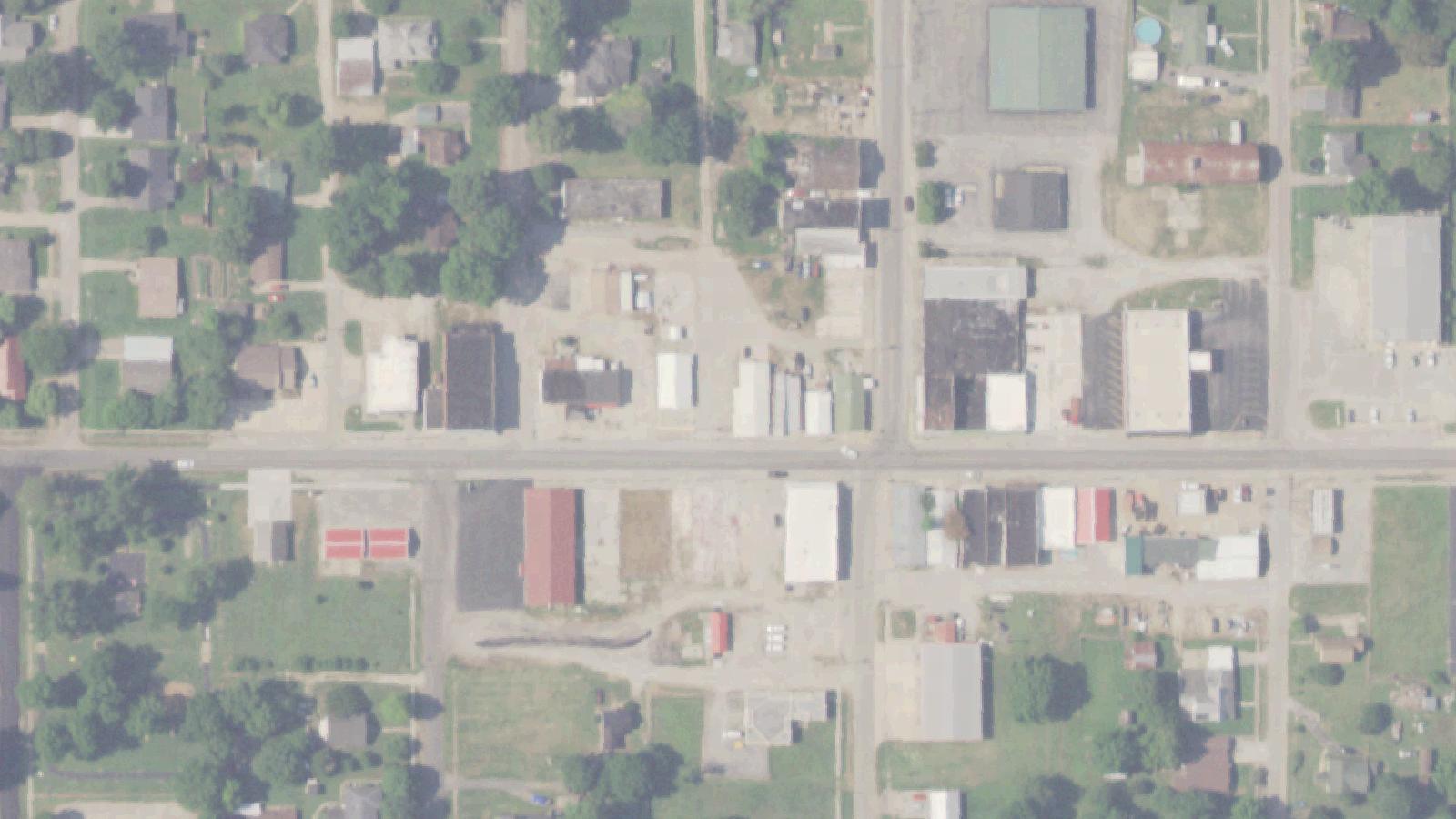 Aerial survey · USDA NAIP
Senath, MO
Crybaby Bridge is a small bridge on the ditch-bank roads near Senath in Dunklin County, deep in Missouri's Bootheel. It is one of dozens of 'crybaby bridge' sites across the United States and is locally paired with the 'Senath Light,' a roadside ghost-light legend that has drawn curiosity-seekers for decades and been covered by regional television news.
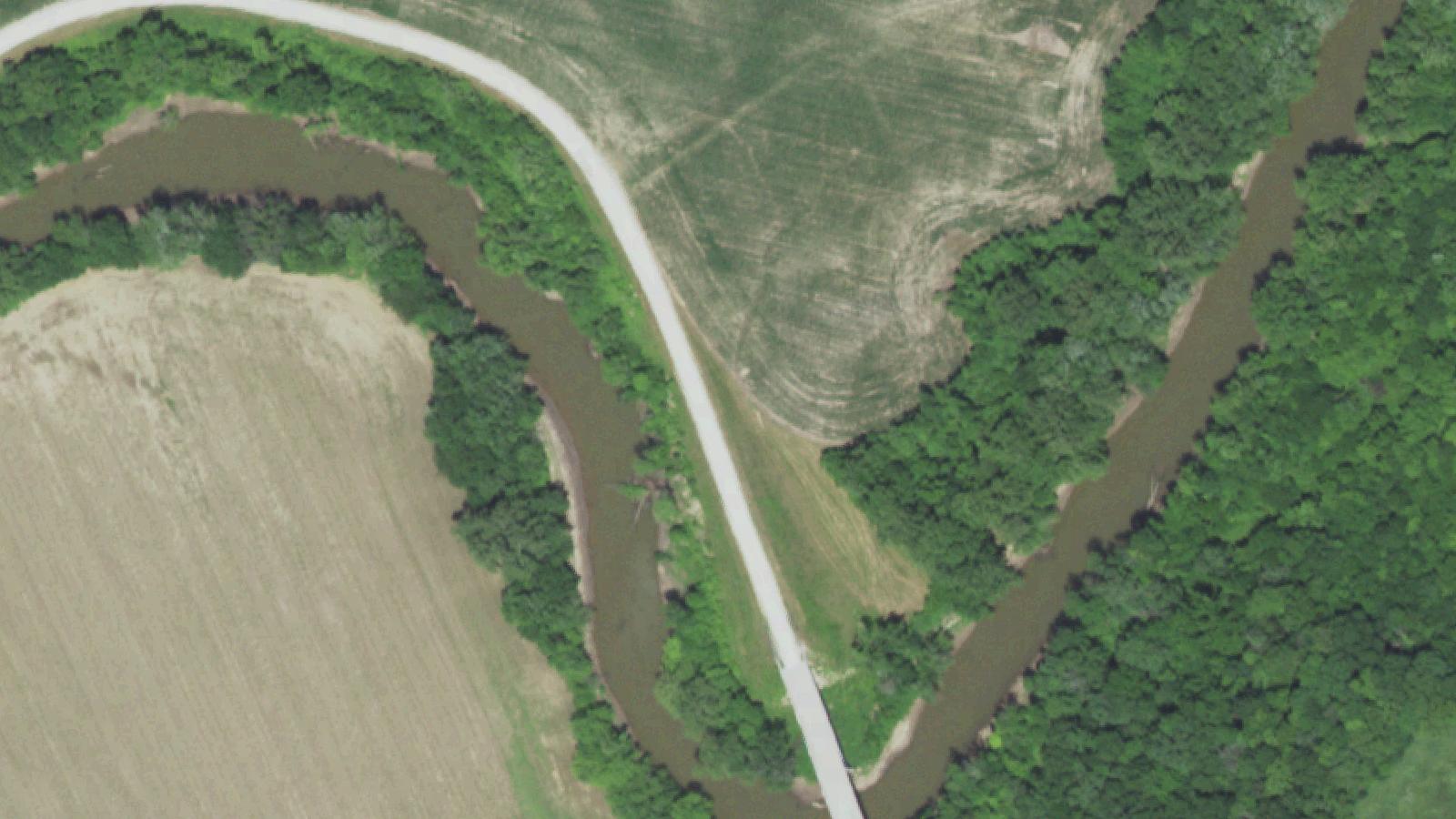 Aerial survey · USDA NAIP
New Haven, MO
Enoch's Knob Bridge was a 185-foot Parker through-truss bridge built in 1908 by the Missouri Bridge and Iron Company, carrying a remote gravel road over Boeuf Creek in Franklin County, between Washington and New Haven, Missouri. Long a destination for ghost hunters across the Midwest, the deteriorating iron span was demolished in 2013 and replaced with a concrete structure.