Est. 1920 · Route 66 Heritage · California Historical Site · Prohibition Era
William Rubottom, an Arkansas native, leased land along the Santa Fe Trail from rancher John Rains in 1856 and converted an existing adobe structure into the Mountain View inn and tavern — a stagecoach stop on the route between Los Angeles and San Bernardino.
In 1862, John Rains was murdered by an unknown assailant; the killing was never solved. Weeks later, vigilantes overheard at the Mountain View were reportedly conspiring to murder Rains' widow, Maria Merced Williams. Rubottom allegedly drove them off with a shotgun. Maria's brother-in-law Robert Carlisle, who initially led the search for Rains, later feuded with her estate's receiver, Under-Sheriff Andrew Jackson King, over control of her finances; Carlisle was killed in the 1865 Bella Union Hotel gunfight with King's brothers in Los Angeles.
The building was damaged by fire and flood over subsequent decades and eventually rebuilt by citrus grower John Klusman in 1920. During Prohibition the property reportedly operated as both a brothel and a speakeasy. Irl Hinrichsen, a Danish immigrant, purchased the inn in 1939, remodeled extensively, and gave it the name it still carries.
Marilyn Monroe is documented as having visited in 1959 — a signed autograph photo confirms the visit. Elizabeth Short, the Black Dahlia, is rumored to have dined there weeks before her murder in January 1947, though this claim lacks the same documentary support.
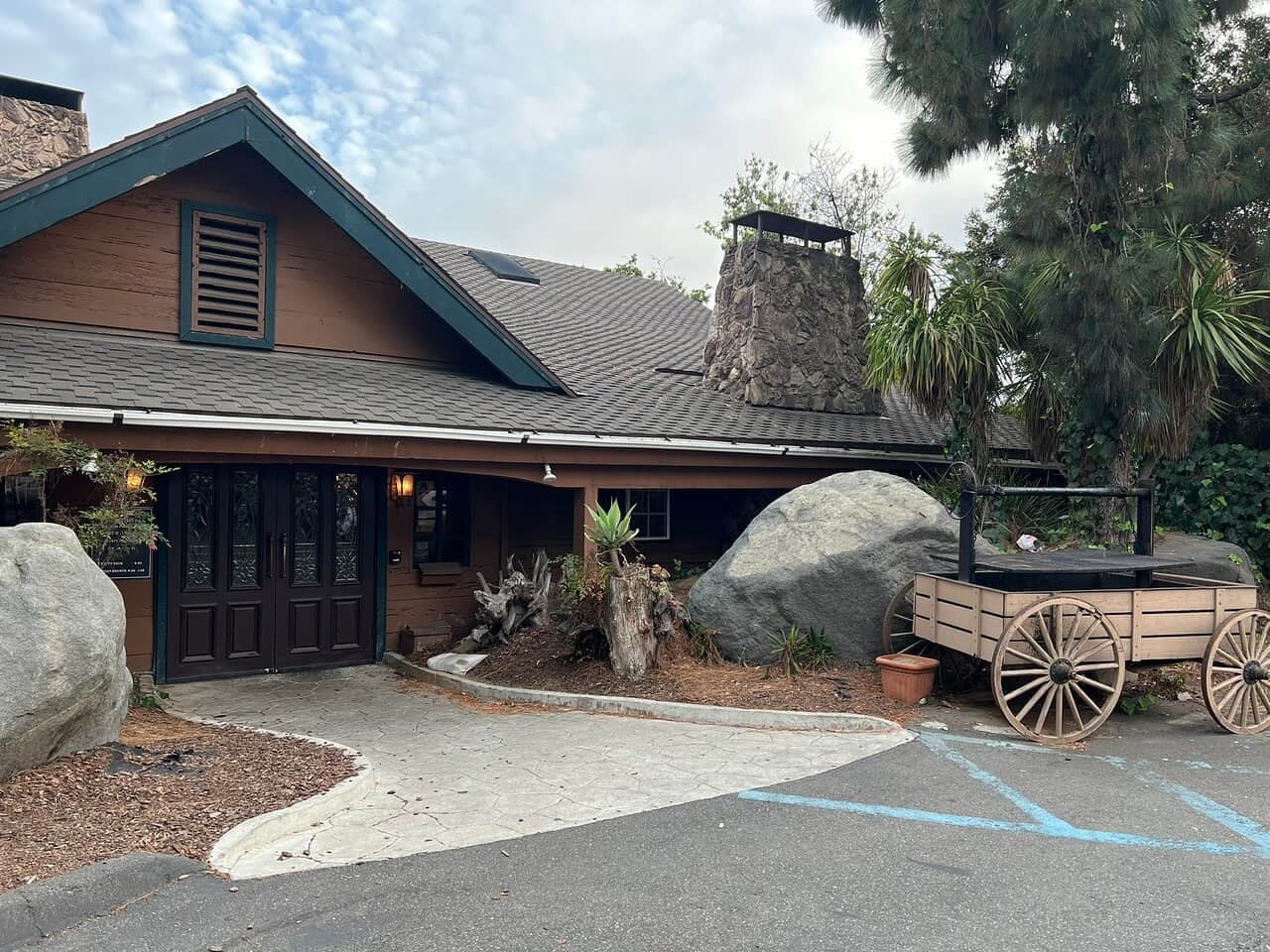
New ownership in 2002 brought interior renovations and an upgraded steakhouse menu. The building at 8318 Foothill Boulevard retains its 1920 exterior character.
Sources
- https://www.tastingtable.com/1916859/route-66-sycamore-inn-history-california-local/
- https://www.route66news.com/2010/05/09/the-history-of-the-sycamore-inn/
- https://deanjab.com/2013/04/the-sycamore-inn-route-66-rancho-cucamonga-california/
Phantom smells
The Inn's paranormal reputation is informal and employee-reported rather than externally investigated. Staff members describe the Venetian Room — a themed private dining space — as occasionally carrying an unexplained cigar smell with no identifiable source. The Viking Room, where the building's 1940s card-game and moonshine culture was most concentrated, is noted by some staff as having a heavier atmosphere than other areas.
No independent paranormal investigations are documented at this location, and the property does not market itself around supernatural claims. The building's age, its layered history of violence and illicit activity, and its position on what local researchers consider one of Southern California's most historically saturated corridors (multiple murders occurred on adjacent properties in the 1860s) contribute to its inclusion in regional dark tourism discussions.
The claim that Elizabeth Short visited before her murder is cited by several regional history sources but cannot be verified against primary documents. It may reflect the broader pattern of the Black Dahlia legend attaching to atmospheric Los Angeles-area venues from the 1940s.