Est. 1810 · Almshouse History · Poor Relief · Bucks County History · James A. Michener Connection
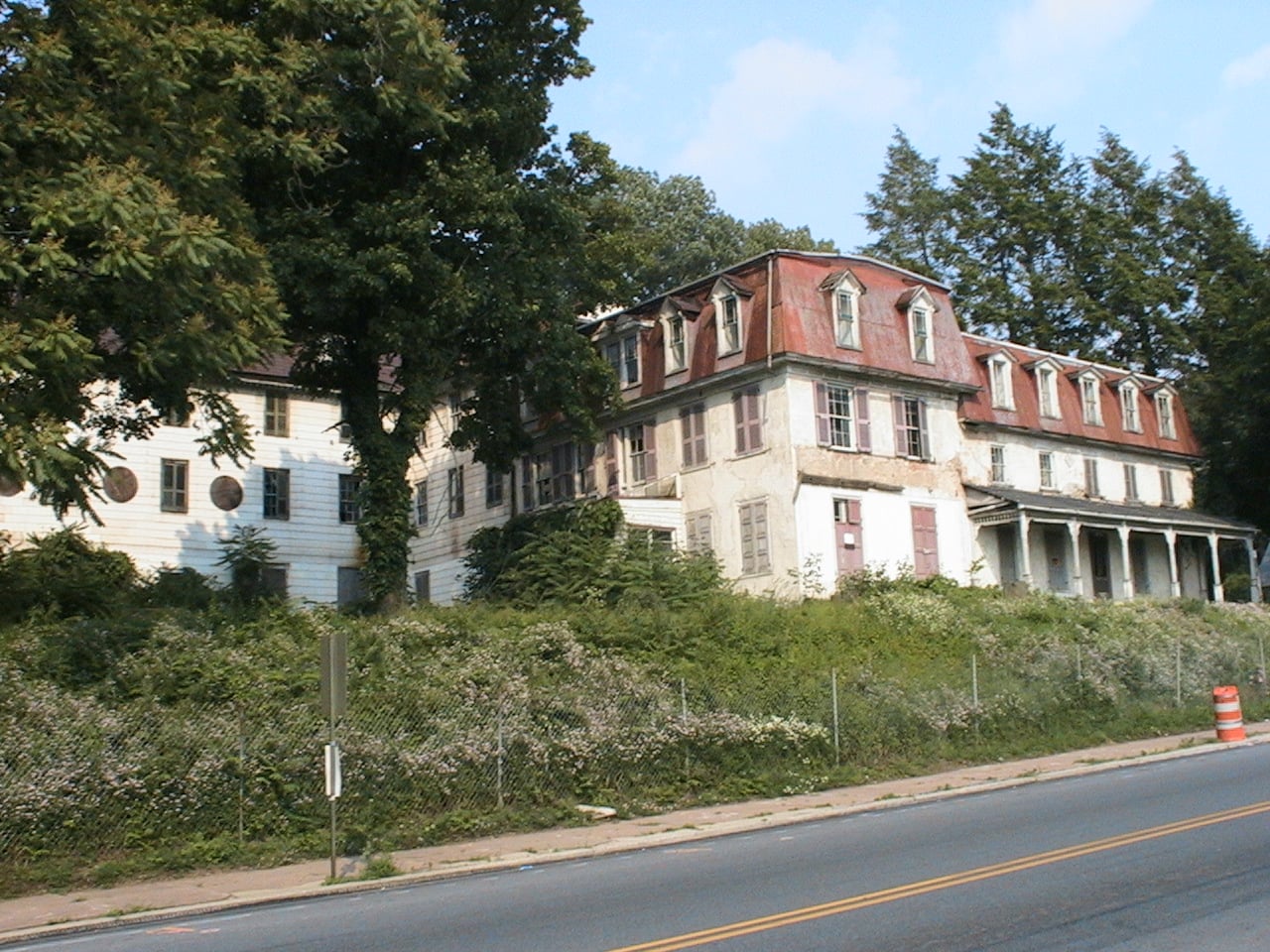
The history of this site extends before the almshouse itself. A barn built circa 1732 anchored a farm that would later support the county's welfare operation. From 1810, Bucks County operated a formal almshouse at this location — an institution common in American counties of that era, designed to house residents who could not support themselves: the elderly poor, the disabled, orphaned children, and those categorized as mentally ill under the period's diagnostic frameworks.
Almshouses operated on a self-sustaining model where possible: residents worked the farm, maintained the grounds, and performed institutional labor in exchange for housing and food. This was standard American poor relief practice through the 19th century. The Civil War period saw the farm's buildings converted to military hospital use, an additional layer of suffering folded into the physical space.
Writer James A. Michener, raised in Bucks County, spent periods at the county poor house during his youth and later wrote about the experience in his 1949 novel The Fires of Spring — a rare literary record of the institutional experience of American poorhouse life from a resident's perspective.
The almshouse closed in 1966 and transitioned to Neshaminy Manor, a county-operated skilled nursing facility. The institution has since earned recognition as one of the top nursing homes in the country — a 5-star rating from the Centers for Medicare and Medicaid Services as of 2024–2026, placing it in the top 10% of reviewed facilities nationwide. The 360-bed facility continues to operate actively. The historic 1732 barn was restored by a community organization from 1994 to 1996 and now functions as a nature and community center.
Sources
- https://www.buckscounty.gov/540/Neshaminy-Manor
- https://www.barnnaturecenter.org/barn-history.html
- https://buckscountyherald.com/stories/doylestown-has-its-share-of-scary-stories,12635
Apparitions
The Neshaminy Manor Complex sits at the intersection of three distinct eras of American institutional suffering: the antebellum poorhouse period from 1810 onward, the Civil War military hospital use, and the 20th-century institutionalization of the mentally ill and elderly before the shift to community-based care.
Apparitions have been reported in and around the original almshouse-era structures that remain on the complex grounds. These are described in general terms — figures seen near the older buildings, presences observed where residents once lived and died — but without the specificity of named entities, particular rooms, or documented investigation sessions.
Almshouses generated significant human misery over their operational lifetimes, and the populations they served — particularly those who arrived without family or external support — often died without leaving records. The anonymity of their deaths is part of what makes the location's history both historically significant and difficult to document with precision.
The operative nursing facility, Neshaminy Manor, is not open for paranormal investigation; the historic buildings that constitute the atmospheric core of the reports are on property that serves an active medical function.