Est. 1892 · Religious Education History · Moravian Heritage · Lehigh Valley History · 19th-Century Architecture
John Amos Comenius was born in 1592 in Moravia (present-day Czech Republic) and orphaned by the plague at age twelve. He became a bishop of the Unity of the Brethren and developed educational philosophy advocating that all people — regardless of class, gender, or nationality — deserved systematic instruction. His 1657 work Didactica Magna articulated principles that shaped European and American pedagogy for centuries. The Moravians, who founded Bethlehem in 1741, honored this legacy when they named their college's central building after him.
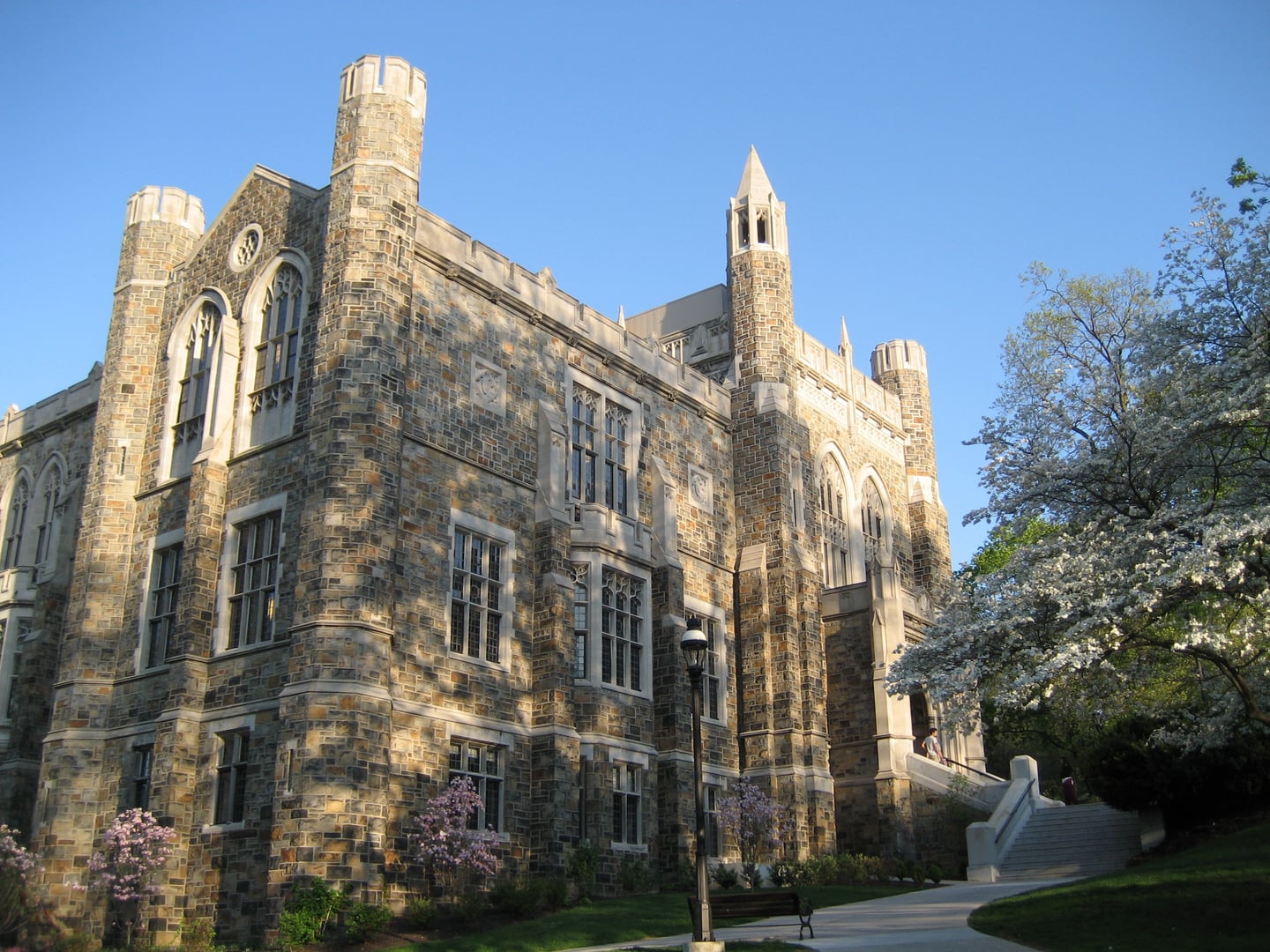
Architect Albert Leh designed Comenius Hall and construction was completed in 1892. Built of limestone and bluestone quarried locally, the structure was intended to house every function of the college in a single building: lecture halls, student dormitories, administrative offices, a cafeteria, and a gymnasium. In 1892, it literally was Moravian College.
On Halloween night, 1913, fire gutted the upper three floors. The original Comenian student newspaper documented the collapse: around 9:30 p.m., the roof gave way, destroying the fourth and third floors and damaging the second as the structure fell. The building was rebuilt to its current configuration — offices and classrooms only, the residential functions removed. It now houses multiple academic departments including History, Modern Languages, and Philosophy.
Moravian College has been known as Moravian University since 2021, following a change in institutional classification.
Sources
- https://www.moravian.edu/about/comenius
- https://sah-archipedia.org/buildings/PA-02-NO27
- https://www.wfmz.com/features/historys-headlines/historys-headlines-fire-at-comenius-hall/article_5a76dc12-5a93-59ab-9103-b8b0761718d3.html
- https://en.wikipedia.org/wiki/Moravian_University
ApparitionsLights flickeringShadow figures
Two separate figures are attributed to Comenius Hall in the reports collected from students and campus guides over the years. The older account simply describes a light source moving steadily back and forth across the top floor after dark — visible from the street — and connects it to the namesake of the building, John Amos Comenius. Whether the original reporters literally believed this or whether it began as a story attached to an unexplained light is not documented.
A second figure, reported more recently, is described as a young male student who interrupted his studies to serve in World War I. According to accounts gathered from campus sources, his apparition has been observed throughout the building, as if still attending the classes he left behind.
The most detailed account from Comenius Hall involves a Halloween tour organized by the college. A guide led a group through the building, and for atmospheric effect, had someone go ahead to turn off the basement lights. That person described watching the light switch return to the on position three times in succession — each time he threw it, it reversed. He gave up and rejoined the group without killing the lights.
As the group descended toward the basement, a blind participant hesitated. His guide dog refused to proceed. The animal reportedly gave signals associated with the detection of danger, attempting to prevent the man from entering the basement. There was nothing visibly threatening in the stairwell. After the tour, the participant noted the dog had never before responded that way in any setting. No investigation followed.
Other reported phenomena at the broader Moravian campus — including the Brethren's House on the South Campus, where Revolutionary War soldiers were treated and where a nurse's figure has been reported — are distinct from the Comenius Hall accounts.