Est. 1833 · Historic Cemetery · Above-Ground Tomb Architecture · Anne Rice Literary Setting · Immigrant Heritage
The City of Lafayette, then a separate municipality across the upper boundary of New Orleans, established Lafayette Cemetery No. 1 in 1833 to serve its growing population of German and Irish immigrants. New Orleans annexed Lafayette in 1852; the cemetery continued as a municipal burial ground under the new jurisdiction.
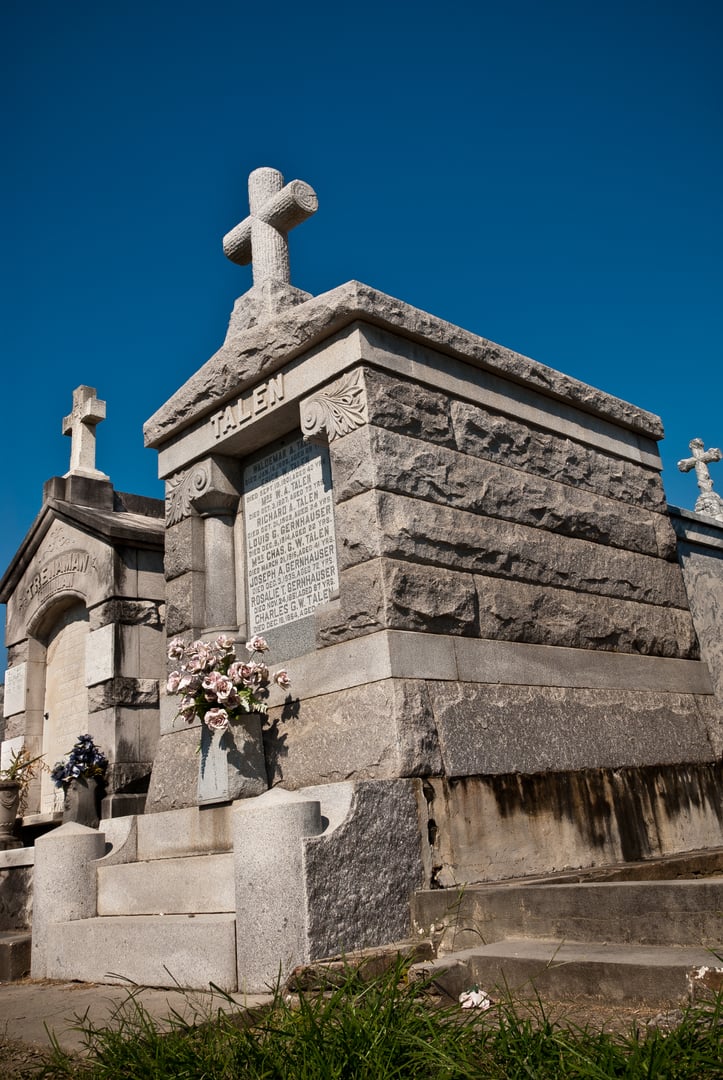
The cemetery's roughly seven acres are divided into two main blocks separated by a central cross-axis. The above-ground tomb tradition characteristic of New Orleans cemeteries reflects the city's high water table, which makes below-ground burial impractical. Many of the tombs are family monuments; others are society vaults built by mutual-aid and benevolent associations that served their immigrant member populations. The cemetery contains approximately 1,100 family tombs and society vaults representing more than 7,000 documented burials, with substantial additional informal use over its 190-year history.
Lafayette Cemetery No. 1 entered American popular consciousness through Anne Rice. Rice's Vampire Chronicles, beginning with the 1976 novel Interview with the Vampire, used the cemetery and surrounding Garden District as recurring settings. Neil Jordan's 1994 film adaptation filmed scenes among the tombs, and the cemetery's appearance in the Mayfair Witches series and television adaptations has cemented its association with Rice's body of work.
The cemetery has been temporarily closed for repairs since 2020, with successive reopening dates pushed back due to the scale of restoration work needed on the tombs and walls. The City of New Orleans Property Management Division administers the site. Tours from the gates have continued throughout the closure. Save Our Cemeteries, the New Orleans cemetery preservation nonprofit, has historically led tours and conservation programming at the site.
Sources
- https://en.wikipedia.org/wiki/Lafayette_Cemetery_No._1
- https://www.neworleans.com/listing/lafayette-cemetery-no-1/32160/
- https://nola.gov/nola/media/Property-Management/Guidebook-2022-05-25-As-submitted-for-promulgation-(1).pdf
ApparitionsPhantom smellsCold spots
Lafayette Cemetery No. 1 carries less specifically named haunted folklore than St. Louis Cemetery No. 1, which is anchored by the Marie Laveau tradition. Lafayette's atmospheric weight derives instead from its architectural density, its literary associations, and its cinematic presence in the Interview with the Vampire adaptation.
Local tradition does include a few specific accounts. A figure of a woman in mourning has been reported among the tombs at dusk. Visitors have described the smell of pipe tobacco near one of the cemetery's distinctive cast-iron monuments. Tour guides from Save Our Cemeteries and other operators describe consistent cold pockets in specific society-vault sections, particularly the German Society vault.
The cemetery's association with Anne Rice has substantially shaped its public reception. The Lestat character's preference for Lafayette Cemetery in the Vampire Chronicles, the cemetery's role in the 1994 Interview with the Vampire film, and its use in subsequent Mayfair Witches adaptations have made it a literary pilgrimage destination. Rice was a Garden District resident herself; her former home on First Street is a frequent stop on the same tour circuit.
Visitors interested in New Orleans cemetery culture should treat Lafayette Cemetery No. 1 as a working historic burial ground first and a haunted location second. The Save Our Cemeteries conservation framing offers a more textured engagement with the site than the standard ghost-tour patter.
Media Appearances
- Interview with the Vampire (1994 film)
- The Vampire Chronicles novels
- Mayfair Witches