Est. 1889 · San Francisco Landmark No. 135 · National Register of Historic Places (1989) · Former Russian Consulate · Counterculture History
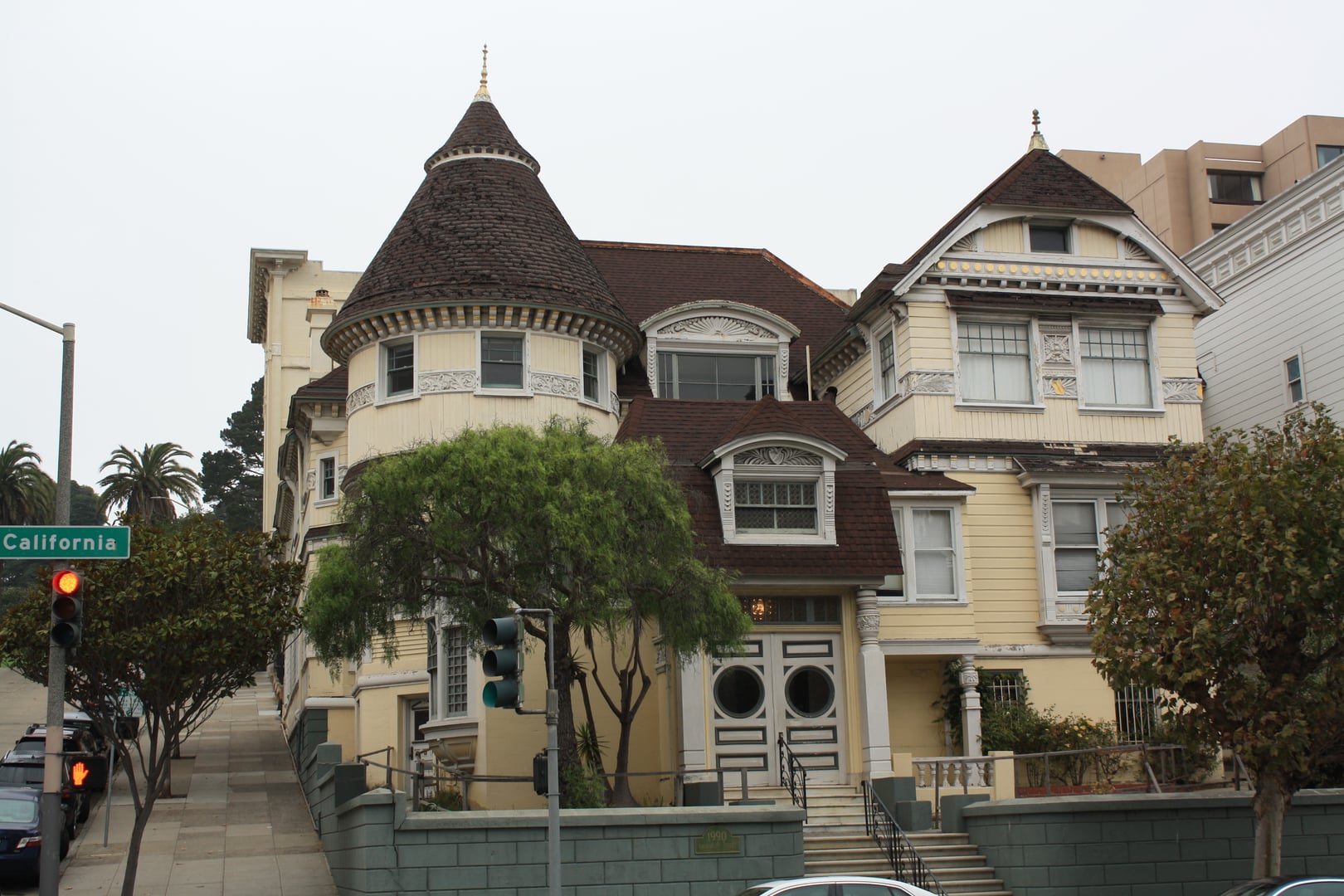
William Westerfeld, a German-born confectioner who operated a bakery on Sutter Street, commissioned architect Henry Geilfuss to design a four-story Stick-style Victorian at the corner of Fulton and Scott. The house was completed in 1889 with 28 rooms, an octagonal tower, and ornate woodwork that survives largely intact.
After Westerfeld's death in 1895, the property passed through several owners. From around 1925 to 1928 it served as the Russian consulate following the Soviet government's takeover of pre-revolutionary holdings; the building is sometimes called the Russian Embassy House for this period. It was subsequently divided into a rooming house, then operated as a jazz club called the Powell-Sutton.
The 1960s brought a new layer of cultural history. Underground filmmaker Kenneth Anger rented rooms in 1966-67 and shot portions of Invocation of My Demon Brother in the house. Musician and Anger collaborator Bobby Beausoleil lived in the building during the same period before becoming associated with the Manson Family and being convicted of the 1969 murder of music teacher Gary Hinman. Anton LaVey, founder of the Church of Satan, visited the house during this era; whether full Church of Satan rituals were conducted there is disputed across sources.
Jimmy Siegel, a San Francisco business owner, purchased the foreclosed property at auction in 1986 for $750,000. Siegel has carried out a multi-decade restoration of the original Victorian detailing while operating the building as private apartments, primarily for staff and friends connected to his Haight Street store. The Westerfeld House was designated San Francisco Landmark No. 135 and was added to the National Register of Historic Places in 1989. It remains a private residence; interior access is not available to the public.
Sources
- https://en.wikipedia.org/wiki/William_Westerfeld_House
- https://www.atlasobscura.com/places/william-westerfeld-house
- https://noehill.com/sf/landmarks/sf135.asp
- https://victorianalliance.org/the-westerfeld-house-history/
- https://hoodline.com/2014/10/the-spooky-history-of-the-westerfeld-house/
Phantom footstepsCold spotsPhantom sounds
Reports of unusual activity at Westerfeld span decades and turn less on dramatic apparitions than on a quieter, more atmospheric set of accounts. Tenants have described persistent nightmares, footsteps in unoccupied upper rooms, and what several have called an overwhelming emotional weight in specific spaces. The most frequently cited rooms are those associated with Kenneth Anger's 1966-67 residency on the upper floors.
Anger himself spoke in interviews about ceremonial work conducted in the house during the production of Invocation of My Demon Brother. A pentagram is reported to have been etched into one floor during this period. Whether Anton LaVey conducted Church of Satan rituals in the house or merely visited is disputed; LaVey's biographies place his ritual practice primarily at his own Black House on California Street, not at Westerfeld.
The house was the subject of a 2018 Ghost Adventures investigation. Owner Jimmy Siegel has stated publicly that he does not consider the house haunted in his decades of residence. Tenants associated with his Haight Street store, however, have continued to report nightmares, cold spots in specific rooms, and footsteps on the upper-floor stairs without an apparent source.
These accounts circulate as private tenant reports rather than as formal investigation records. The Westerfeld House does not open for paranormal tours, and visitors are limited to exterior viewing from the public sidewalk at Fulton and Scott.