Guided Tour Booking Required
Performance attendance
Attend a film, concert, or live performance in the restored 1,143-seat Tivoli auditorium with its preserved 1926 atmospheric-style detailing.
- Duration:
- 2 hr
HauntBound archive · catalog record
Reported phenomena, as catalogued
A 1,143-seat Frederick theater that opened in 1926 as the Tivoli, restored after a 1976 flood; staff report the spirit of 'Jimmy,' a former projectionist who died of a heart attack at the venue.
20 West Patrick Street, Frederick, MD 21701
Research updated May 2026
Age
All Ages
Cost
$$
Ticket prices vary by performance. Check the Weinberg Center calendar for current shows and pricing.
Access
Wheelchair OK
Restored historic theater with accessible entrances and accessible seating sections.
Equipment
No Photos
Est. 1926 · Opened December 23, 1926 as the Tivoli Theatre, built by Stanley-Crandall Company · 1,143-seat atmospheric-style movie palace; second-largest building in Frederick at the time · Substantially damaged in the 1976 Frederick flood · Reopened 1978 as the Weinberg Center for the Arts after restoration
The Tivoli Theatre opened on December 23, 1926 in downtown Frederick at 20 West Patrick Street. Built by the Stanley-Crandall Company at a reported cost of more than $350,000, the 1,143-seat theater was at the time the second-largest structure ever built in Frederick. Like other large Stanley-Crandall houses, the Tivoli was designed as a movie palace with vaudeville and live-performance capacity, with an atmospheric style of interior decoration intended to evoke an open-air courtyard under a starlit sky.
The theater operated continuously as a cinema and live venue through the mid-twentieth century. Dan and Alyce Weinberg purchased the Tivoli in the late 1950s and operated it for the next two decades. The building was substantially damaged in the 1976 Frederick flood, when Carroll Creek overflowed and inundated downtown Frederick, including the Tivoli's lower levels.
After the flood, the Weinbergs presented the theater to the City of Frederick, which restored it and reopened the building in 1978 as the Weinberg Center for the Arts. Since then it has operated as a municipal performing-arts venue programming film, concerts, dance, theater, and community events. Most of the original 1926 interior decoration survives, having been preserved and refreshed through the restoration. The Weinberg Center remains a Wikipedia-documented historic theater and the centerpiece of downtown Frederick's cultural infrastructure.
Sources
According to Southern Spirit Guide's roundup of haunted Maryland theaters and to Visit Frederick's haunted-Frederick coverage, the most consistently reported phenomenon at the Weinberg Center is staff-room and restroom disturbance attributed to the ghost of 'Jimmy,' identified in the lore as a former projectionist who reportedly died of a heart attack at the theater.
The staff tradition holds that Jimmy is particularly active when new employees are hired — restroom fixtures will be found turned on, items moved, or stalls visibly used — and that the disturbances quiet down once the new hires are integrated. The standard appeasement, repeated across multiple sources, is that the last employee to leave the building each night will say goodnight to Jimmy on the way out.
The lore is described as 'medium' verifiability in our intake. It is single-source for the named entity (no contemporary obituary or newspaper account confirms a projectionist's on-site death at the Tivoli has surfaced in our verification), but it is multi-source for the staff tradition itself: Southern Spirit Guide, the haunted-Maryland-theaters circuit, and Visit Frederick all describe the same goodnight ritual and the same hiring-driven pattern of incidents.
Independent corroboration: Southern Spirit Guide's Haunted Theatres of Maryland profile and US Ghost Adventures' Frederick Ghost Tour each independently record the Jimmy-the-projectionist lore — heart-attack death on premises, restroom disturbances aimed at new hires, mezzanine stomping, box-office time-reminders — with details that match across sources. Two independent paranormal sources beyond the prior Wikipedia / Weinberg Center / Cinema Treasures historical base.
Notable Entities
Attend a film, concert, or live performance in the restored 1,143-seat Tivoli auditorium with its preserved 1926 atmospheric-style detailing.
Some links on this page may earn HauntBound a small commission when you book, at no extra cost to you. Our editorial picks are independent. Full disclosure
This Frederick tour includes Weinberg Center for the Arts on its route.
Every HauntBound history is researched from documented sources. We clearly separate verified historical fact from paranormal folklore.
Free Guide
9 verified stops, rated for families, mapped in order. Free.
One email to confirm, then the guide link. Unsubscribe anytime.
Yankton, SD
The Dakota Theatre opened in 1902 in downtown Yankton, one of the oldest cities in South Dakota and the former capital of Dakota Territory. The building has served as a performance venue across more than a century, including periods as a vaudeville house and a movie theater, and now operates as a community theater. Staff and performers have long associated the building with reports of resident spirits.
Cripple Creek, CO
The Butte Theater on Bennett Avenue is a historic Cripple Creek opera house rebuilt after the April 1896 fires that devastated the city. Associated with the Imperial Casino, it has operated as a performance venue for more than a century and is reportedly haunted by a ghost named Jack, linked to the nearby fire department.
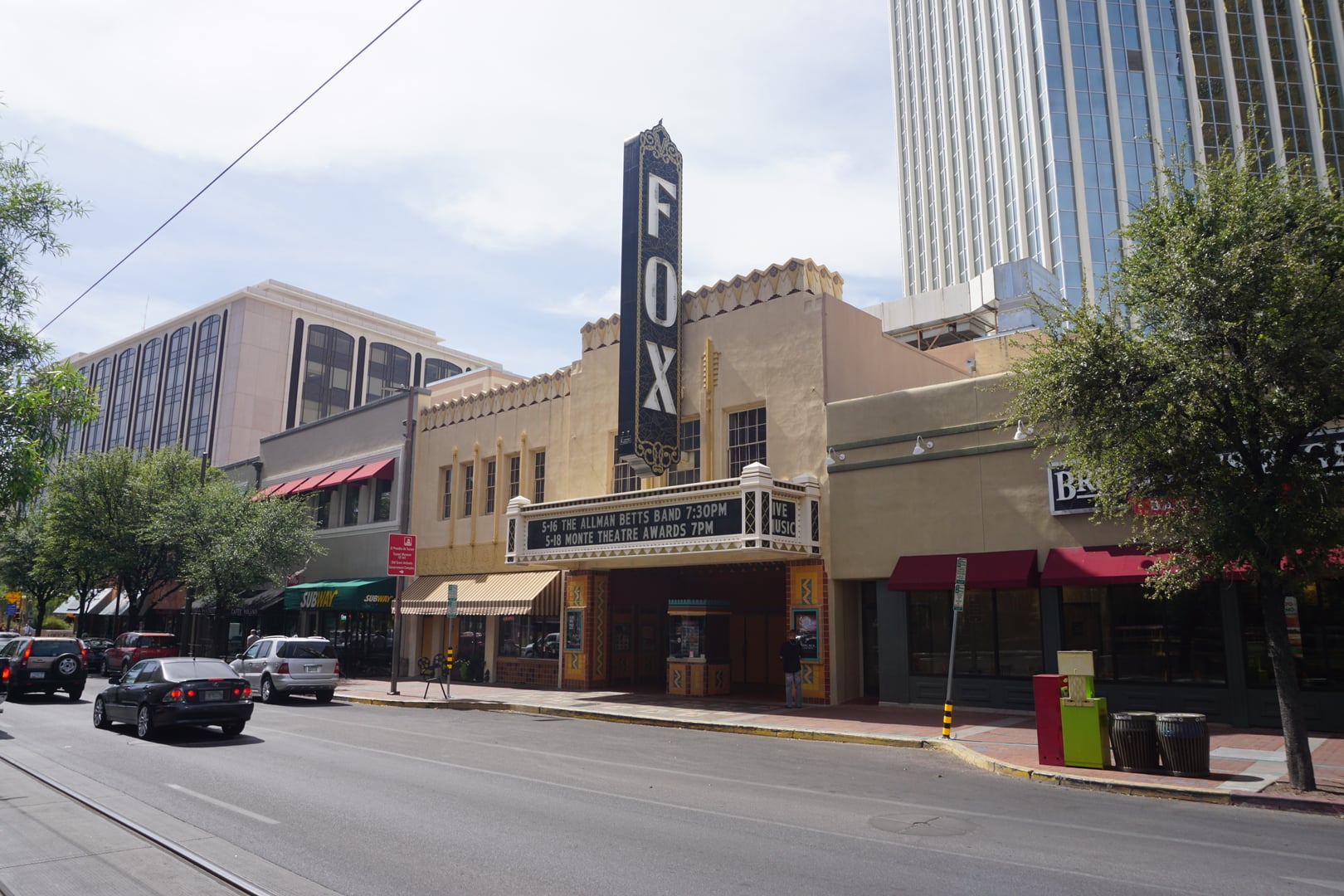
Tucson, AZ
The Fox Tucson Theatre opened on April 11, 1930, as a combined vaudeville and movie house. After closing in 1974 and standing vacant for 25 years, the building was purchased in 1999 by the non-profit Fox Tucson Theatre Foundation for $250,000 and reopened in 2006 following a multi-year, multi-million-dollar restoration.