Est. 1894 · Industrial Heritage · Gilded Age Engineering · Rural Infrastructure
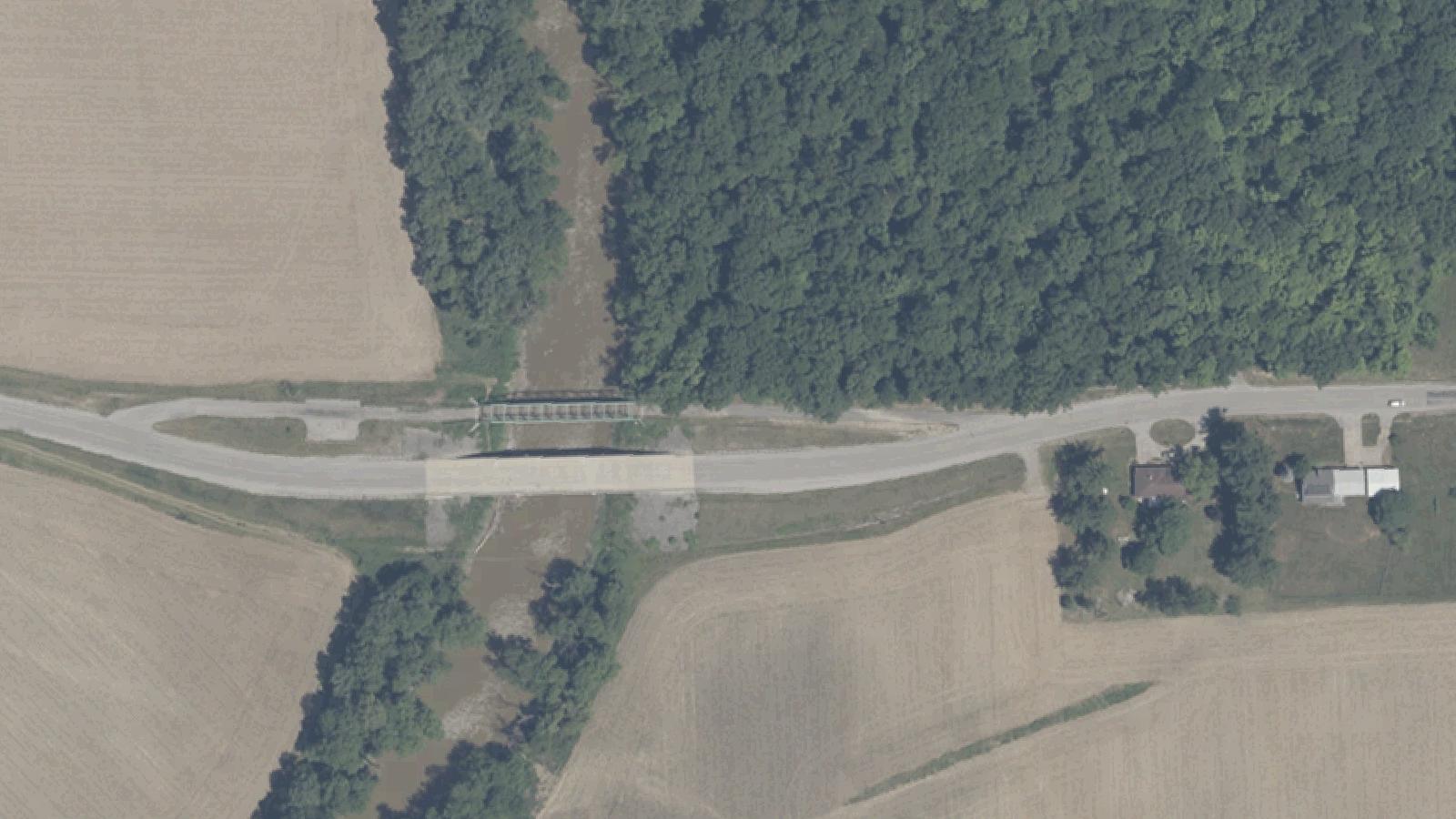
Brooks Bridge stands as an example of late nineteenth-century American bridge engineering. Built in 1894 by the Lafayette Bridge Company of Lafayette, Indiana, the bridge carries Brooks Bridge Road across the East Fork White River in the rural landscape south of Shoals in Martin County. The structure employs a pin-connected Pratt through truss design, a configuration favored during the late 1800s for its structural efficiency and relatively economical fabrication.
The bridge consists of ten metal panels spanning the river, and its design incorporates the practical engineering approaches of the era. The bridge is a single-lane structure, reflecting both the rural nature of the area and the road traffic patterns of the period in which it was built. Despite its age and the rural setting, the bridge has been maintained in serviceable condition and continues to function as an active crossing.
The bridge's location in the undeveloped landscape of Martin County has preserved much of its original setting. The surrounding area remains largely rural, with the East Fork White River creating a scenic corridor through the Indiana countryside. The bridge represents the infrastructure development that enabled settlement and commerce in rural areas during the Gilded Age.
Sources
- https://historicbridges.org/bridges/browser/?bridgebrowser=indiana/brooksbridge/
- https://indiana.hometownlocator.com/maps/feature-map,ftc,2,fid,450714,n,brooks%20bridge.cfm
Phantom voicesDisembodied screaming
The Brooks Bridge carries one of the darker legends in Martin County folklore. According to local accounts passed down through generations, a young woman once died at the bridge. The circumstances are lost to time. Days later, her body was recovered, confirming the tragedy.
Following her death, witnesses began reporting cyclical paranormal manifestations. On the fifth of every month—whether by coincidence or design—visitors to the bridge have reported hearing anguished screams emanating from the area. The accounts describe female vocal distress seemingly synchronized with the moment of the original fall, followed by the sound of impact on water and subsequent silence.
More unsettling accounts suggest interactive phenomena. According to local lore, individuals who have tried to intercept the apparition have allegedly been pursued by the manifestation. These reports describe the figure turning hostile, chasing her would-be rescuers while screaming in fury for the interruption. The accounts reflect folkloric themes of unfinished business and resistance to external intervention.
Whether these reports represent actual paranormal phenomena, psychological responses to the bridge's location and tragic history, or purely folkloric storytelling remains undetermined. The monthly cycle and the specific narrative structure suggest elements of urban legend rather than documented paranormal investigation findings, though the accounts have persisted in local oral tradition.