Est. 1870 · National Register of Historic Places · King Bridge Company · Iron Bridge Engineering · Barren River Crossing
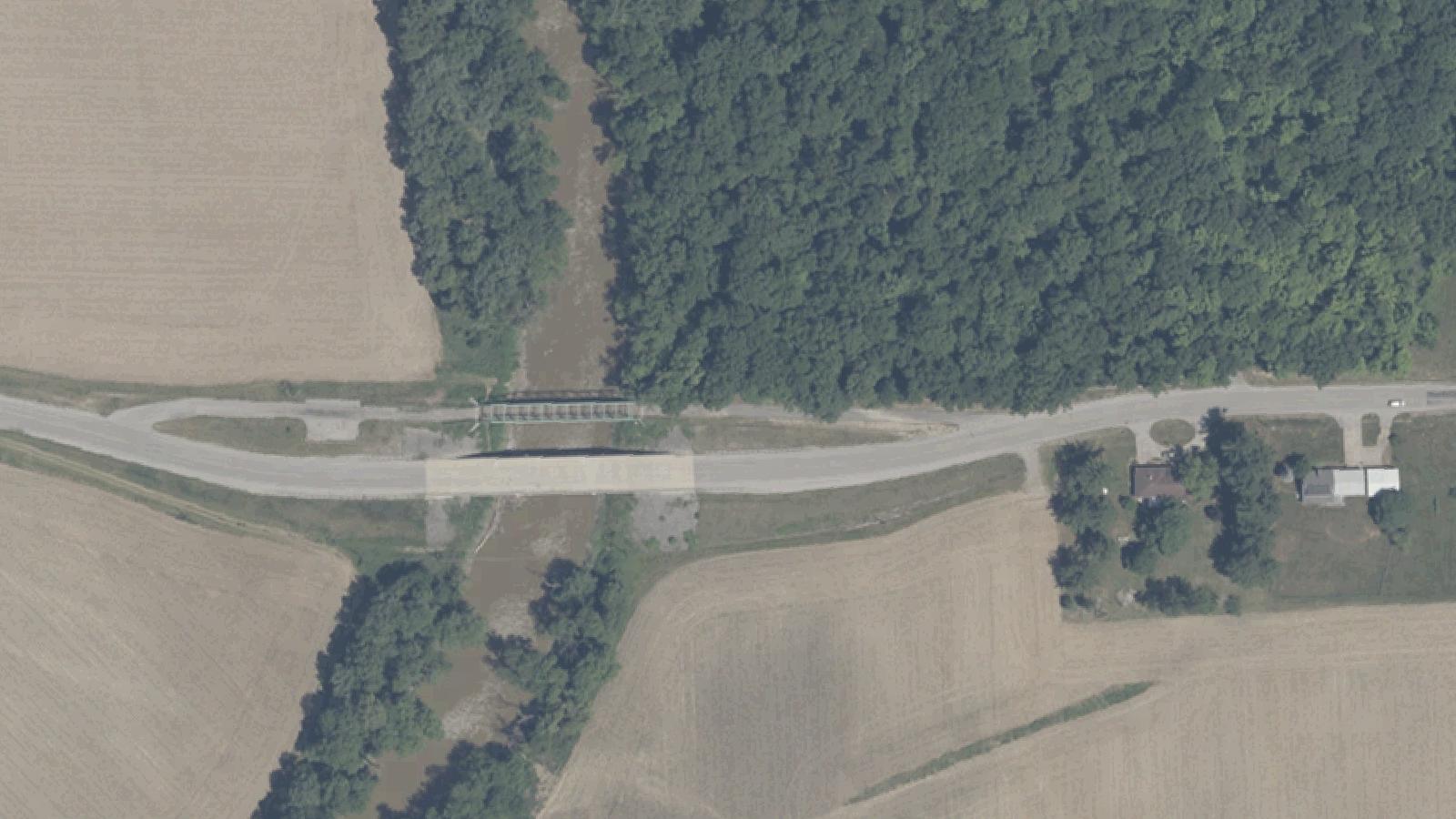
The Old Richardsville Road Bridge represents a significant engineering achievement in American bridge construction. Built during the pivotal era of American iron bridge development, the structure showcases the three-span bowstring truss design that characterized cutting-edge infrastructure of the late 19th century.
Historical records indicate construction occurred between 1860 and 1889, with a commemorative plaque mounted on the bridge's overhead bracing suggesting the later date. However, engineering analysis suggests the bridge likely dates to the early 1870s, indicating the plaque may commemorate a renovation or significant maintenance event rather than original construction.
The bridge was constructed by the King Bridge Company of Cleveland, Ohio, a significant player in the American bridge manufacturing industry during the Industrial era. The single-lane crossing spans the Barren River, providing critical infrastructure for residents of Warren County and the surrounding region.
The bridge's engineering and historical significance led to its designation on the National Register of Historic Places in November 1980. In the 21st century, the structure faced demolition threats but was preserved through community effort. Recent restoration work was completed to ensure the bridge's continued functionality and historic preservation.
The bridge has served as a filming location and tourist destination, recognized for its architectural distinction and historical importance to regional infrastructure development.
Sources
- https://historicbridges.org/bridges/browser/?bridgebrowser=kentucky/oldrichardsvilleroad/
- https://wanderlog.com/place/details/281109/old-richardsville-bridge
- https://www.explorekentucky.us/fieldjournal/2014/9/10/old-richardsville-road-bridge
ApparitionsPhantom pushingResidual haunting
The Old Richardsville Road Bridge has become a focal point for regional paranormal folklore and legend tripping—the practice of young people visiting supposedly haunted locations as coming-of-age rituals. The bridge's legend centers on a tragic narrative involving a young woman whose pregnancy drove her to despair.
According to the most common version of the legend, the woman drove her vehicle off the bridge during a violent storm. Floodwaters resulting from the same weather event prevented rescue, and she drowned in the swollen Barren River. Alternative accounts describe the death as accidental rather than intentional, with the woman losing control during poor visibility and stormy conditions.
Paranormal researchers and folklore specialists have traced drowning incidents at the bridge spanning from the 1930s through the 1970s, with some accounts suggesting even earlier tragedies coinciding with the bridge's original construction period. However, local law enforcement and historical researchers have been unable to locate newspaper records or official documentation confirming specific incidents.
The most famous paranormal ritual associated with the bridge involves visitors driving onto the structure, placing their vehicle in neutral, and turning off the engine. According to the legend, a ghostly hand will push the vehicle across the bridge, or handprints will mysteriously appear in powder applied to the car's bumper before arrival.
Variations on the legend include leaving a rose on the windshield during storms, with witnesses claiming to observe a spectral hand retrieving the flower. Dr. Sydney Varajon, a supernatural folklore instructor at Western Kentucky University, explains that such legends serve important community functions, providing younger generations with shared cultural narratives and coming-of-age experiences.
Engineering analysis suggests the phenomenon experienced by visitors—cars rolling across the bridge despite being in neutral—results from the bridge's structural characteristics. The iron framework naturally shifts when vehicles are parked on it, creating subtle gravitational conditions that encourage movement. This rational explanation does not diminish the cultural significance or visitor experience associated with the bridge's paranormal reputation.
Notable Entities
The Drowned Woman