Est. 1849 · Pioneer Cemetery · Indigenous Burial Mounds · Webster County History
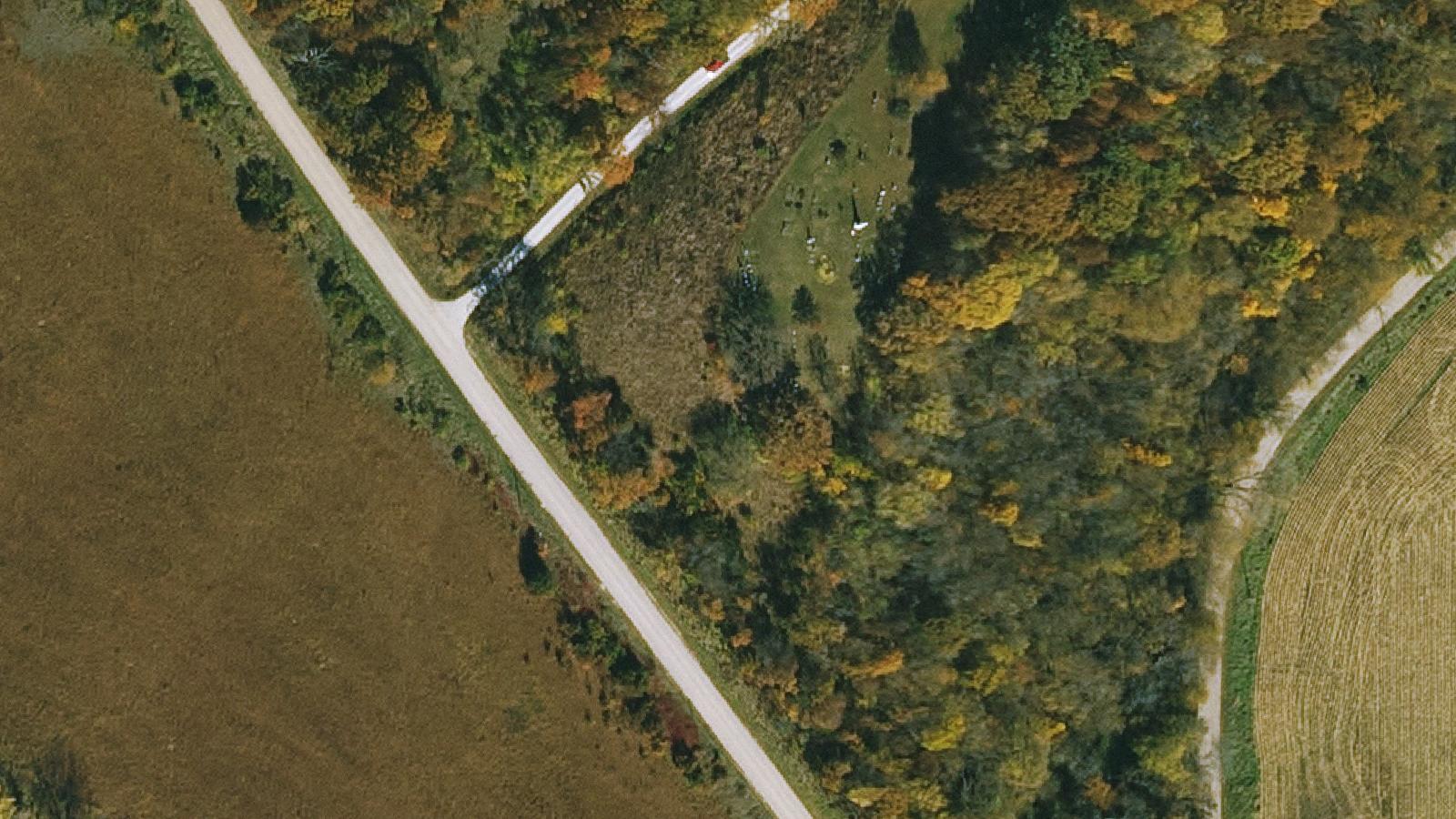
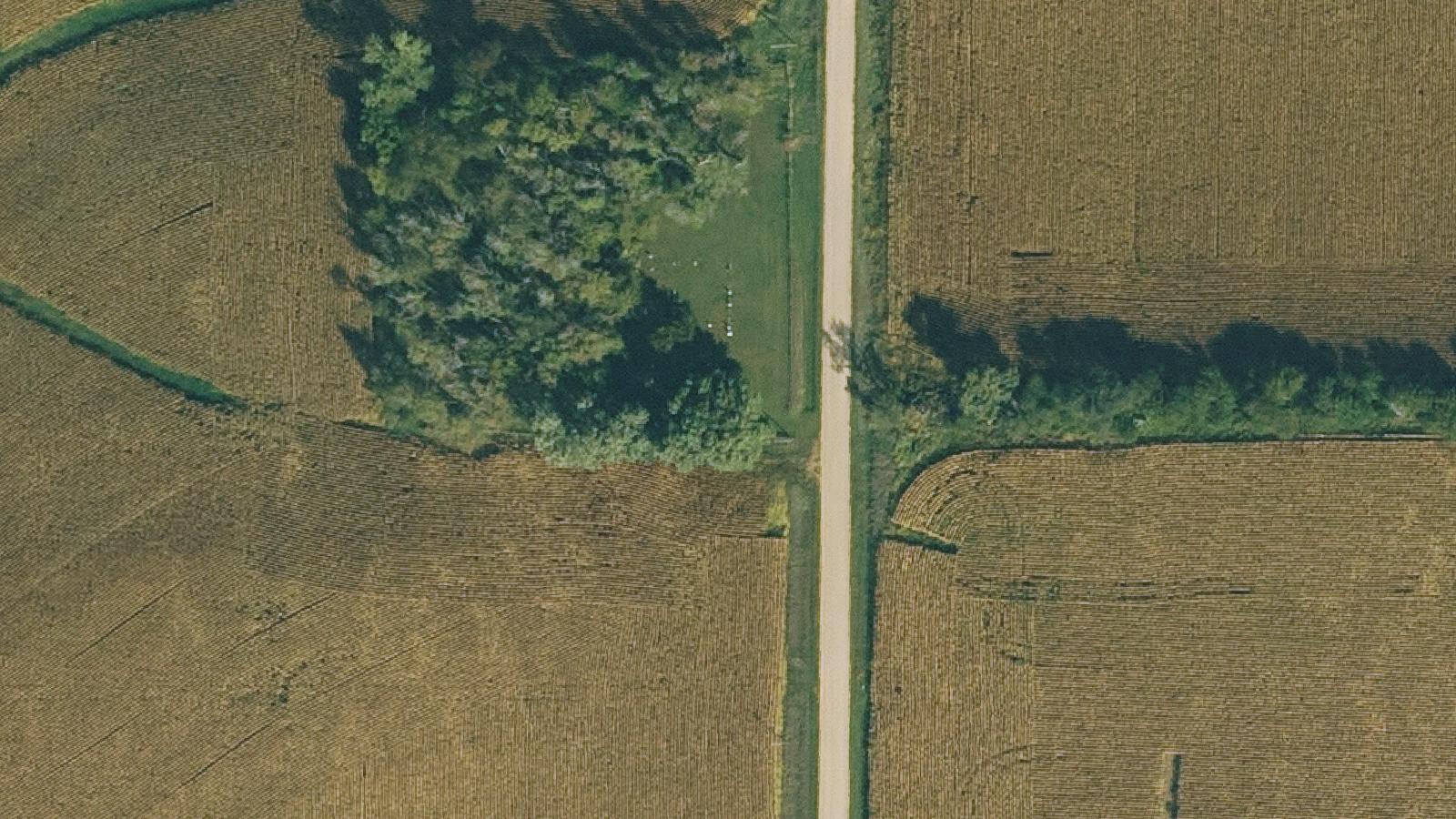
Vegors Cemetery occupies a ridge above the Boone River in southern Webster County, Iowa, approximately three miles from Stratford. The cemetery was established in 1849 and remains active for occasional burials. A white obelisk near the entrance commemorates Mrs. Henry Lott, recognized in regional histories as the first white woman to die in what became Webster County.
The Lott monument is a marker rather than a known grave: Henry Lott built a cabin on the Des Moines River near the mouth of the Boone River in late 1846. In December 1846 a Sioux party visited the cabin looking for missing horses. Henry was away with his older son. When Mrs. Lott did not respond after the visit, Henry assumed she was dead and traveled south for help. She lingered through illness, exposure, and isolation, and died in January 1848. Local tradition holds she was buried beside the cabin. The 1911 obelisk in Vegors Cemetery is a cenotaph erected later, with her body never relocated to the site.
The most archaeologically significant feature of the cemetery is the presence of five prehistoric earthen mounds attributed to Woodland-period peoples (roughly 500 BCE to 1000 CE). At least one is a documented burial mound. Webster County historical records identify the site as a longstanding burial place predating European settlement. Iowa law and federal NAGPRA protections cover these features.
Sources
- https://www.destinationstratford.net/vegorscemetery.html
- https://iowagravestones.org/cemetery_list.php?CID=94&cName=Vegors
- https://booneforksiowa.org/attraction/vegors-cemetery/
- http://iagenweb.org/webster/cemeteries/Burials/vegors.html
Disembodied laughterPhantom sounds
Local Iowa folklore attached to Vegors Cemetery describes sounds variously interpreted as voices and faint children's laughter heard along the ridge after dark. Reports of disturbance-related misfortune attached to the indigenous mounds appear in the original Shadowlands narrative and in Iowa folklore anthologies, framed as a curse on those who tamper with the burial features.
With respect to Woodland-period burial heritage, the responsible posture is archival rather than investigative. The cemetery's primary value is as a small-town frontier graveyard layered atop a documented prehistoric burial site. Visitors are asked to keep to the marked paths, avoid climbing on the mounds, and treat the entire ridge as protected ground.