Est. 1843 · Founded 1843 · NRHP Chapel (2002) · Muscatine Historic Cemetery
Greenwood Cemetery was established in 1843 as the public burial ground for the Town of Bloomington, the original name for what is now Muscatine, Iowa. The first five-acre plot was named Muscatine Cemetery at the time of its founding and renamed Greenwood Cemetery in 1849. Records survive of 702 burials between August 1843 and September 1853.
The cemetery has grown roughly sixteenfold over the intervening century and a half, to its current 80 acres. The City of Muscatine owns and operates the property today.
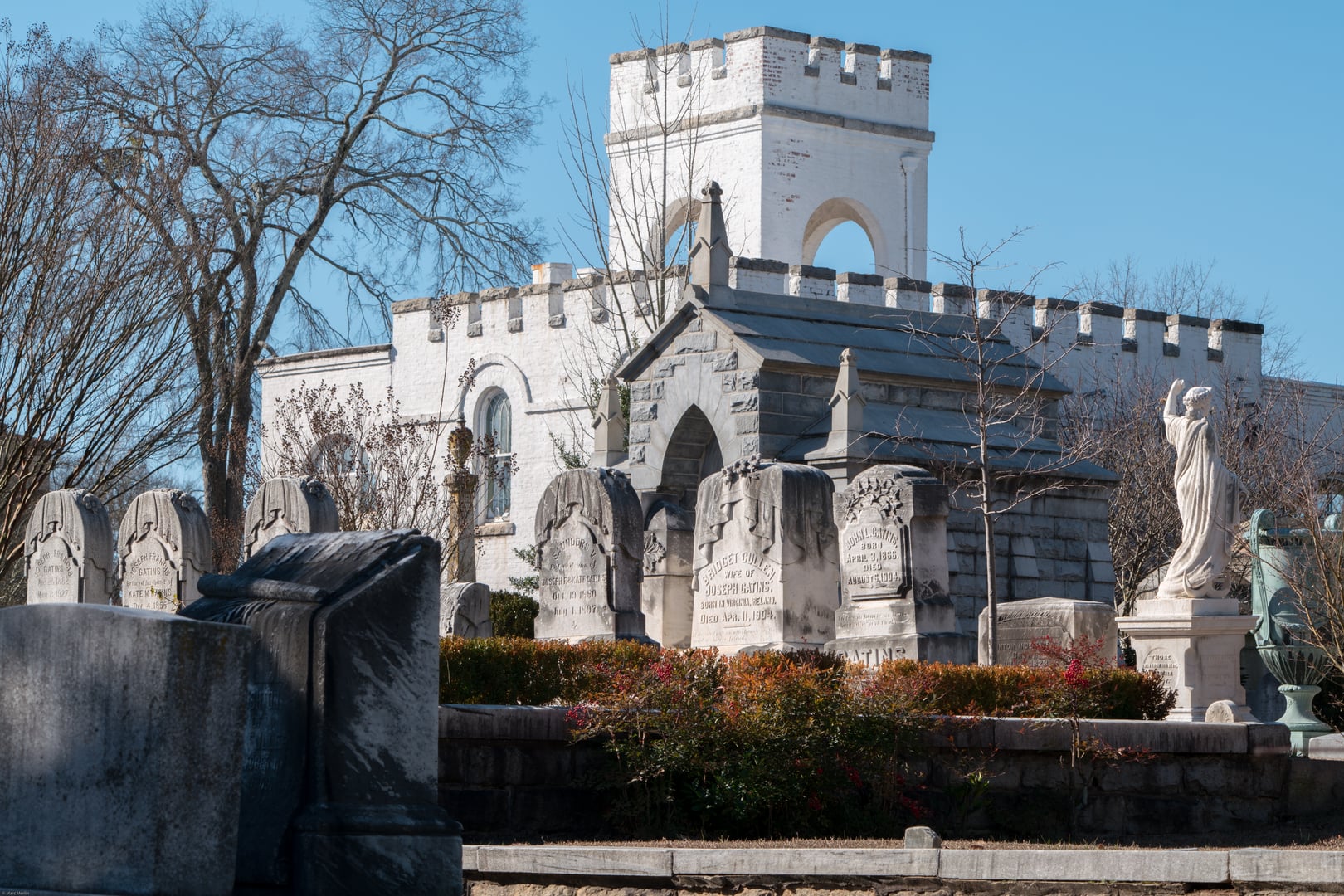
The Greenwood Cemetery Chapel is the most architecturally significant structure on the grounds. Peter Musser, a local businessman and philanthropist, donated the chapel to the city in memory of his wife Tamson Musser. The chapel was entered on the National Register of Historic Places by the State Historical Society of Iowa in 2002.
Visit Muscatine and the City periodically host the Greenwood Cemetery Walk — a living-history program in which costumed interpreters stand at the graves of notable Muscatine figures and tell their stories. The events typically run in autumn.
The cemetery records are searchable through Iowa GenWeb and Find a Grave; the city maintains a public-rules page reminding visitors that Greenwood is an active burial ground.
Sources
- https://www.muscatineiowa.gov/170/Greenwood-Cemetery
- https://en.wikipedia.org/wiki/Greenwood_Cemetery_Chapel
- https://www.findagrave.com/cemetery/94947/greenwood-cemetery
- http://iagenweb.org/muscatine/cemetery/greenwd.htm
Apparitions
The paranormal narrative attached to Greenwood Cemetery in older internet collections describes a wealthy family said to have lived in a large house across a lake from the cemetery. According to the story, the husband killed his disabled wife by pushing her wheelchair into the lake to be with another woman. The wife is reported to appear on certain nights as a green mist over the ground, accompanied by wheelchair tracks pressed into the soil.
Local tradition of this kind does not appear in the public records of Muscatine County history, Iowa newspaper archives, or the cemetery's own documentation. No murder of this description anchored to a property across from the cemetery surfaces in standard historical sources.
The story should be read as community folklore in the lineage of "woman in mist" cemetery legends, common across the Midwest in the late twentieth century. The cemetery itself is a substantial historic property worth visiting on its documented merits — the 1843 founding, the Musser Chapel listing, and the living-history Cemetery Walks. The folklore is a separate layer that the city does not promote or endorse.