Overnight Stay Booking Required
Stay at the Mizpah
Book a room at the restored 1907 Mizpah Hotel, the centerpiece of historic Tonopah. The fifth-floor Lady in Red Suite is the room most often tied to the hotel's signature story.
- Duration:
- 12 hr
HauntBound archive · catalog record
Reported phenomena — as catalogued
1907 Tonopah Hotel and Home of the Lady in Red
100 Main St, Tonopah, NV 89049
Research updated May 2026
Age
All Ages (casino floor 21+)
Cost
$$
Mid-range room rates; restaurant and casino on site.
Access
Wheelchair OK
Five-story 1907 building with elevator; some historic surfaces uneven
Equipment
Photos OK
Est. 1907 · Tonopah Silver-Mining Boomtown · First Electric Elevator in the West · National Register of Historic Places
The Mizpah Hotel opened in 1907 in Tonopah, a silver-mining boomtown roughly midway between Reno and Las Vegas. Built at a cost of around $200,000, the five-story building was the tallest in Nevada for the following twenty-five years and was widely covered as one of the most luxurious hotels in the American West.
At opening the Mizpah offered all-electric lighting, steam heat, the first electric elevator in the western United States, ceiling-mounted fans, a fully stocked bar, and ornately finished guest rooms. The hotel served the silver-mining boom of the early twentieth century and the city's later transitions through closure and reopening cycles.
In early 2011 the hotel was purchased by Fred and Nancy Cline of Cline Cellars in Sonoma, California. Following an extensive renovation, the Mizpah reopened to the public in August 2011 and continues to operate as a hotel, casino, and restaurant. In 2018, USA Today readers voted the Mizpah the most haunted hotel in America.
Sources
The Mizpah Hotel's signature legend is the Lady in Red, often called Rose, said in hotel tradition to have been a woman of the saloon era strangled or stabbed in a fifth-floor hallway after a jealous client found her with another man. Guest reports include whispered voices, pearls left on pillows attributed to a necklace torn during the attack, and apparitions on the fifth floor.
Local tradition holds that two separate witness accounts described hearing sounds of physical distress from the first stall of the women's restroom in the Mizpah's restaurant area, with the stall found open and the room empty on inspection.
A historiographical note: Bill Metscher, a founder of the Central Nevada Historical Society and Museum, has argued that the Lady in Red character was developed by hotel restorer J.L. Scott during the late-1970s renovation as part of the hotel's identity. The story has since become an integral part of Tonopah's tourism identity, and the Mizpah was voted USA Today's most haunted hotel in America in 2018.
Notable Entities
Media Appearances
Book a room at the restored 1907 Mizpah Hotel, the centerpiece of historic Tonopah. The fifth-floor Lady in Red Suite is the room most often tied to the hotel's signature story.
Eat in the Pittman Cafe or have a drink in the Mizpah's restored saloon. Witness accounts of the women's restroom in the restaurant area are part of guest tradition.
Some links on this page may earn HauntBound a small commission when you book, at no extra cost to you. Our editorial picks are independent. Full disclosure
See current room rates and availability at The Mizpah Hotel.
Check rates and bookRates come from booking partners, so a small property may not be listed. Book direct with The Mizpah Hotel
Every HauntBound history is researched from documented sources. We clearly separate verified historical fact from paranormal folklore.
Free Guide
12 verified stops, rated for families, mapped in order. Free.
One email to confirm, then the guide link. Unsubscribe anytime.
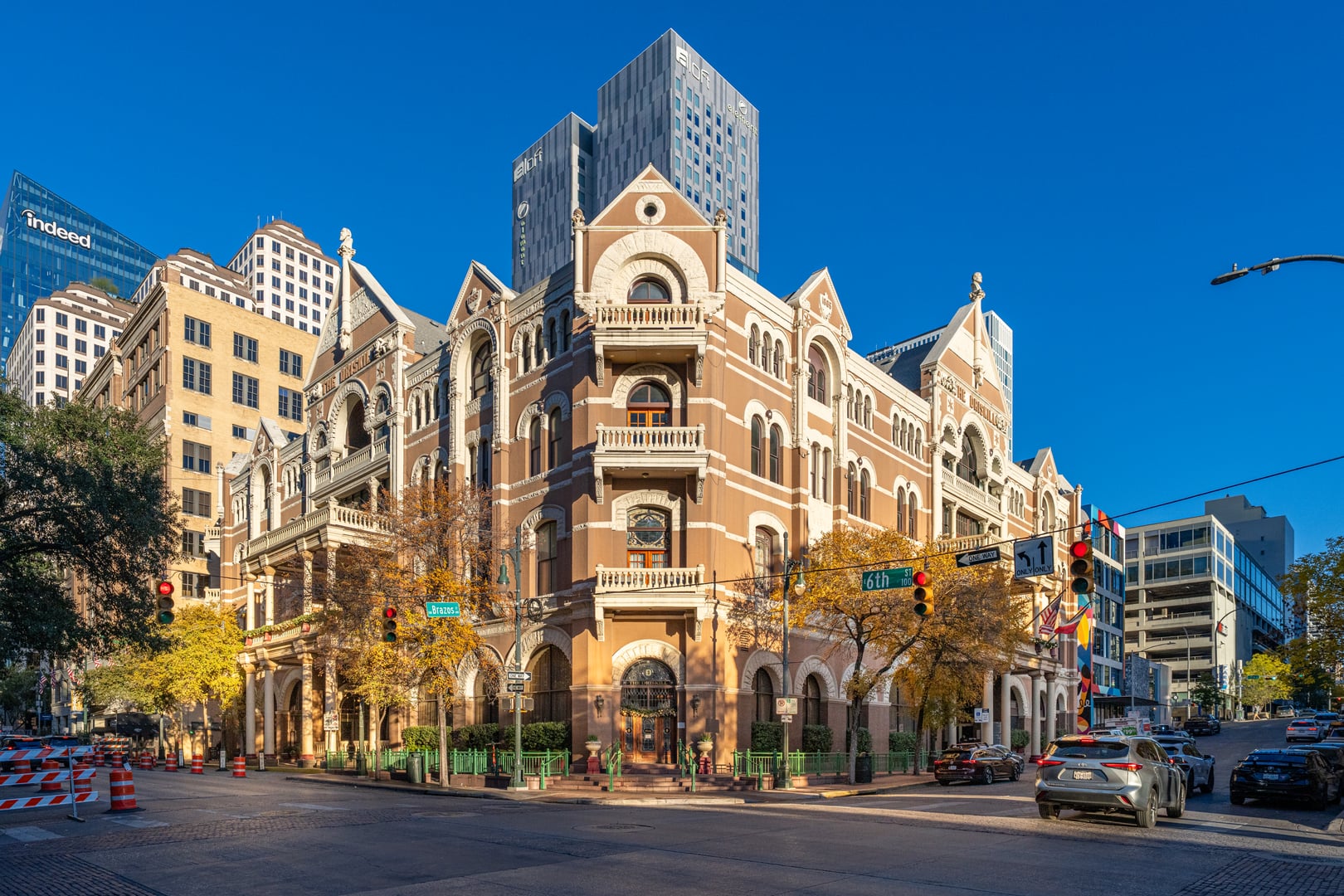
Austin, TX
Colonel Jesse Lincoln Driskill, a Tennessee-born cattle baron who supplied beef to the Confederate Army and later the Texas Rangers, opened The Driskill Hotel on December 20, 1886. Its first event, two weeks after opening, was the inaugural ball for Texas Governor Sul Ross. Driskill sold the hotel in 1888 after severe drought devastated his cattle herds and died in 1890. The hotel has hosted every Texas governor's inaugural ball since 1887.
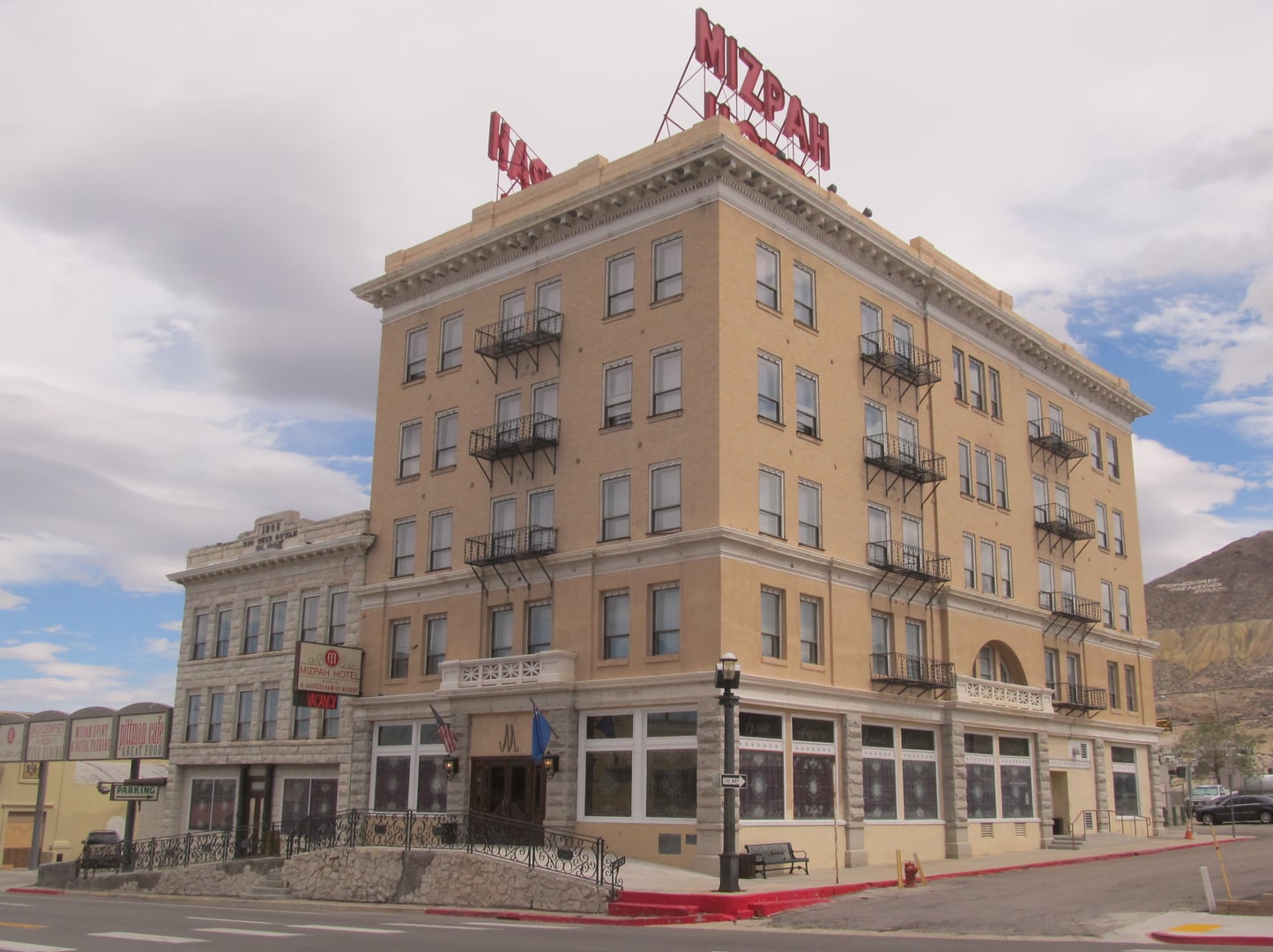
Tonopah, NV
The Mizpah Hotel in Tonopah, Nevada was constructed in 1905 at a cost of $200,000, financed by mining magnates George Wingfield, George S. Nixon, Cal Brougher, and Bob Govan. The reinforced concrete and stone structure was Nevada's tallest building until 1927. It was added to the National Register of Historic Places in 1978, fell dormant in 1999, and reopened in August 2011 after a $4 million restoration by Fred and Nancy Cline.

Tonopah, NV
The Belvada Hotel occupies the 1906 State Bank and Trust Company Building on Main Street in Tonopah, designed in a Classical Revival / Beaux-Arts style by architect George E. Holesworth. Just months after it opened, the 1907 financial panic forced the bank to close, and its owner, Thomas Rickey, was indicted for embezzlement. The building later served as the Belvada Apartments, stood vacant and near demolition, and reopened in 2020 as a hotel restored by Fred and Nancy Cline, the owners of the nearby Mizpah Hotel.