Est. 1655 · National Register of Historic Places · Gateway National Recreation Area · Continuous Military Use 1655-1994
The Narrows separates New York Bay's upper and lower halves, the natural defensive choke point for any maritime approach to lower Manhattan. The site that became Fort Wadsworth was first fortified in 1655, when Dutch settler David Pieterszen de Vries built a blockhouse on what is now called Signal Hill. The British took control with the rest of New York colony in 1664 and maintained military presence at the site through the colonial period.
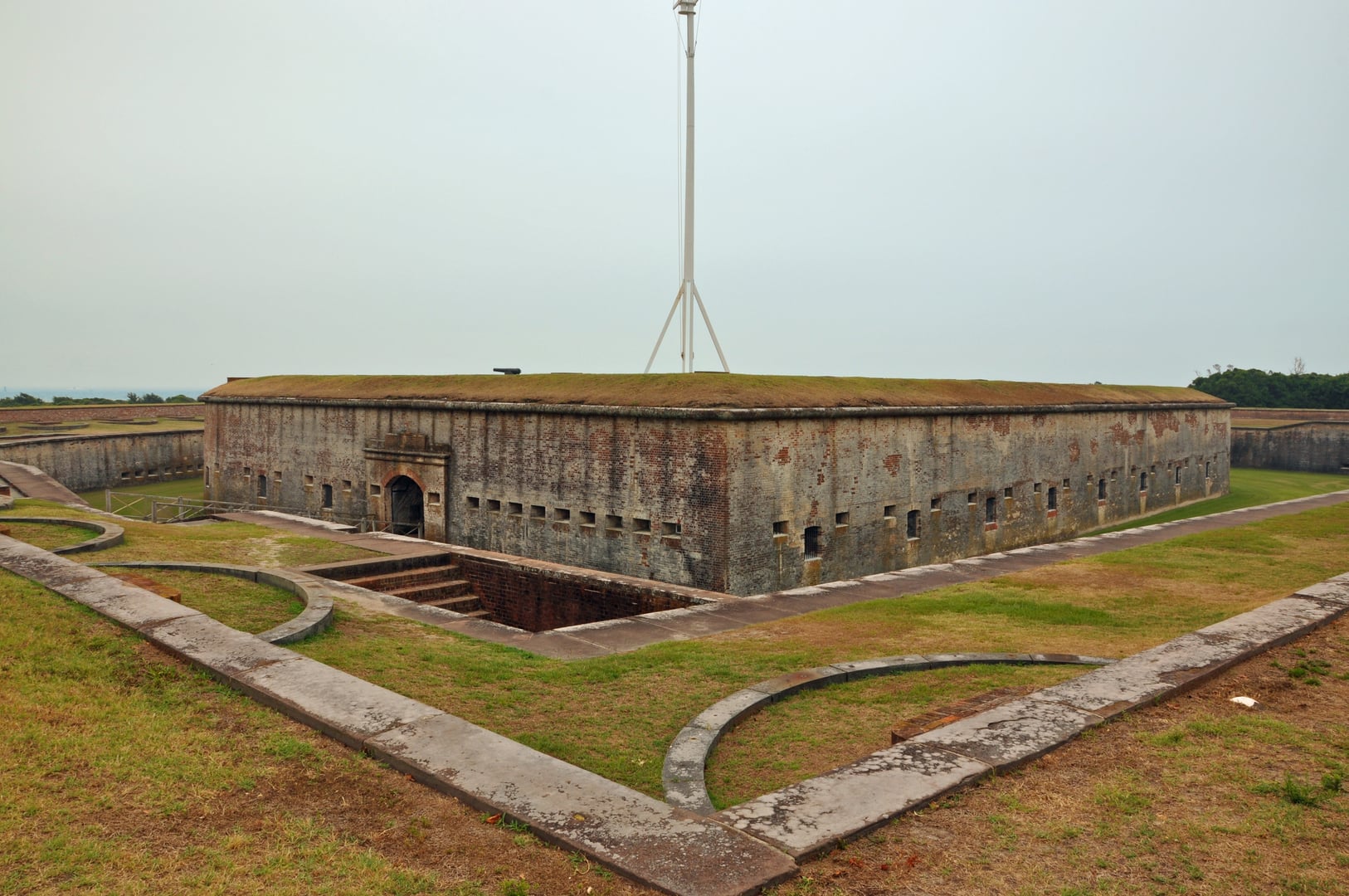
The NPS documents British fortification of the area now known as Fort Wadsworth in 1779. New York State assumed control in 1806 and built four forts at the site, completed in 1808. These included the red sandstone Forts Richmond and Tompkins. The state's mid-19th century rebuilding under federal direction produced the surviving structures: Battery Weed, rebuilt in 1847-1862 on the site of Fort Richmond, and Fort Tompkins, rebuilt in 1859-1876 on Signal Hill behind it. The complex was renamed Fort Wadsworth in 1865 to honor Brigadier General James Wadsworth, killed at the Battle of the Wilderness in 1864.
Fort Wadsworth served continuously through both World Wars and the Cold War, with periodic upgrades to coastal artillery and missile systems. Prior to its 1994 closure, it was claimed to be the longest continuously garrisoned military installation in the United States, with 339 years of unbroken service. The fort closed under the Base Realignment and Closure process and was transferred to the National Park Service.
Fort Wadsworth is now part of the Staten Island Unit of Gateway National Recreation Area. The Visitor Center, located on New York Avenue, operates Friday through Monday from 10 AM to 4 PM. The grounds are open daily, and the interior of Battery Weed and Fort Tompkins are accessible only on guided tours scheduled seasonally by park rangers.
Sources
- https://en.wikipedia.org/wiki/Fort_Wadsworth
- https://www.nps.gov/gate/learn/historyculture/ftwad.htm
- https://en.wikipedia.org/wiki/Battery_Weed
- https://en.wikipedia.org/wiki/Fort_Tompkins_(Staten_Island)
- https://www.legendsofamerica.com/fort-wadsworth/
ApparitionsShadow figuresResidual haunting
The reported phenomena at Fort Wadsworth tend toward the disorienting rather than the dramatic. Multiple visitor accounts describe a soldier figure observed walking on a deliberate course through the lower fortification areas, passing through walls and parked cars without altering its movement, then disappearing. The figure is consistently described in dark uniform; observers do not specify a particular war's clothing.
A more unusual category of report involves brief subjective episodes among visitors at the older fortifications. One account, repeated in regional folklore literature, describes a woman who reported a momentary perceptual shift while walking through Fort Tompkins, with a brief view of a wartime hospital scene and a soldier yelling at her to take cover before she returned to the present. Similar reports describe visitors momentarily seeing the empty parade ground populated with figures of injured soldiers, the impression dissolving on a second look.
The character of these reports differs from typical apparition accounts. They are described less as observed presences and more as intrusions of remembered events, the kind of experience that paranormal literature labels residual or place-memory phenomena. Whether these reports reflect anything beyond the suggestive power of an old fort with a long combat-adjacent history is not something the National Park Service interprets.
The Visitor Center provides ranger-led tours that cover the fort's military history without addressing the paranormal reports. The grounds remain a popular spot for sunset views of the Verrazzano-Narrows Bridge and lower Manhattan, and most visitors come for those rather than for the ghost stories.