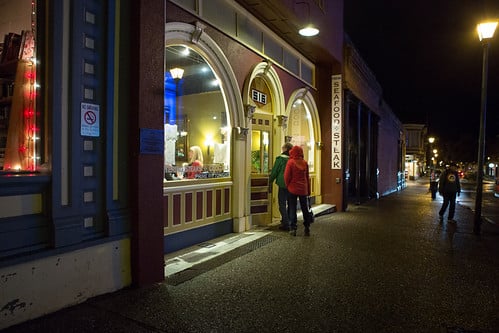
Est. 1887 · Warwick Village Historic District · Warwick Valley Railroad Era
The completion of the Warwick Valley Railroad in 1862 brought a wave of new travelers and commercial activity to the Village of Warwick. The first hotel on the site, the National Hotel, was built in 1863 specifically to accommodate that traffic.
The present structure, the Demarest House, was erected on the site in 1887. The four-story brick and terra-cotta building, with its distinctive roofline and two-story porch, became one of the most prominent commercial buildings on Warwick's Railroad Avenue. It contributes to the Warwick Village Historic District and remains a landmark of the village's late-19th-century commercial architecture.
The upper floors of the building have been closed for some years, according to the Shadowlands narrative. Ground-floor commercial space has hosted varied tenants over recent decades, including the present Fannie's restaurant. Independent web sources do not corroborate claims of Revolutionary War or Civil War era violence at the site, which the Shadowlands entry references.
Sources
- https://en.wikipedia.org/wiki/Demarest_Building
- https://www.livingplaces.com/NY/Orange_County/Warwick_Village/Warwick_Village_Historic_District.html
- http://www.albertwisnerlibrary.org/Factsandhistory/History/Shorthistory.htm
Disembodied screamingPhantom voices
The Demarest Building's reputation as a paranormal site centers on its long-closed upper floors. Visitors and ghost-story compilations report disembodied screams emanating from the building at night and a generally uneasy atmosphere on the upper levels. The exact source of the activity is not identified in available accounts.
Regional haunted-place listings reference a murder of a resident at the building during the 1980s. Independent news archives and court records that would confirm the specifics are not readily available in public sources, so the detail should be treated as local folklore rather than documented history.
The Shadowlands Haunted Places Index entry attributes activity to Revolutionary War and Civil War era violence at the site. The current building dates to 1887, postdating both wars by decades, and no independent web sources support those specific claims.