Est. 1871 · Home of Harriet Beecher Stowe · Abolitionist History · Nook Farm Literary Community · National Register of Historic Places
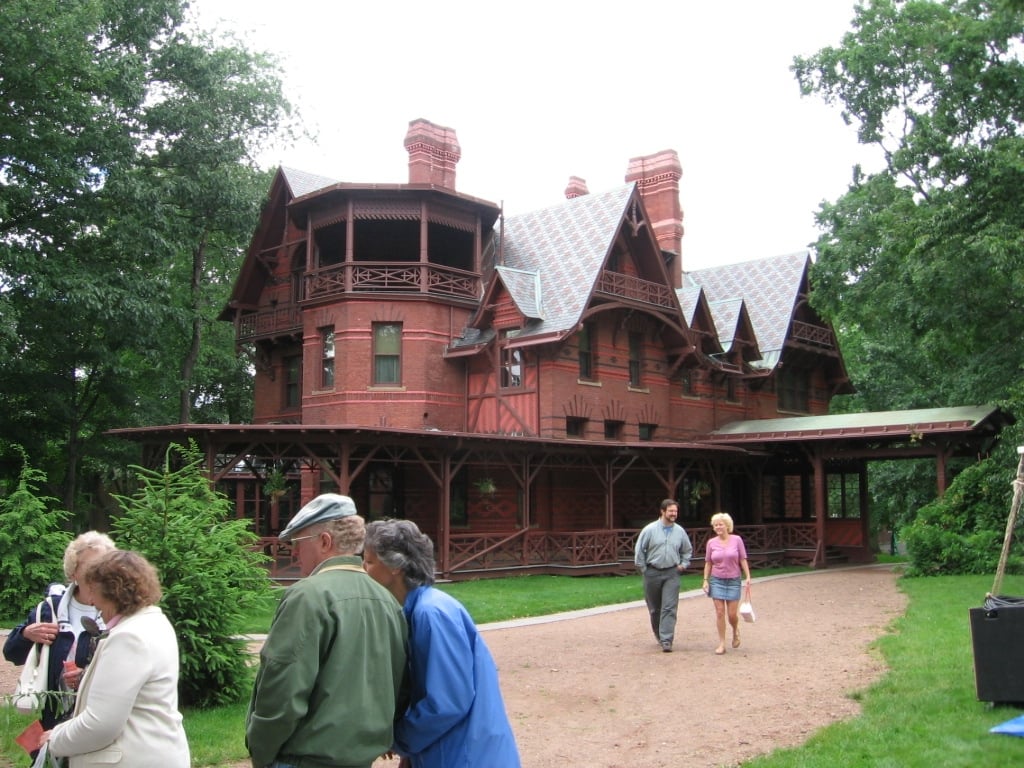
Harriet Beecher Stowe and her husband, theologian Calvin Stowe, moved into the modest Gothic Revival cottage at 77 Forest Street in Hartford in 1873, two years after the house was built. The Stowes spent the previous winter in Mandarin, Florida, and selected the Hartford residence to be near family and the literary community then taking shape in the Nook Farm neighborhood, which also included Mark Twain's house immediately next door.
Stowe had achieved international fame two decades earlier with the publication of 'Uncle Tom's Cabin' (1852), a novel whose enormous reach in the United States and abroad is widely credited with crystallizing anti-slavery sentiment in the years before the Civil War. By the time she moved to the Forest Street house she was 62 years old and continued to write, publishing several more novels and essay collections during her Hartford years.
The Stowes had seven children, four of whom predeceased their parents — losses that pulled Harriet toward Spiritualism, a 19th-century religious movement centered on the belief that the dead could communicate with the living through mediums and seances. Calvin Stowe likewise reported visions throughout his life, writing matter-of-factly about seeing 'fairies and demons' at his bedside.
Harriet Beecher Stowe died in the Forest Street house on July 1, 1896. The home passed to her surviving daughter Hattie and grand-niece Katharine Seymour Day, who preserved it as a memorial. In 1968 it opened to the public as a museum, and today the institution operates as the Harriet Beecher Stowe Center, focused on Stowe's legacy as an author and on broader themes of social-justice literary activism.
Sources
- https://www.harrietbeecherstowecenter.org/
- https://en.wikipedia.org/wiki/Harriet_Beecher_Stowe_House_(Hartford,_Connecticut)
- https://www.finebooksmagazine.com/fine-books-news/spirits-stowe-house
- https://www.harrietbeecherstowecenter.org/spirits-at-stowe/
Self-opening window shadesDisembodied footstepsUnexplained light flashesObject movementCold spots
The paranormal lore attached to the Stowe house is unusual among historic-home hauntings in that its central figure — Harriet Beecher Stowe herself — was an active participant in 19th-century Spiritualism during her lifetime. According to Fine Books & Collections and Theresa's Haunted History of the Tri-State, Stowe was hypnotized by her brother Henry in 1843 and afterward sought out mediums to communicate with departed family members. Her interest deepened after the deaths of four of her seven children. The Stowe Center confirms she hosted regular seances in the Hartford home, and her husband Calvin separately wrote of seeing 'fairies and demons' at his bedside.
According to CT Haunted Houses and US Ghost Adventures, visitors and staff have reported window shades in the parlor opening on their own, footsteps echoing through the house when no one is present, flashes of light in bedrooms, objects relocating without explanation, and unexplained cold spots. None of these reports are tied to a named apparition; the dominant interpretive frame instead emphasizes the home as a continuing site of Spiritualist energy connected to Stowe's documented practice.
The Stowe Center has formally engaged the paranormal lore through its annual 'Spirits at Stowe: An Otherworldly Tour,' an after-hours program held seasonally around Halloween. The program reframes the haunting narrative through the lens of 19th-century Spiritualism as a historical and cultural phenomenon rather than as conventional ghost-tour fare.
Notable Entities
Harriet Beecher Stowe (1811-1896, in life a documented Spiritualist)