Est. 1874 · Kirkbride Plan Psychiatric Architecture · Levi T. Scofield Design · 19th-20th Century Ohio Psychiatry · Margaret Schilling Case · National Register Historic District · Ohio University Adaptive Reuse
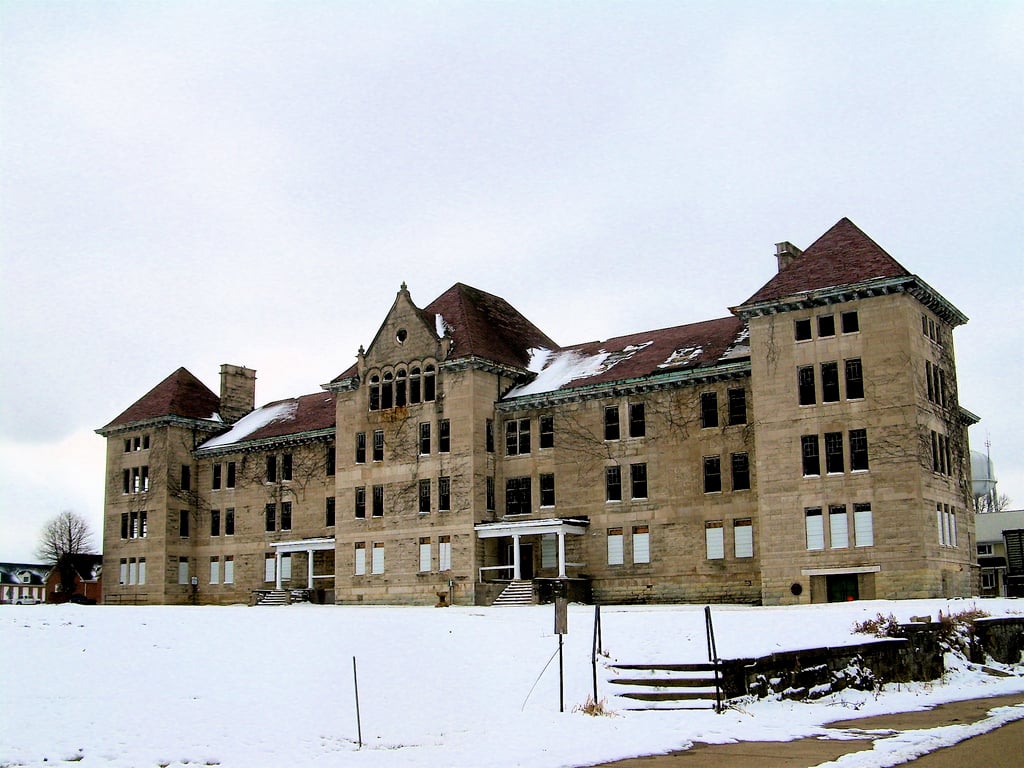
Construction on the Athens Lunatic Asylum began in 1868 on a 1,000-acre site on a wooded ridge above the Hocking River, southwest of downtown Athens, Ohio. The architect was Levi Tucker Scofield, who would later design the Ohio State Reformatory in Mansfield. The building followed the Kirkbride plan — a psychiatric hospital design developed by Dr. Thomas Story Kirkbride that emphasized natural light, ventilation, separation of patient populations by symptom severity, and architectural symmetry as therapeutic features.
The asylum opened January 9, 1874, with an initial capacity of approximately 200 patients. The facility's name changed several times as terminology evolved: Athens Lunatic Asylum (1874 to 1911), Athens State Hospital (1911 to 1968), and Athens Mental Health Center (1968 to 1993). The patient population grew steadily through the late 19th and early 20th centuries, reaching approximately 2,000 by the 1930s and 1940s — substantially exceeding the original Kirkbride-designed capacity.
The 20th century treatment record at Athens includes the full spectrum of mid-century psychiatric interventions: insulin coma therapy, electroconvulsive therapy, and prefrontal lobotomy. Athens performed lobotomies during the procedure's brief American peak, though detailed institutional records of these procedures have been the subject of ongoing scholarly study rather than a single comprehensive account. The introduction of antipsychotic medications in the 1950s, combined with the broader American deinstitutionalization movement of the 1960s and 1970s, gradually reduced the patient census.
In 1978, patient Margaret Schilling, then approximately 53 years old, disappeared from the facility on December 1. Her body was discovered 42 days later on January 12, 1979, by a maintenance worker on the top floor of Ward N-20 — a section that had been closed off from the main facility. Schilling's remains were found nude, with her clothes folded neatly beside her, in an area where afternoon sunlight reached the floor. The official cause of death was heart failure; how she came to be in the closed ward, and why she removed her clothing, remained unresolved. Her body had decomposed enough that an outline remained on the concrete floor — analyzed by a forensic team in 2007 and determined to be the product of adipocere, the soap-like substance produced by the decomposition of body fat under specific moisture and temperature conditions. The outline, which has resisted multiple cleaning efforts, has come to be called the Stain in regional accounts.
The facility closed in 1993, with most operations transferred to other Ohio psychiatric facilities or to community-based care. Ohio University acquired the majority of the campus, renamed it The Ridges, and has gradually rehabilitated portions of the buildings for academic and museum use. The Kennedy Museum of Art now occupies a restored wing of the original Kirkbride building. Approximately 1,930 former patient burials are spread across three on-site cemeteries, most marked only with numbered stones; the Athens Asylum Cemeteries Restoration Project has worked since 2001 to identify individuals beneath the numbered markers.
The Ridges is listed on the National Register of Historic Places.