Est. 1902 · Illinois State Psychiatric Institution · Cottage System Reform Era · Dr. George A. Zeller Tenure
The Illinois Asylum for the Incurable Insane opened in Bartonville in 1902 on a wooded hilltop above the Illinois River. Its first superintendent, Dr. George A. Zeller, was a reform-minded physician who objected to the institution's original name on principle. Zeller successfully lobbied the state legislature to remove the word 'Incurable' from the title, arguing that no patient should be classified as beyond help. The site was renamed Peoria State Hospital and operated under that designation for most of its history.
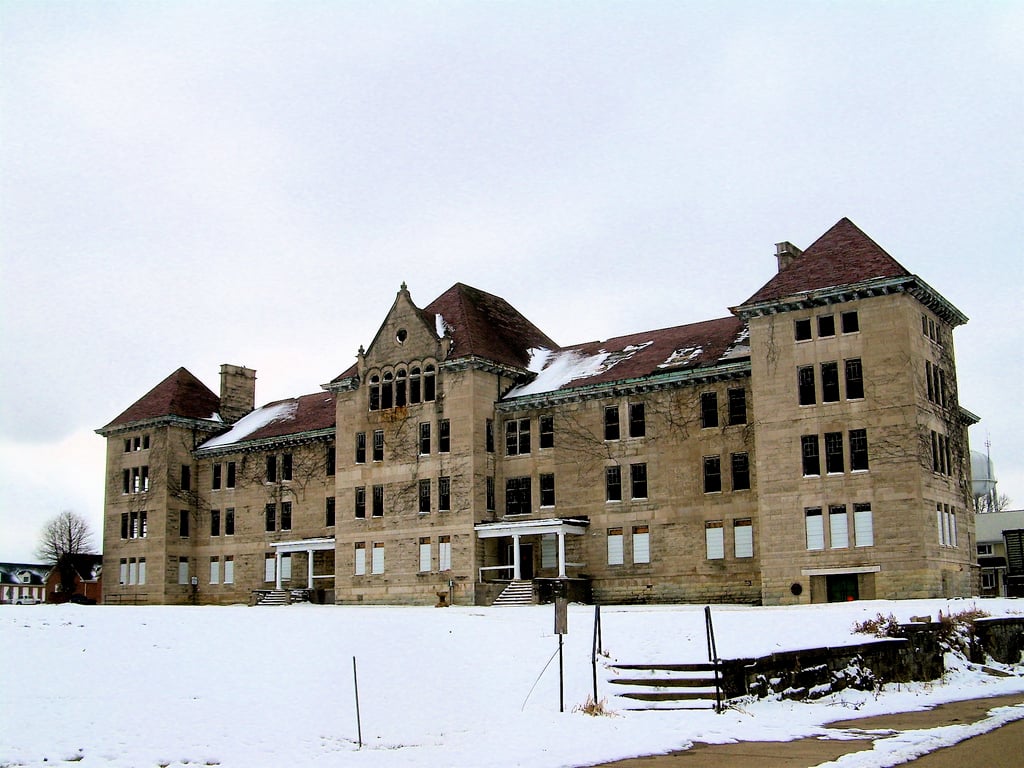
The campus was organized on the cottage system, an early-twentieth-century reform model that distributed patients across smaller residential buildings rather than concentrating them in a single asylum block. At its peak the property comprised more than sixty buildings, including patient cottages, staff housing, the Pollak Hospital tuberculosis ward, an administration building, a nurses' dormitory, and the central Bowen Building, which served primarily as administrative offices once the cottage system was in place.
Dr. Zeller wrote extensively about life at the hospital, publishing a memoir titled Befriending the Bereft in the 1920s. One of his most cited accounts concerned a patient assigned to the institution's burial corps, Manuel A. Bookbinder, known on the grounds as "Old Book." Zeller recorded that Bookbinder wept openly at the gravesides of fellow patients, and that when Bookbinder himself died in 1910, staff members and inmates reported seeing him mourning at his own funeral. The account became part of the hospital's documented folklore and is still cited by museum interpreters today.
The State of Illinois closed Peoria State Hospital in 1973. In the decades that followed, much of the campus deteriorated. The Bowen Building, the nurses' dormitory, and the administration building were demolished in 2017 after the property's owner defaulted on a loan to the Village of Bartonville. The Bowen's salvaged stone was sold off. Approximately thirteen of the original sixty-three buildings remain standing, several of them renovated for commercial and industrial use under a tax-increment-financing district established by the village.
In 2013, a nonprofit founded the Peoria State Hospital Museum to preserve the institution's archival record. The museum has acquired three of the surviving hilltop buildings and offers historical interpretation, periodic tours, and seasonal events. The Pollak Hospital tuberculosis ward, the cemeteries, and several cottages remain on the original property.
Sources
- https://en.wikipedia.org/wiki/Peoria_State_Hospital
- https://www.peoriastatehospital.com/psh-history
- https://www.atlasobscura.com/places/peoria-state-hospital
- http://preservationresearch.com/hospitals/bartonville-state-hospital/
- https://www.bumpinthenight.net/peoria
- https://www.peoriamagazine.com/article/a-place-for-special-people/
- https://www.almanac.com/man-who-cried-everyone
- https://www.jahernandez.com/posts/old-book-ghost-of-peoria-state-hospital-in-bartonville-illinois
- https://michaelkleen.com/2018/01/23/ethereal-remains-of-peoria-state-hospital/
- https://www.youtube.com/watch?v=_kPoIau-sZI
- https://tcghs.org/publications/other-items/fractured-spirits-hauntings-at-the-peoria-state-hospital/
ApparitionsShadow figuresPhantom footstepsPhantom voicesCold spotsDisembodied laughter
The earliest paranormal account associated with Peoria State Hospital was recorded by the institution's own first superintendent. Dr. George A. Zeller wrote that a patient assigned to the asylum's burial corps — Manuel A. Bookbinder, known on the grounds as "Old Book" — customarily wept at the gravesides of those he helped to inter. When Bookbinder himself died in 1910 and was lowered into the ground beneath the cemetery's "Graveyard Elm," Zeller documented that staff and patients independently reported watching Bookbinder mourn at his own burial. Zeller published the account in his 1920s memoir Befriending the Bereft, making it the foundation of the site's paranormal reputation and the rare ghost story attributed to a sitting medical superintendent. The Graveyard Elm itself reportedly withered in the years after the funeral and was eventually removed.
Later accounts cluster around the surviving buildings and the campus cemeteries. Visitors and investigators have reported the figure of a young girl in the basement of the now-demolished Bowen Building, sometimes described as playing with dolls; the same basement was associated with reports of a shadow figure that appeared to chase witnesses up the stairs. The men's ward generated repeated reports of heavy, booted footsteps with no visible source. The cemeteries — where many graves are marked only with numbers because the institution had no record of patients' surnames — are a focus of investigation activity.
The site's documented status as one of Illinois's longest-operating psychiatric institutions, combined with its meticulous archival record under Zeller, has made it a recurring destination for paranormal research groups. American Hauntings runs overnight investigations that access portions of the remaining buildings and the cemeteries. Author Sylvia Shults has written and recorded extensively on the site's reported phenomena, drawing on both archival material and contemporary witness accounts.
The site occupies an unusual middle ground in American paranormal folklore: a fully documented historical institution whose foundational ghost story comes not from anonymous internet posts but from a published account by the hospital's first superintendent.
Notable Entities
Manuel A. "Old Book" BookbinderThe Girl in the Basement
Media Appearances
- Ghost Hunters: Prescription for Fear (S9E3) (2013)
- Ghost Asylum: Peoria State Hospital (S4E3) (2016)
- Fractured Spirits: Hauntings at the Peoria State Hospital by Sylvia Shults (2012)