Est. 1788 · Built on the site of the 1788 Campus Martius fortification, the first civilian-built fort in the Northwest Territory · Preserves the Rufus Putnam House and the Ohio Company Land Office in situ · Both preserved structures are on the National Register of Historic Places · Operated by the Ohio History Connection
Campus Martius was a wooden palisade fortification built in 1788 by Rufus Putnam and the Ohio Company of Associates at the new settlement of Marietta, the first permanent American settlement in the Northwest Territory. It was the second fortification at the site after Fort Harmar across the Muskingum River, and the first built primarily for civilian defense.
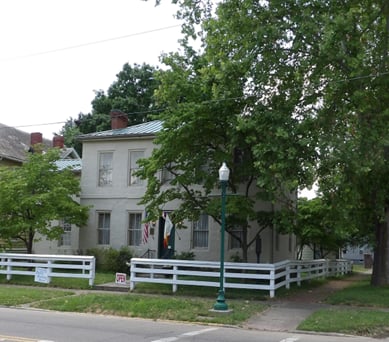
The modern Campus Martius Museum, operated by the Ohio History Connection (formerly the Ohio Historical Society), stands on the original fortress footprint at 601 Second Street. Inside the museum building two pre-existing structures from the fortress era have been preserved in place: the Rufus Putnam House, the only remaining piece of the original fortification, and the Ohio Company Land Office, frequently cited as the oldest building in Ohio and the broader Northwest Territory. Both are listed on the National Register of Historic Places.
The museum's exhibits focus on the founding of Marietta, the Ohio Company, Rufus Putnam's personal effects (including his Revolutionary War military chest, boots, and cane), and themes of westward migration. Atlas Obscura highlights Campus Martius as one of the most important pre-1800 historic sites in the Midwest.
Sources
- https://en.wikipedia.org/wiki/Campus_Martius_Museum
- https://www.atlasobscura.com/places/campus-martius-museum
- https://www.newsandsentinel.com/news/local-news/2013/10/history-mystery-and-hauntings-surround-marietta/
Unexplained footsteps in the empty lobbyElevator that opens, closes, and changes floors with no occupants
The Campus Martius Museum's paranormal reputation rests largely on a small set of staff anecdotes that the News and Sentinel's 2013 'History, mystery and hauntings' feature drew into print. Staff there have described unexplained footsteps echoing across the otherwise empty lobby and an elevator that opens, closes, and changes floors with no visible occupants. According to the same article, the museum's education program director has publicly acknowledged staff encounters with unexplained activity, and the History Channel's 'Haunted History' program highlighted the building during an episode about haunted Ohio sites.
We present these accounts as the staff-level lore that has accumulated around an active state-history museum housed on a centuries-old footprint. The museum does not market itself as a haunted attraction, and paranormal claims should be considered secondary to its central role as the preeminent interpretive site for the founding of Marietta and the Northwest Territory.
Media Appearances
- History Channel — Haunted History (referenced by News and Sentinel 2013)